

Amazon Liquidation: How to Buy Return Pallets and Resell for Profit

Every day, millions of products get returned to Amazon. Most can't be resold as new. So what happens to them?
They get liquidated — sold in bulk to resellers at pennies on the dollar through liquidation auctions and wholesale platforms.
For the right buyer, Amazon liquidation represents a massive sourcing opportunity. You can purchase pallets of returned merchandise for 5-20% of retail value, then resell individual items for profit.
But it's not as simple as "buy cheap, sell high." Liquidation requires understanding condition grades, calculating true costs, and knowing where to find legitimate inventory. This guide covers everything you need to know.
What Is Amazon Liquidation?
Amazon liquidation is the process of selling returned, overstock, and unsellable inventory in bulk through wholesale channels. Instead of destroying merchandise or letting it sit in warehouses, Amazon partners with liquidation marketplaces to auction off this inventory to resellers.
What Gets Liquidated
- Customer returns — Items returned for any reason (changed mind, wrong size, defective)
- Overstock — Excess inventory that didn't sell
- Warehouse damaged — Products damaged in fulfillment centers
- Shelf pulls — Items removed from sale (discontinued, seasonal)
How It Works
- Amazon receives returns and unsellable inventory
- Items are sorted and graded by condition
- Amazon partners with liquidation platforms
- Inventory is sold in bulk (pallets or truckloads) via auction or fixed price
- Resellers purchase and sort the merchandise
- Individual items are resold on various channels
Why It Exists
Amazon processes billions of dollars in returns annually. Storing, inspecting, and reselling each item individually isn't cost-effective. Liquidation lets them recover some value while clearing warehouse space quickly.
Where to Buy Amazon Liquidation Pallets
Several legitimate platforms sell Amazon liquidation inventory. Here are the main options:
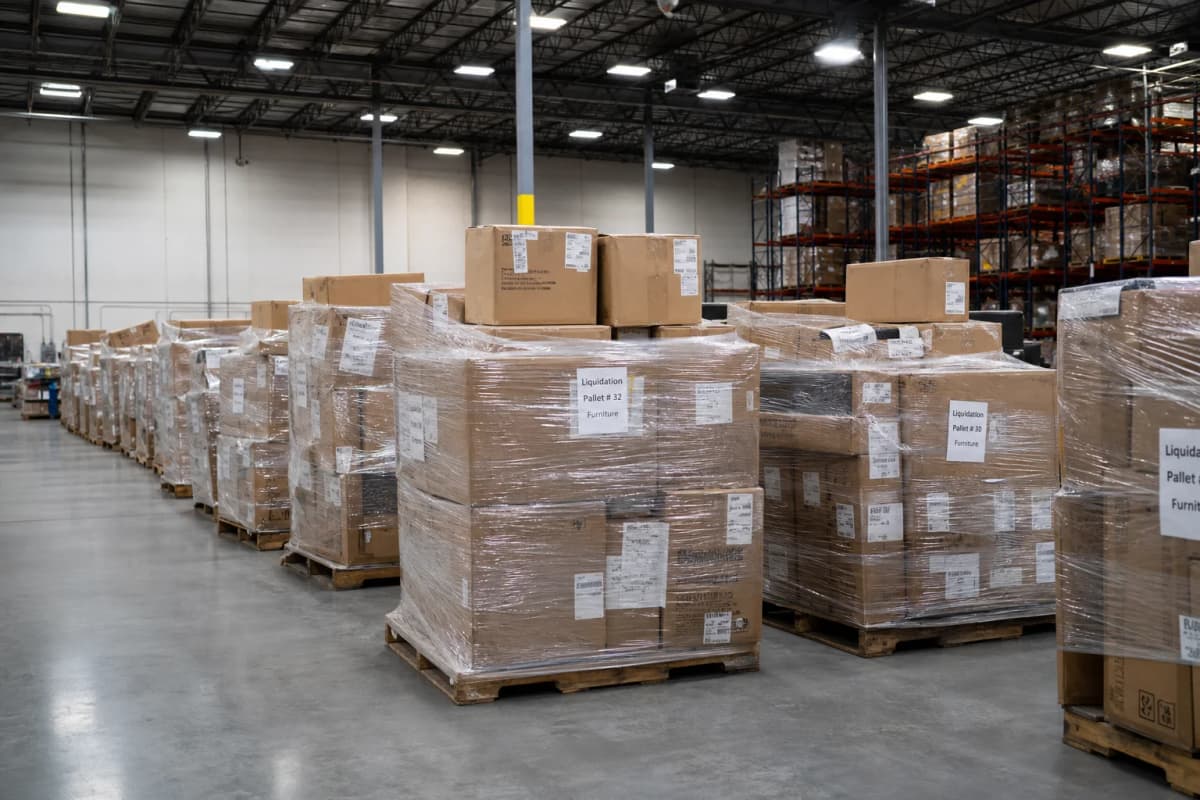
Amazon Bulk Liquidations (Official)
Amazon's own liquidation storefront on the Amazon website.
Link
amazon.com/Amazon-Bulk-Liquidations
What they offer
- Customer returns and overstock
- Sold by pallet
- Manifests available (list of items)
- Ships directly from Amazon facilities
Pros
- Official Amazon channel
- Detailed manifests
- Consistent quality
Cons
- Limited selection
- Higher prices than third-party liquidators
B-Stock (Amazon's Primary Partner)
B-Stock operates Amazon's official liquidation auctions through dedicated storefronts.
Link
bstock.com/amazon
What they offer
- Timed auctions on pallets and truckloads
- Customer returns and overstock
- Multiple Amazon categories
- Detailed manifests
Pros
- Large inventory selection
- Auction format can mean good deals
- Verified Amazon merchandise
Cons
- Competitive bidding
- Buyer's premiums on auction wins
- Minimum purchase requirements
Direct Liquidation
Third-party liquidator with Amazon partnerships.
What they offer
- Amazon customer returns
- Fixed-price and auction options
- Pallets and truckloads
- Multiple condition grades
Pros
- Variety of purchase options
- Detailed condition grading
- Customer support
Cons
- Mixed quality reports
- Shipping costs can be high
Liquidation.com
One of the largest B2B liquidation marketplaces.
What they offer
- Amazon and other retailer returns
- Auction format
- Wide category selection
- Bulk lots of varying sizes
Pros
- Huge selection
- Established platform
- Buyer protection
Cons
- Highly competitive
- Quality varies significantly
- Buyer's premium fees
BULQ
Focused on smaller resellers with lower buy-in.
What they offer
- Curated boxes (not full pallets)
- Fixed pricing
- Condition-sorted lots
Pros
- Lower starting prices
- Good for beginners
- Condition categories
Cons
- Higher per-item cost than pallets
- Limited Amazon-specific inventory
Local Liquidation Warehouses
Physical warehouses that buy from Amazon and resell locally.
How to find them
- Search "liquidation warehouse near me"
- Check Facebook Marketplace for local sellers
- Join reseller groups for recommendations
Pros
- Inspect before buying
- No shipping costs
- Build relationships for better deals
Cons
- Inventory varies wildly
- No manifests typically
- Quality control issues
Understanding Condition Grades
Amazon liquidation uses standard condition grades. Knowing what each means helps you calculate realistic profit margins.
Condition Categories
Brand New / Sealed
- Original packaging intact
- Never opened
- Highest resale value
- Expect to pay more at auction
Like New / Open Box
- Opened but unused
- All accessories present
- Packaging may be damaged
- 80-95% of new value
Very Good
- Light use or minor cosmetic issues
- Fully functional
- May be missing non-essential accessories
- 60-80% of new value
Good
- Moderate wear or cosmetic damage
- Fully functional
- May be missing accessories
- 40-60% of new value
Acceptable
- Heavy wear or damage
- Still functional
- Missing parts possible
- 20-40% of new value
Salvage / For Parts
- Not guaranteed to work
- Significant damage
- Best for parts harvesting
- 5-15% of new value
Manifest Reality Check
Manifests list items and their stated condition. But conditions are often optimistic:
- "Brand New" might have damaged packaging
- "Like New" might be missing accessories
- Electronics "tested working" might have issues
Rule of thumb: Assume 10-20% of items are in worse condition than listed. Factor this into your profit calculations.
This is similar to the inspection process in retail arbitrage — always verify before committing.
Cost Breakdown: What You'll Actually Pay
The purchase price is just the start. Here's the true cost of buying liquidation pallets:
Direct Costs
Pallet price
- Varies by category and condition
- Electronics: $500-$3,000+ per pallet
- General merchandise: $200-$1,500 per pallet
- Clothing: $100-$800 per pallet
Buyer's premium
- Auction platforms charge 10-20% on top of winning bid
- Factor this into your maximum bid
Shipping
- Pallets weigh 500-1,500 lbs typically
- Freight shipping: $200-$600+ depending on distance
- Truckloads: $1,500-$5,000+
Sales tax
- Most platforms charge sales tax
- May be waived with reseller certificate
Hidden Costs
Storage
- Space for sorting and storing inventory
- Climate control for sensitive items
- Security considerations
Labor
- Time to sort, test, clean, photograph items
- Listing creation for each item
- Packing and shipping sold items
Unsellable percentage
- Plan for 15-30% of items being unsellable
- Factor this loss into calculations
Testing equipment
- Electronics may need testing tools
- Cables, batteries, accessories for testing
Realistic Example
| Cost Component | Amount |
|---|---|
| Pallet purchase | $800 |
| Buyer's premium (15%) | $120 |
| Shipping | $350 |
| Total acquisition | $1,270 |
| Manifest retail value | $5,000 |
| Cost per dollar of retail | $0.25 |
At 25 cents per retail dollar, you need to sell items at 30%+ of retail value to profit after selling fees and labor.
Calculating Profit Potential
Before bidding, calculate whether a pallet can actually make money.
The Basic Formula
Profit = (Sellable Items × Average Sale Price) - Total Costs - Selling Fees
Step-by-Step Calculation
1. Estimate sellable percentage - Brand new pallets: 80-90% sellable - Returns pallets: 60-80% sellable - Salvage pallets: 40-60% sellable
2. Estimate average sale price - Check sold listings on eBay, Amazon, Facebook - Use realistic prices, not wishful thinking - Account for fees (eBay ~13%, Amazon ~15%)
3. Calculate total costs - Purchase price + premium + shipping + labor
4. Example calculation
| Factor | Value |
|---|---|
| Manifest retail value | $4,000 |
| Estimated sellable | 70% = $2,800 retail |
| Average recovery rate | 40% of retail |
| Expected sales | $1,120 |
| Total costs | $900 |
| Selling fees (15%) | $168 |
| Net profit | $52 |
This example shows thin margins. Many beginners overestimate recovery rates and underestimate costs.
Red Flags to Avoid
- Pallets with no manifest (blind buys)
- "Mystery" pallets at suspiciously low prices
- Categories you don't understand
- Sellers with no reviews or history
- Deals that seem too good
Best Categories for Beginners
Some categories are more forgiving for new liquidation buyers. Not sure what sells well? Our guide on what to sell on Amazon covers profitable product categories in detail.
Good Starting Categories
Home & Kitchen
- Easy to assess condition
- Broad resale market
- Lower testing requirements
- Reasonable margins
Toys & Games
- Seasonal demand (plan timing)
- Easy condition grading
- Strong eBay/Facebook market
- Complete sets important
Books & Media
- Simple to grade
- Established resale channels
- Low storage requirements
- Consistent pricing data
Clothing & Apparel
- Name brands hold value
- Easy to photograph
- Multiple selling platforms
- Size/condition critical
Categories to Avoid Initially
Electronics
- High testing requirements
- Rapid depreciation
- Complex functionality
- Returns more likely
Large Appliances
- Shipping nightmares
- Storage intensive
- Limited buyer pool
- Damage common
Health & Beauty
- Expiration concerns
- Regulation issues
- Authenticity questions
- Platform restrictions
Where to Resell Liquidation Finds
After sorting your pallet, you need places to sell:
Online Marketplaces
New to selling online? Our how to sell on eBay guide covers everything you need to get started.
eBay
- Best for used/open box items
- Large buyer base
- Auction or fixed price
- ~13% total fees
Amazon
- Higher prices for new/like new
- FBA option available (learn what FBA means)
- Strict condition requirements
- ~15% referral fees + FBA
Facebook Marketplace
- Local sales, no shipping
- No fees (currently)
- Good for large items
- Cash transactions
Mercari
- Growing platform
- Simple listing process
- ~13% fees
- Good for clothing/accessories
Local Options
Flea markets
- Low overhead
- Cash sales
- Volume clearing
- Relationship building
Consignment shops
- They do the selling
- Split typically 50/50
- Good for clothing/accessories
- Less work for you
Garage sales
- Clear slow movers
- Cash sales
- No fees
- Limited reach
Finding Profitable Products to Resell
Success in liquidation depends on knowing which products hold value and which don't. Market research is essential.
Before Buying a Pallet
- Review the manifest carefully
- Research sold prices for listed items
- Calculate realistic recovery rates
- Factor in your time and effort
Tools That Help
Price research tools like eBay's sold listings, Keepa, and CamelCamelCamel show what items actually sell for.
For deeper product research, Nexscope helps you understand market demand, competition, and pricing patterns.
Try these prompts:
"What's the average selling price for [product name] in used condition?"
"Which product categories have the best resale margins?"
"Find trending products in home and kitchen under $50"
Understanding what sells — and at what price — separates profitable liquidation buyers from those who end up with garages full of unsellable inventory.
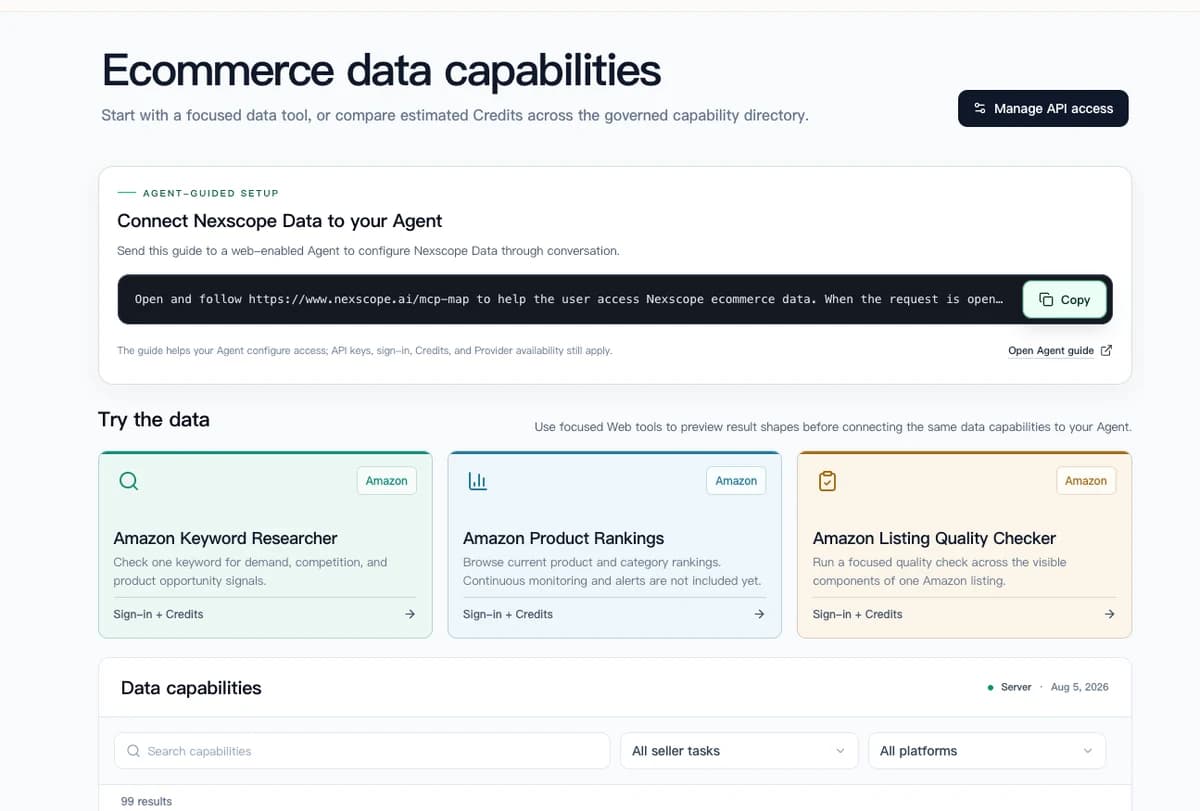
Try Nexscope Free → — 3 days free with 1,000 credits.
Common Mistakes to Avoid
Learn from others' expensive lessons:
Overbidding
Getting caught up in auction excitement. Set maximum bids beforehand and stick to them.
Ignoring Shipping Costs
A $500 pallet with $400 shipping isn't a deal. Calculate total landed cost before bidding.
Buying Blind
"Mystery pallets" rarely contain hidden treasure. Manifests exist for a reason.
Wrong Categories
Sticking to what you know. Electronics expertise doesn't transfer to clothing liquidation.
Underestimating Time
Sorting, testing, photographing, listing, packing, shipping — it adds up fast.
Storage Problems
Buying faster than you can sell leads to cash flow issues and storage nightmares.
Unrealistic Expectations
YouTube videos showing $5,000 profits from single pallets are the exception, not the rule.
Getting Started: First Pallet Checklist
Ready to try liquidation? Here's your starting checklist:
Before Buying
- [ ] Research platforms and create accounts
- [ ] Get reseller certificate (for tax exemption)
- [ ] Identify target category
- [ ] Set budget (including all costs)
- [ ] Arrange storage space
- [ ] Plan resale channels
Choosing Your First Pallet
- [ ] Start small (under $500 total cost)
- [ ] Stick to manifested lots
- [ ] Choose familiar categories
- [ ] Calculate profit potential honestly
- [ ] Read seller reviews
After Purchase
- [ ] Document everything (photos, video)
- [ ] Sort by condition immediately
- [ ] Test electronics before listing
- [ ] Price based on actual sold data
- [ ] Track every cost for analysis
Evaluate Results
- [ ] Calculate actual profit/loss
- [ ] Identify what sold vs. what didn't
- [ ] Note time investment
- [ ] Decide whether to continue
Connect Ecommerce Data to Your Agent
Use Nexscope through API, MCP, or Skills, or open a ready seller workflow.
Explore Ecommerce Data →1,000 free credits • API, MCP & Skills
Frequently Asked Questions
Is Amazon liquidation legitimate?
Yes. Amazon officially partners with liquidation platforms like B-Stock to sell returns and overstock. Many resellers build profitable businesses sourcing from these channels.
How much does an Amazon liquidation pallet cost?
Prices vary widely: $200-$500 for general merchandise, $500-$3,000+ for electronics. Add buyer's premiums (10-20%) and shipping ($200-$600) to calculate total cost.
What percentage of items are sellable?
Expect 60-80% sellable for returns pallets, 80-90% for overstock/new pallets. Salvage pallets may be 40-60% sellable.
Can I make money with Amazon liquidation?
Yes, but margins are thinner than social media suggests. Success requires careful product research, accurate cost calculation, and efficient operations. Many beginners lose money learning.
Where's the best place to buy Amazon liquidation?
B-Stock (Amazon's official partner) and Amazon Bulk Liquidations are the most reliable. Third-party liquidators like Direct Liquidation and Liquidation.com also carry Amazon inventory.
Do I need a business license?
Requirements vary by state. A reseller certificate helps avoid sales tax on purchases. Check local regulations for your situation.
Sources
- Amazon Seller Central. (2026). FBA Liquidations Program. Retrieved from sellercentral.amazon.com
- B-Stock Solutions. (2026). Amazon Liquidation Auctions. Retrieved from bstock.com
- Direct Liquidation. (2026). How to Buy Amazon Return Pallets. Retrieved from directliquidation.com