

How to Build a Profitable Amazon Private Label Business

Private label is how most successful Amazon sellers build real businesses. Instead of reselling other people's products, you create your own brand—controlling your margins, your listings, and your future.
But private label isn't easy money. It requires upfront investment, careful product selection, and the patience to build something sustainable. The sellers who fail usually skip the research phase or underestimate the competition.
This guide walks you through the entire private label process—from finding your first product to launching and scaling. No hype, just the steps that actually work.
What Is Amazon Private Label?
Amazon private label means selling products manufactured by a third party under your own brand name. You don't invent the product—you find an existing product, add your branding, and sell it as your own.
How It Differs from Other Models
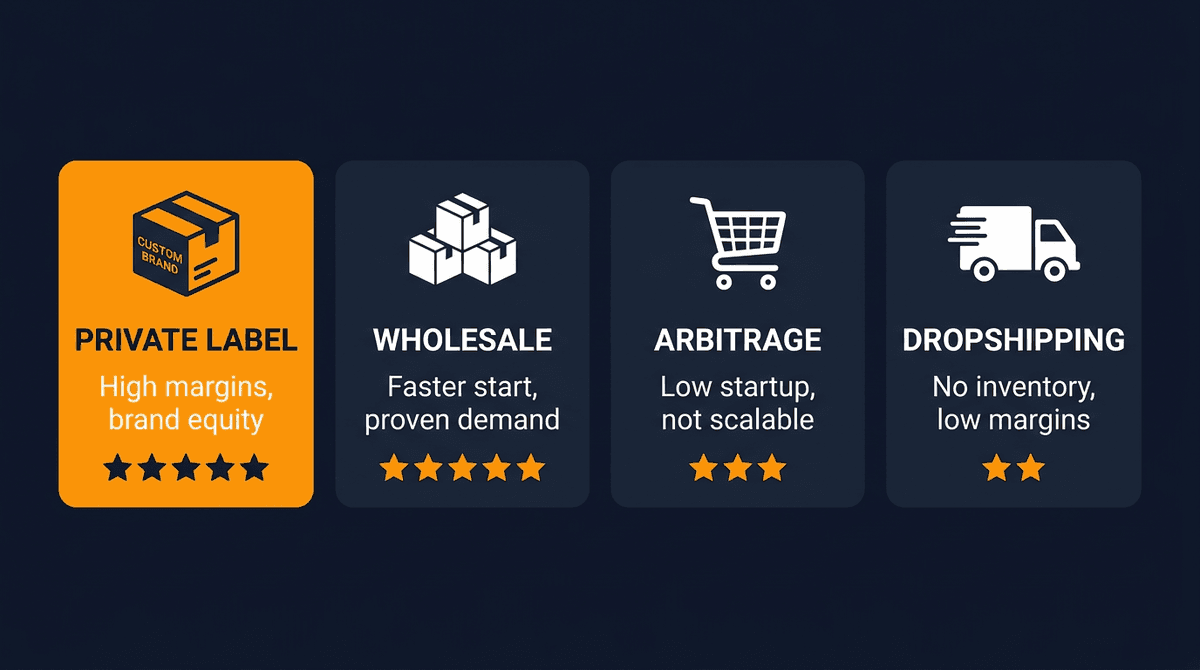
| Model | What You Sell | Pros | Cons |
|---|---|---|---|
| Private Label | Your branded products | Higher margins, brand equity, control | Upfront investment, longer setup |
| Wholesale | Other brands' products | Faster start, proven demand | Lower margins, competition on same listing |
| Retail Arbitrage | Clearance/sale items | Low startup cost | Not scalable, time-intensive |
| Dropshipping | Supplier ships direct | No inventory risk | Low margins, no quality control |
Private label sits at the intersection of effort and reward. It takes more work upfront but builds something you actually own.
Why Private Label Works on Amazon
- Buy Box ownership — You're the only seller on your listing
- Brand protection — Amazon Brand Registry protects against hijackers
- Pricing control — No race to the bottom with other sellers
- Customer loyalty — Buyers can become repeat customers of your brand
- Exit potential — Private label brands sell for 2-4x annual profit
Is Private Label Still Profitable in 2026?
Yes, but the game has changed. The easy wins are gone—you can't just slap a logo on a garlic press and expect to make money anymore.
What's Different Now
- Higher competition — More sellers, more sophisticated brands
- Rising costs — FBA fees increased, advertising costs up
- Quality expectations — Customers expect better products and packaging
- Review barriers — Getting initial reviews is harder (and more important)
What Still Works
- Niche products — Specific solutions for specific audiences
- Differentiation — Products that solve problems better than competitors
- Brand building — Sellers who invest in brand experience
- Data-driven decisions — Using tools to validate before investing
Realistic Profit Margins
Most successful private label sellers target:
- Gross margin: 30-40% after Amazon fees and COGS
- Net margin: 15-25% after advertising and overhead
- ROI timeline: 6-12 months to profitability on a new product
If your numbers don't support these margins, the product probably isn't worth pursuing.
How Much Money Do You Need to Start?
The honest answer: more than the gurus tell you, but less than you might fear.
Budget Breakdown
| Budget Level | What You Can Do | Realistic Outcome |
|---|---|---|
| $2,000-$3,000 | Single low-cost product, minimal inventory | Learning experience, possible profit |
| $5,000-$7,000 | One product done right, proper launch | Good shot at sustainable business |
| $10,000-$15,000 | Premium product or multiple SKUs | Faster scaling, more margin for error |
Where the Money Goes
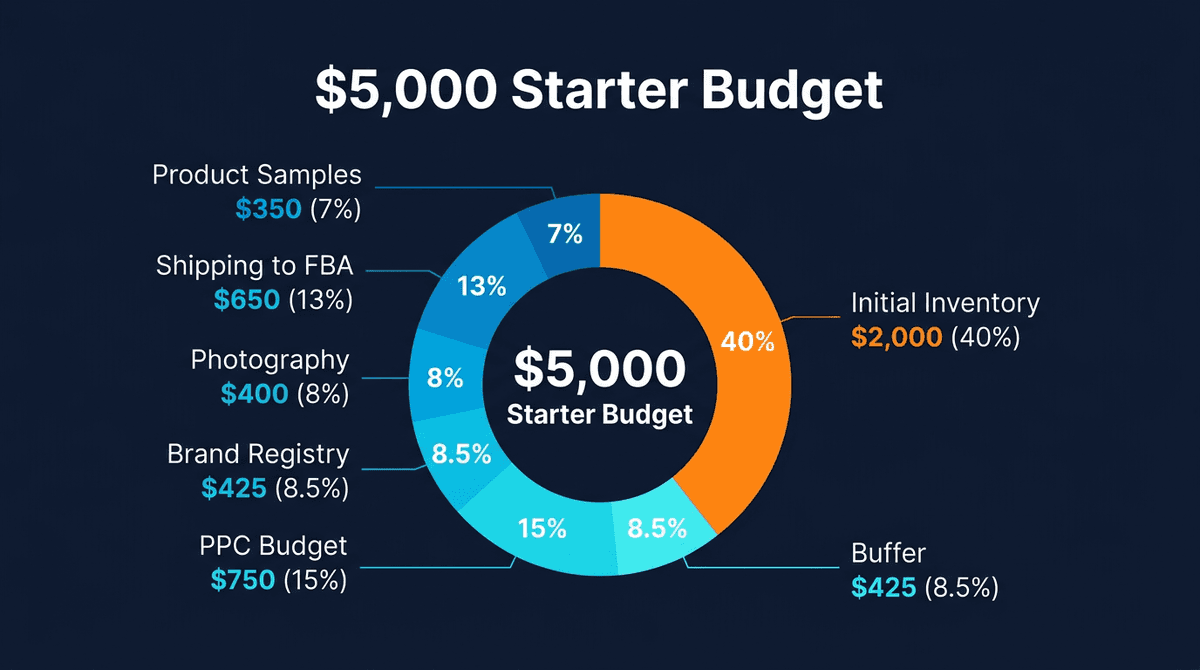
For a typical $5,000 budget:
- Product samples: $200-$500 (test 3-5 suppliers)
- Initial inventory: $1,500-$2,500 (500-1000 units)
- Shipping to Amazon: $500-$800
- Product photography: $300-$500
- Brand Registry/Trademark: $350-$500
- Launch PPC budget: $500-$1,000
- Buffer for surprises: $500
Starting with less is possible but increases risk. Starting with more gives you room to make mistakes and recover.
How to Find Private Label Product Ideas
Product selection determines 80% of your success. A great product with mediocre execution beats a mediocre product with perfect execution.
What Makes a Good Private Label Product
- Price point: $15-$50 (enough margin, impulse-buy friendly)
- Small and light: Lower FBA fees, cheaper shipping from China
- Not fragile: Fewer returns, simpler packaging
- Not seasonal: Year-round demand is more predictable
- Improvable: You can differentiate from existing products
- Low review threshold: Top sellers don't have 10,000+ reviews
Red Flags to Avoid
- Dominated by major brands (Nike, Apple, etc.)
- Patent or trademark risks
- Complex electronics (high return rates)
- Products requiring certifications (FDA, FCC)
- Categories with frequent counterfeit complaints
Where to Find Ideas
Amazon Best Sellers and Movers & Shakers
Browse subcategories in Best Sellers. Look for products where: - Multiple sellers have similar products (market is validated) - Top products have fewer than 500 reviews (opportunity exists) - Price points support good margins
Your Own Frustrations
Products you've bought that disappointed you are gold. What was wrong? Could you make it better?
Keyword research
Search volume data reveals what people want. High search volume with weak competition signals opportunity.
Validate Before You Invest
Before spending money on samples, validate demand and competition:
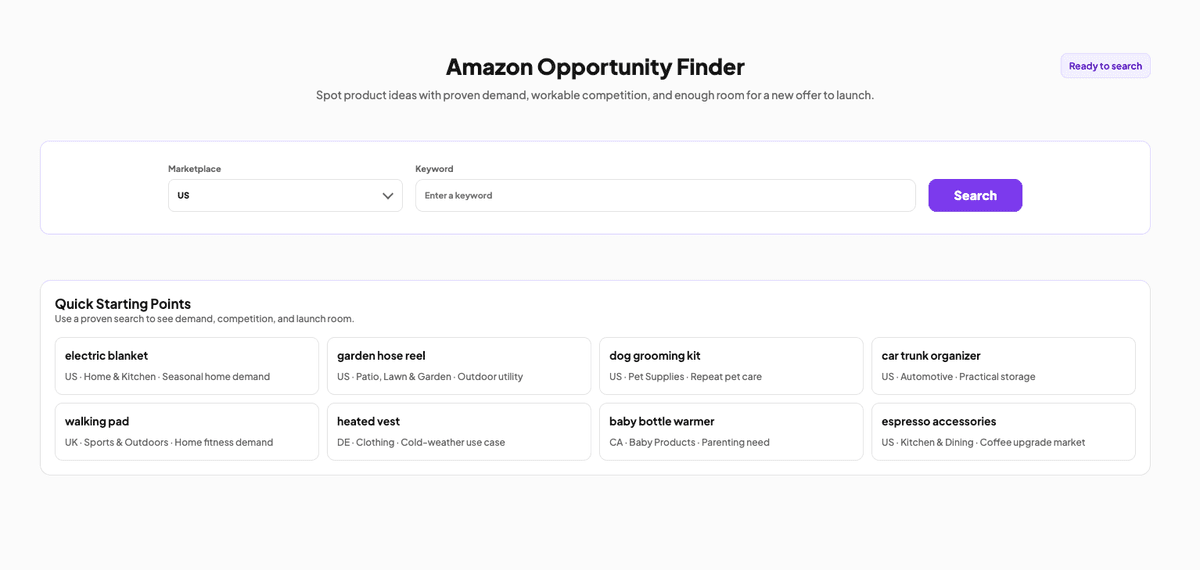
Nexscope's Opportunity Finder shows you search volume, competition levels, and estimated sales for any product keyword. Enter your idea and see if the numbers support a profitable launch.
How to Find and Vet Suppliers
Your supplier relationship can make or break your private label business. A good supplier becomes a partner; a bad one becomes a nightmare.
Where to Find Suppliers
Alibaba
The default choice for most private label sellers. Millions of suppliers, easy to use, built-in protections.
1688.com
Alibaba's Chinese-language sister site. Lower prices, but requires more effort (translation, agents).
Global Sources
Higher-quality suppliers, often more established factories. Better for premium products.
Trade Shows
Canton Fair and others let you meet suppliers in person. Worth it if you're serious about the business.
How to Vet Suppliers
Initial Screening Questions
- How long have you been manufacturing this product?
- What certifications do you have?
- Can you provide references from US/EU buyers?
- What's your MOQ and can you start smaller?
- Do you offer OEM/ODM services?
Sample Testing
Always order samples before committing to an order. Test for:
- Build quality and materials
- Packaging durability
- Accuracy to specifications
- Consistency across multiple samples
Red Flags
- Won't provide samples or wants high sample fees
- Pushy about large initial orders
- Can't answer technical questions
- No factory photos or verification
- Prices significantly below competitors
Negotiation Tips
- Get quotes from 5+ suppliers for leverage
- Ask about payment terms (30% deposit / 70% before shipping is standard)
- Negotiate on shipping, not just unit price
- Build relationship before asking for discounts
Creating Your Brand
Your brand is more than a logo—it's the perception customers have of your products and company.
Choosing a Brand Name
Good Brand Names Are:
- Easy to spell and pronounce
- Memorable and distinctive
- Available as a trademark
- Available as a .com domain
- Not too generic (hard to trademark "Best Kitchen Tools")
Check Availability
- USPTO trademark database
- Amazon Brand Registry (existing registrations)
- Domain registrars
- Social media handles
Visual Identity
Logo
Keep it simple. A clean wordmark or simple icon works better than complex designs. Budget $50-$200 on Fiverr/99designs for something professional.
Packaging
Your packaging is your first physical impression. Invest in:
- Quality materials (no flimsy boxes)
- Clear branding (logo, colors)
- Unboxing experience (inserts, thank you cards)
- Product protection (arrives undamaged)
Amazon Brand Registry
Brand Registry unlocks powerful tools:
- A+ Content (enhanced product descriptions)
- Brand Analytics (search term data)
- Sponsored Brands ads
- Protection against listing hijackers
- Brand Store (your own Amazon storefront)
Requirements: - Registered trademark (or pending application) - Brand logo on products or packaging
Timeline: Apply for trademark first (4-6 months for approval), then register with Amazon.
Listing Optimization for Private Label
Your listing is your salesperson. It needs to convince shoppers to buy in seconds. Good listing optimization can double your conversion rate.
Title Optimization
Front-load your main keyword. Include key product attributes.
Formula: Brand + Main Keyword + Key Feature + Size/Quantity + Benefit
Example: "BRANDNAME Yoga Mat 1/2 Inch Thick - Non-Slip Exercise Mat for Home Workout - 72x24 with Carrying Strap"
Product Images
Amazon allows 7+ images. Use them all:
- Main image: White background, product only
- Lifestyle image: Product in use
- Scale image: Show size relative to common objects
- Feature callouts: Highlight key benefits
- Infographic: Specs, dimensions, what's included
- Packaging: Show what arrives
- Comparison: Why you're better than alternatives
Professional photography costs $200-$500 but pays for itself in conversion rate.
Bullet Points
Each bullet should: - Start with a BENEFIT in caps - Include relevant keywords naturally - Address a specific customer concern or question - Stay under 500 characters
A+ Content
Use A+ Content to: - Tell your brand story - Show additional use cases - Provide comparison charts - Answer common questions visually
Listings with A+ Content convert 3-10% better than those without.
Backend Keywords
Fill the 249-byte search terms field with: - Synonyms you didn't use in visible content - Common misspellings - Spanish translations - Related terms
Launch Strategy
Launching a private label product requires momentum. Amazon's algorithm favors products that sell well early.
Pre-Launch Checklist
- [ ] Inventory received at FBA
- [ ] Listing optimized and live
- [ ] A+ Content approved
- [ ] PPC campaigns drafted
- [ ] Review strategy planned
Pricing Strategy
Launch Pricing
Consider launching 15-20% below your target price to: - Encourage initial sales - Generate reviews faster - Build sales velocity
Raise prices gradually as reviews accumulate.
PPC Campaign Structure
Start with three campaign types:
Auto Campaign
Let Amazon find keywords. Set modest bids ($0.50-$0.75) and harvest data.
Manual Exact Match
Target your top 10-15 researched keywords with higher bids.
Manual Broad/Phrase Match
Discover additional keywords at lower bids.
Budget: Start with $20-$50/day total across campaigns. Adjust based on ACoS.
Getting Reviews (The Right Way)
Amazon's Terms of Service prohibit incentivized reviews. Legal methods include:
- Amazon Vine: Costs $200 but gets you up to 30 reviews
- Request a Review button: Use for every order
- Product inserts: Ask for feedback (not specifically reviews)
- Great product: Products people love get reviewed organically
Early reviews matter more for ranking than review velocity later.
Common Private Label Mistakes to Avoid
Learn from others' expensive lessons:
-
Skipping product research — Gut feeling isn't data. Validate everything.
-
Choosing oversaturated markets — If the top 10 products all have 5,000+ reviews, find another niche.
-
Underestimating competition — Your competitors have more experience and data than you. Respect that.
-
Ordering too much inventory — Start with 500-1,000 units. Scale after proving demand.
-
Ignoring product differentiation — "Same but cheaper" isn't a strategy. What makes yours better?
-
Skimping on photos — Professional images convert. iPhone photos don't.
-
Launching without PPC budget — Organic ranking takes time. PPC bridges the gap.
-
Expecting overnight success — Most products take 3-6 months to stabilize. Plan accordingly.
Conclusion
Building an Amazon private label business is straightforward but not easy. The sellers who succeed:
- Research thoroughly before investing
- Choose products where they can genuinely differentiate
- Treat it as a real business, not a side hustle
- Invest in brand assets that compound over time
- Stay patient through the inevitable early struggles
Start with one product. Validate relentlessly. Launch with a plan. Learn from the data. Then scale what works.
The opportunity is still there—it just rewards preparation over luck now.
Scale Your Private Label Research with Nexscope
Nexscope provides structured ecommerce data and focused seller workflows. Teams can use Nexscope's web tools directly or connect governed capabilities to their existing Agent through API, MCP, or Skills. Ready workflows include Keyword to Ads, Video Clone, and Buy Box Repricer.
Key Features
- Agent-ready access — Connect ecommerce capabilities through API, MCP, or Skills
- Live data — Real-time pulls from Amazon, TikTok Shop, Jungle Scout, Keepa, eBay, Walmart, Google Trends
- Product validation — Check demand, competition, and margins before investing
- Competitor analysis — See what's working for top sellers in any niche
- Context memory — Remembers your niche, products, and past research
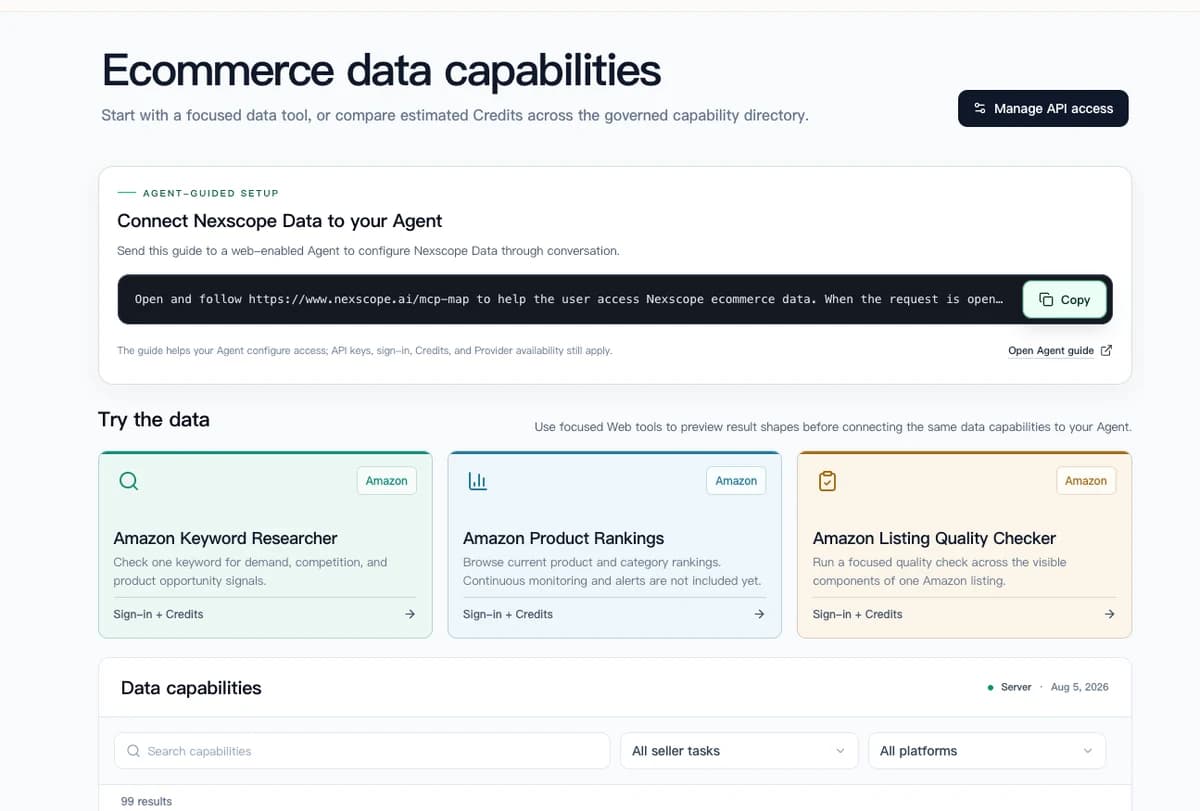
Stop guessing which products are worth pursuing. Let Nexscope validate your private label ideas with real data.
Connect Ecommerce Data to Your Agent
Use Nexscope through API, MCP, or Skills, or open a ready seller workflow.
Explore Ecommerce Data →FAQ
How much does it cost to start an Amazon private label business?
Most sellers need $3,000-$7,000 to launch properly. This covers product samples ($200-$500), initial inventory ($1,500-$2,500), shipping to FBA ($500-$800), photography ($300-$500), trademark/Brand Registry ($350-$500), and launch PPC budget ($500-$1,000). Starting with less is possible but riskier; starting with more gives you room for mistakes.
How long does it take to make money with private label?
Expect 6-12 months to reach consistent profitability on your first product. The first 1-3 months typically involve product research and sourcing. Months 3-6 cover launch and optimization. Most sellers see positive monthly cash flow around month 6-9, with full ROI recovery by month 12. Subsequent products launch faster because you've built systems and supplier relationships.
Is Amazon private label still worth it in 2026?
Yes, but it requires more sophistication than before. Easy wins are gone—you can't just relabel generic products anymore. Success now requires genuine differentiation, quality branding, and data-driven decisions. Sellers who treat it as a real business still build profitable brands; those looking for quick money usually fail.
What products should I avoid for private label?
Avoid products dominated by major brands, items with patent/trademark risks, complex electronics (high returns), products requiring FDA or FCC certification, fragile items prone to shipping damage, and seasonal products unless you can handle inventory timing. Also avoid categories where top sellers have 5,000+ reviews—breaking in is nearly impossible.
How do I find a reliable supplier for private label products?
Start on Alibaba with Trade Assurance suppliers. Contact 10+ suppliers, ask detailed questions about experience and certifications, and order samples from your top 3-5. Test samples for quality, consistency, and packaging durability. Build relationships gradually—don't commit to large orders until you've verified they deliver quality consistently. Consider inspection services for your first shipments.
Do I need a trademark for Amazon private label?
Not to start, but yes for long-term success. Amazon Brand Registry—which requires a registered trademark—unlocks A+ Content, Brand Analytics, Sponsored Brands ads, and protection against hijackers. Apply for your trademark early (it takes 4-6 months) so it's ready when you need it. Budget $350-$500 for USPTO filing.
How many products should I launch at once?
One. Focus all your energy and budget on validating a single product first. Launching multiple products splits your attention and capital, increasing the chance that all of them fail. Once your first product is profitable and stable (usually 4-6 months), use those profits and learnings to launch product two.
What's a good profit margin for private label products?
Target 30-40% gross margin after Amazon fees and cost of goods sold. After advertising and overhead, aim for 15-25% net margin. If your numbers don't support at least 25% gross margin, the product probably isn't viable—rising fees or competition will eliminate your profit. Always calculate margins before ordering inventory.
Sources
- Jungle Scout. (2026). State of the Amazon Seller Report. Retrieved from junglescout.com
- Amazon Seller Central. (2026). Brand Registry Program Guidelines. Retrieved from sellercentral.amazon.com
- Helium 10. (2026). Private Label Success Guide. Retrieved from helium10.com
- SellerApp. (2026). Amazon FBA Private Label 101. Retrieved from sellerapp.com
- Amazon. (2026). FBA Fee Schedule. Retrieved from sellercentral.amazon.com