

How to Sell Books on Amazon: Complete Guide for Beginners

Selling books on Amazon is one of the easiest ways to start an e-commerce business. You don't need to create products, negotiate with manufacturers, or build a brand from scratch. Books are everywhere — thrift stores, library sales, garage sales, your own bookshelf — and Amazon has millions of buyers looking for them.
Whether you want to clear out your personal collection or build a full-time book reselling business, this guide covers everything you need to know: how to find profitable books, list them correctly, price competitively, and choose between FBA and merchant fulfillment.
Why Sell Books on Amazon?
Books remain one of the most accessible product categories for new sellers:
Low Barrier to Entry
If you're already exploring how to make money on Amazon, books are one of the easiest starting points.
- No minimum investment — Start with books you already own
- No product research needed — Every book has an existing market
- No brand approval required — Most books are ungated
- Easy to source — Available everywhere at low cost
Proven Demand
Amazon started as a bookstore. Books still drive massive volume:
- Over 30 million book titles listed on Amazon
- Consistent year-round demand
- Textbooks spike every semester
- Collectors pay premium prices for rare editions
Multiple Business Models
You can sell books in several ways:
- Casual selling — Clear your personal collection
- Retail arbitrage — Buy cheap, sell higher
- Textbook flipping — Semester-based inventory
- Rare book hunting — High-margin collectibles
- Wholesale — Bulk purchasing from distributors
Types of Books You Can Sell
Understanding book categories helps you focus on what's profitable.
Used Books
The bread and butter of book reselling:
- Novels and fiction
- Non-fiction and self-help
- Biographies and memoirs
- Cookbooks
- Art and photography books
Condition matters. Amazon has strict condition guidelines — misrepresenting condition leads to returns and negative feedback.
Textbooks
High-value, high-demand category with seasonal patterns:
- College textbooks (highest margins)
- K-12 educational materials
- Test prep books (SAT, GRE, MCAT)
- Professional certification guides
Timing is everything. Buy textbooks after semester ends (May, December), sell before classes start (August, January).
New Books
If you have access to wholesale or publisher accounts:
- Bulk purchases at discount
- Remainders and overstock
- Publisher direct relationships
Collectible and Rare Books
For experienced sellers willing to learn valuation:
- First editions
- Signed copies
- Out-of-print titles
- Vintage and antique books
How to Find Books to Sell
Sourcing is where book sellers make or lose money.
Thrift Stores
Goodwill, Salvation Army, and local thrift shops are goldmines:
- Books typically $1-3 each
- Donations include valuable titles mixed with junk
- Regular restocking means new inventory weekly
- Build relationships with staff for early access
Library Sales
Libraries sell donated and withdrawn books:
- Annual sales offer bulk pricing
- "Bag sales" at end of events ($5-10 fills a bag)
- Quality varies — check carefully
- Some libraries have ongoing book sales
Garage and Estate Sales
Hit or miss, but can yield rare finds:
- Estate sales often have better quality
- Arrive early for best selection
- Negotiate bulk discounts
- Watch for collections (all books from one topic)
Book Wholesalers
For scaling beyond retail arbitrage:
- Bulk lots of sorted books
- Liquidation pallets
- Library discard programs
- Publisher overstock
Online Arbitrage
Similar to retail arbitrage, you can buy online and resell on Amazon:
- Other booksellers clearing inventory
- eBay lots
- Facebook Marketplace
- Craigslist bundles
Your Own Collection
Start with what you have:
- Books you've read and won't reread
- Gifts you never opened
- Textbooks from school
- Inherited collections
Essential Tools for Book Sellers
Scanning Apps
The most important tool for book sellers. Scan barcodes to instantly check Amazon prices and sales rank.
Popular options:
- Amazon Seller App — Free, built-in scanner
- ScoutIQ — Advanced data, profit calculations
- BookScouter — Compares buyback prices
- Scan Power — Detailed sales history
What to Look For When Scanning
When you scan a book's barcode, check:
- Sales Rank — Lower is better (under 1 million for books)
- Current Price — What are other sellers charging?
- Number of Sellers — High competition means lower margins
- FBA vs MF Prices — FBA commands premium pricing
- Condition of Competing Offers — Can you beat them?
Pricing Software
For managing large inventories:
- RepricerExpress — Automated repricing
- BQool — Rule-based price adjustments
- Informed.co — AI-powered repricing
Listing Tools
Speed up the listing process:
- AccelerList — Batch listing for books
- InventoryLab — Listing plus accounting
- Turbo Lister — Bulk upload capability
How to List Books on Amazon
Step 1: Create Your Seller Account
If you don't have one already:
- Go to sell.amazon.com
- Choose Individual ($0.99/sale) or Professional ($39.99/month)
- Provide business information
- Set up payment method
- Complete identity verification
Recommendation: Start with Individual if selling fewer than 40 books/month. Switch to Professional as volume grows.
Step 2: Find the Book's Product Page
Every book has an existing Amazon listing. You're adding your offer to it.
Find the listing by:
- Scanning the barcode with Amazon Seller App
- Searching by ISBN (10 or 13 digit)
- Searching by title and author
Step 3: Select Condition
Amazon has specific condition guidelines for books:
New
- Original packaging (if applicable)
- No marks, highlights, or damage
- Includes all original materials
Like New
- No visible wear
- No marks or highlights
- Dust jacket intact (if originally included)
Very Good
- Minimal wear
- May have minor marks
- Spine intact, pages clean
Good
- Average used condition
- May have highlights or notes
- All pages present and readable
Acceptable
- Heavy wear but complete
- Significant highlighting or notes
- Still fully readable
Be conservative. Overgrading leads to returns and negative feedback. When in doubt, grade down.
Step 4: Set Your Price
Pricing strategy depends on your fulfillment method and competition:
Check competitor prices: - Lowest FBA price - Lowest MF price - Buy Box price
Factor in your costs: - Acquisition cost - Amazon fees - Shipping (if MF) - Desired profit margin
Step 5: Choose Fulfillment Method
Fulfillment by Amazon (FBA): - Ship books to Amazon warehouse - Amazon handles storage, shipping, returns - Prime eligibility increases sales - Higher fees but higher prices
Merchant Fulfilled (FBM/MF): - Store books yourself - Ship directly to customers - Lower fees, more control - No Prime badge
FBA vs Merchant Fulfilled: Which to Choose?
This decision significantly impacts your profitability.
When to Use FBA
FBA works best for:
- Fast-selling books — Sales rank under 100,000
- Higher-priced items — $15+ selling price
- Textbooks in season — Quick turnover expected
- Limited storage space — Let Amazon store inventory
FBA advantages: - Prime eligibility (more sales) - Higher selling prices - Hands-off fulfillment - Better Buy Box chances
When to Use Merchant Fulfillment
MF works best for:
- Slow-selling books — Sales rank over 500,000
- High-value rare books — Worth the personal handling
- Low-priced items — FBA fees eat the margin
- Oversized books — FBA fees are expensive for large items
MF advantages: - Lower fees - No storage fees - Keep rare books accessible - No inbound shipping costs
The Hybrid Approach
Most successful book sellers use both:
- FBA for fast movers and textbooks
- MF for slow sellers and high-value items
- Evaluate each book individually
Understanding Amazon Book Selling Fees
Referral Fee
Amazon takes a percentage of each sale:
- Books: 15% of total sale price
- Minimum $0.30 per item
Variable Closing Fee
Additional fee for media items:
- Books: $1.80 per item sold
FBA Fees (If Using FBA)
Fulfillment fees based on size and weight:
| Size | Weight | Fee (2026) |
|---|---|---|
| Small Standard | Up to 12 oz | $3.06 |
| Large Standard | Up to 16 oz | $3.68 |
| Large Standard | 1-2 lb | $4.90 |
| Large Standard | 2-3 lb | $5.65 |
Plus monthly storage fees: - Standard: $0.78/cubic foot (Jan-Sep), $2.40/cubic foot (Oct-Dec)
Example Fee Calculation
Selling a book for $15 via FBA:
| Fee Type | Amount |
|---|---|
| Referral Fee (15%) | $2.25 |
| Variable Closing Fee | $1.80 |
| FBA Fulfillment | $3.68 |
| Total Fees | $7.73 |
| Your Payout | $7.27 |
If you paid $2 for the book, your profit is $5.27.
Pricing Strategies for Books
Competitive Pricing
Match or beat the lowest price in your condition tier:
- Check FBA and MF prices separately
- Don't compete with MF if you're FBA (different markets)
- Update prices regularly as competition changes
Value-Based Pricing
For rare or unique items:
- Research completed sales
- Check collector forums
- Consider book's specific attributes (signatures, editions)
Repricing Rules
If using repricing software:
- Set minimum price (floor) to protect margins
- Match FBA to FBA, MF to MF
- Don't race to the bottom — slow sellers still sell
When to Lower Prices
- Book has been listed 30+ days with no sale
- New lower-priced competition appears
- End of textbook season approaching
- Storage fees becoming significant
Tips for Selling Books Successfully
Focus on Profitable Niches
Some categories consistently perform better:
- Textbooks — High margins, seasonal demand
- Technical/Professional — IT, medical, legal
- Test Prep — Steady demand throughout year
- Niche Non-Fiction — Specific hobbies, industries
- Signed/First Editions — Premium pricing
Avoid Common Pitfalls
Don't buy: - Mass market paperbacks (low margins) - Book club editions (low value) - Ex-library books (unless rare) - Water-damaged or moldy books - Outdated textbook editions
Build Systems
As you scale:
- Create sourcing routes (regular thrift store visits)
- Batch similar tasks (list all books at once)
- Track profitability by source
- Develop condition grading consistency
Manage Inventory Age
Books sitting too long cost money:
- Track days listed
- Reprice stale inventory
- Consider liquidating non-sellers
- Avoid FBA storage fees on slow movers
Finding Profitable Books to Sell
Success in book selling comes down to finding the right inventory. Understanding market demand helps you spot opportunities others miss.
Nexscope provides structured ecommerce data and focused seller workflows. Teams can use Nexscope's web tools directly or connect governed capabilities to their existing Agent through API, MCP, or Skills. Ready workflows include Keyword to Ads, Video Clone, and Buy Box Repricer.
Try prompts like:
"What types of books are trending on Amazon right now?"
"What makes a book valuable to collectors?"
"What are the best categories for reselling used items?"
Understanding what buyers want helps you source smarter — whether you're scanning at thrift stores or evaluating bulk lots.
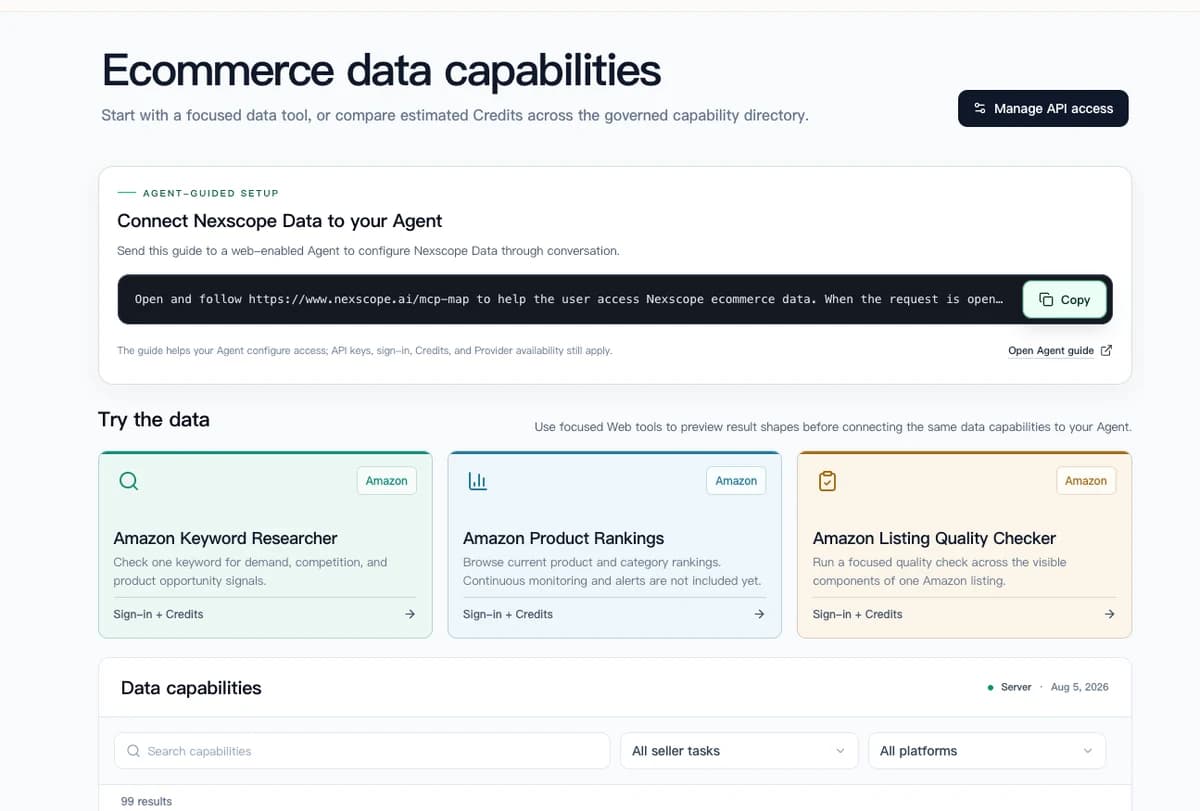
Try Nexscope Free → — 3 days free with 1,000 credits.
Connect Ecommerce Data to Your Agent
Use Nexscope through API, MCP, or Skills, or open a ready seller workflow.
Explore Ecommerce Data →1,000 free credits • API, MCP & Skills
Frequently Asked Questions
How much money can you make selling books on Amazon?
Income varies widely. Casual sellers make a few hundred dollars clearing personal collections. Part-time resellers often earn $500-2,000/month. Full-time book sellers with developed sourcing and systems can earn $5,000-15,000/month or more.
Do you need a business license to sell books on Amazon?
Requirements vary by location. Amazon doesn't require a license to open a seller account, but your state or city might require a business license or sales tax permit. Check local regulations as you scale.
Is selling books on Amazon still profitable in 2026?
Yes, but margins have tightened. Success requires efficient sourcing, smart pricing, and choosing the right fulfillment method for each book. High-volume, low-margin approaches are harder — focus on finding books with real profit potential.
What's the best app for scanning books?
The free Amazon Seller App works for beginners. As you scale, paid apps like ScoutIQ or Scan Power provide more data (sales history, keepa graphs, profit calculations) that help make faster, better sourcing decisions.
Should I use FBA or ship books myself?
Use FBA for fast-selling books (sales rank under 100,000) priced above $15. Use merchant fulfillment for slow sellers, rare books, and low-priced items where FBA fees eat your margin.
How do I find books to sell?
Start with thrift stores, library sales, and garage sales. Scan barcodes to check prices and sales rank before buying. As you learn what sells, you'll develop an eye for profitable books without scanning everything.
Sources
- Amazon Seller Central. (2026). How to sell books online. Retrieved from sell.amazon.com
- Amazon Seller Central. (2026). 2026 US Referral and FBA fee changes. Retrieved from sellercentral.amazon.com
- Amazon Seller Central. (2026). Condition guidelines for books. Retrieved from sellercentral.amazon.com