
How to Start Dropshipping in 2026: Complete Beginner's Guide

Dropshipping remains one of the lowest-barrier entry points into e-commerce. No inventory to purchase upfront, no warehouse to manage, no products to ship. When a customer places an order, the supplier ships directly to them. The seller's job is marketing and customer experience.
But low barrier does not mean easy. Most dropshipping stores fail within the first year due to poor supplier selection, thin margins, or ineffective marketing. This guide covers the complete process of starting a dropshipping business that actually makes money in 2026.
What Is Dropshipping?
Dropshipping is a retail fulfillment method where the store does not keep products in stock. Instead, when a customer places an order, the store purchases the item from a third-party supplier who ships it directly to the customer.
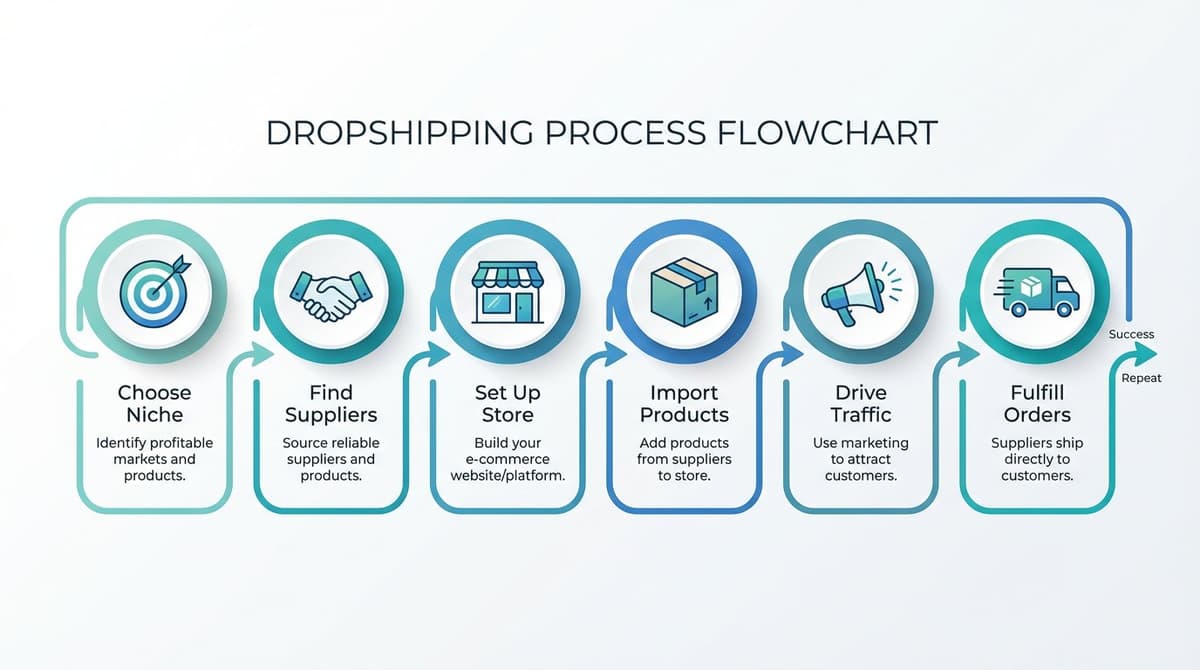
How Dropshipping Works
- Customer places order on your online store
- You forward the order to your supplier (manually or automatically)
- Supplier ships product directly to the customer
- You keep the difference between retail price and supplier cost
The store owner never touches the product. Profit comes from the markup between wholesale and retail prices, minus platform fees and marketing costs.
Dropshipping vs Traditional E-commerce
| Factor | Dropshipping | Traditional E-commerce |
|---|---|---|
| Startup Cost | $100-500 | $5,000-50,000+ |
| Inventory Risk | None | High |
| Profit Margins | 10-30% | 30-50%+ |
| Shipping Control | Limited | Full |
| Scalability | Easy to scale products | Requires capital for inventory |
| Brand Building | Harder (generic packaging) | Easier (custom branding) |
Dropshipping works best for testing product ideas, entering new markets, and building initial cash flow before transitioning to private label or wholesale models.
Step 1: Choose Your Niche
The niche determines everything — supplier options, competition level, and profit potential. A good dropshipping niche has:
Characteristics of Profitable Niches
- Passion-driven buyers — Hobbyists spend more and return less
- Problem-solving products — Items that fix specific pain points
- Not easily available locally — Unique items people cannot buy at Walmart
- $15-200 price range — High enough margin, low enough for impulse buys
- Lightweight — Reduces shipping costs and damage risk
Niches to Avoid
- Electronics — High return rates, warranty issues, fast obsolescence
- Fragile items — Breakage during shipping destroys margins
- Trademarked products — Legal risk from counterfeit claims
- Oversaturated categories — Generic phone cases, basic jewelry
How to Validate a Niche
- Check Google Trends for demand stability
- Search AliExpress for supplier availability and pricing
- Analyze competition on Shopify stores and Amazon
- Calculate potential margins after all costs
💡 Pro Tip: Use AI-powered keyword research to find trending niches faster. Install the amazon-keyword-research skill to analyze search demand across categories:
npx skills add nexscope-ai/Amazon-Skills --skill amazon-keyword-research -g
Step 2: Find Reliable Suppliers
Supplier quality determines customer experience. Late shipments, wrong items, and poor packaging destroy reviews and repeat business.
Top Dropshipping Supplier Platforms
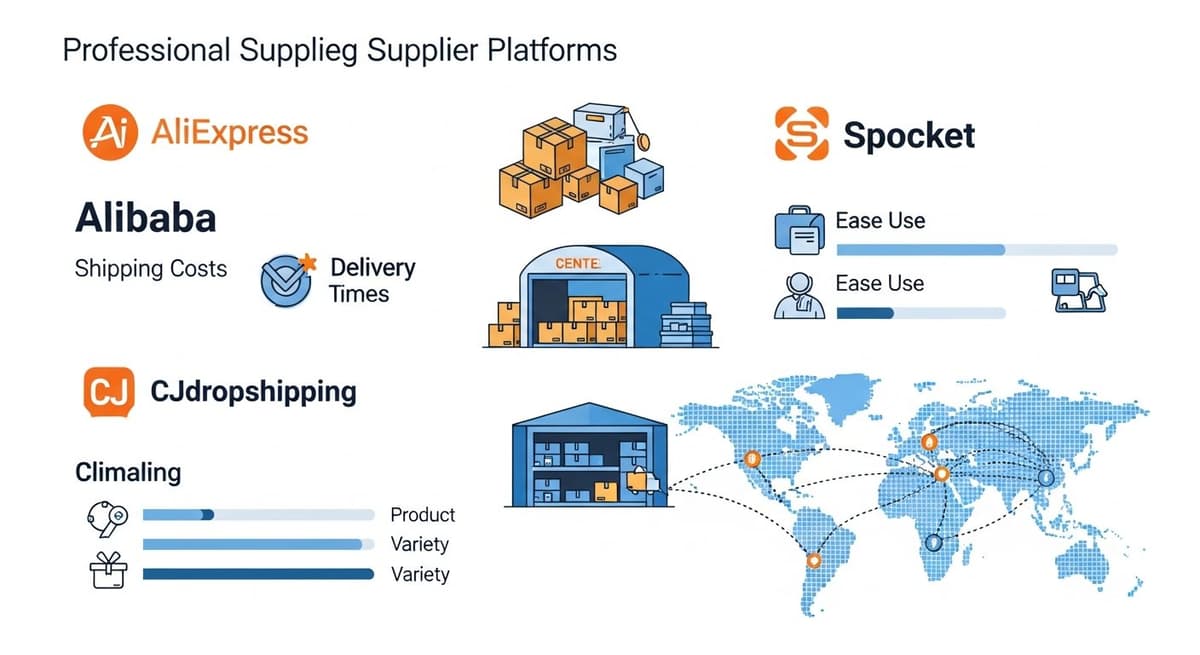
AliExpress
The most popular platform for beginners. Millions of products, no MOQ, buyer protection.
- Pros: Huge selection, easy integration with Shopify
- Cons: Long shipping times (7-30 days), inconsistent quality
- Best for: Testing products before committing to bulk orders
CJDropshipping
Warehouse and fulfillment service with faster shipping options.
- Pros: US/EU warehouses, custom packaging, quality inspection
- Cons: Higher prices than direct AliExpress
- Best for: Scaling after product validation
Spocket
Curated suppliers from US and Europe with 2-5 day shipping.
- Pros: Fast delivery, vetted suppliers, Shopify integration
- Cons: Limited product selection, higher costs
- Best for: Stores targeting US/EU customers who expect fast shipping
Zendrop
Automated fulfillment with branding options.
- Pros: Private labeling, fast processing, good support
- Cons: Monthly fees for premium features
- Best for: Brand-focused dropshippers
How to Vet a Supplier
Before committing to any supplier:
- Order samples — Test product quality, packaging, and shipping time
- Check response time — Message the supplier with questions
- Read reviews — Look for patterns in complaints
- Verify photos — Request real product images, not stock photos
- Test customer service — Simulate a problem and see how they respond
Step 3: Set Up Your Store
The store platform affects functionality, fees, and growth potential.
Platform Comparison
| Platform | Monthly Cost | Transaction Fees | Best For |
|---|---|---|---|
| Shopify | $29-299 | 2.9% + 30¢ | Most dropshippers |
| WooCommerce | $0 (hosting extra) | Varies by gateway | Technical users |
| BigCommerce | $29-299 | 2.9% + 30¢ | High-volume stores |
| Wix | $27-59 | 2.9% + 30¢ | Simple stores |
Shopify dominates dropshipping due to its app ecosystem. DSers, Spocket, and other dropshipping apps integrate natively.
Essential Store Pages
- Homepage — Clear value proposition, featured products
- Product pages — Detailed descriptions, multiple images, reviews
- About page — Brand story (builds trust)
- Contact page — Email, chat support option
- Shipping policy — Realistic delivery timeframes
- Return policy — Clear process for refunds/exchanges
- Privacy policy — Legal requirement for collecting customer data
Step 4: Import Products and Set Pricing
Product Import Tools
- DSers — Official AliExpress dropshipping tool, replaces Oberlo
- Spocket — One-click import from US/EU suppliers
- CJDropshipping App — Direct integration with CJ warehouse
Pricing Formula
Retail Price = (Product Cost + Shipping) × Markup Multiplier

Example:
Product cost: $8
Shipping: $4
Total cost: $12
Markup: 2.5x
Retail price: $30
Profit per sale: $18 (before ads)
Pricing Considerations
- Competitor pricing — Check similar products on Amazon and other stores
- Perceived value — Higher prices can signal quality
- Ad costs — Factor in $5-15 per acquisition for paid traffic
- Platform fees — Shopify Payments takes ~3%
A healthy dropshipping margin after all costs is 15-25%.
Step 5: Drive Traffic
No traffic means no sales. Dropshipping stores typically rely on paid advertising to start.
Paid Traffic Channels
Facebook/Instagram Ads
- Best for visual products, lifestyle niches
- Start with $20-50/day testing budgets
- Use video ads for higher engagement
TikTok Ads
- Lower CPMs than Facebook, younger audience
- Short-form video performs best
- Growing platform for e-commerce
Google Shopping
- Higher intent traffic (people actively searching)
- Better for known products, higher price points
- Requires product feed setup
Free Traffic Strategies
SEO
- Optimize product pages for long-tail keywords
- Create blog content around your niche
- Build backlinks through outreach
Social Media
- Build organic following on TikTok/Instagram
- User-generated content and reviews
- Influencer partnerships (micro-influencers are cost-effective)
Email Marketing
- Capture emails with discount popups
- Abandoned cart sequences
- Post-purchase upsells
Step 6: Fulfill Orders and Handle Customer Service
Order Fulfillment Process
- Customer places order → You receive notification
- Place order with supplier (automated with DSers/Spocket)
- Supplier ships and provides tracking
- Update customer with tracking information
- Follow up after delivery for review request
Handling Common Issues
| Issue | Solution |
|---|---|
| Late delivery | Proactive communication, partial refund offer |
| Wrong item | Full refund + let customer keep item (often cheaper than return) |
| Damaged product | Replacement or refund, file claim with supplier |
| Customer wants return | Evaluate cost of return vs refund |
Good customer service turns problems into loyalty. Respond within 24 hours, offer solutions, and follow up.
Common Dropshipping Mistakes to Avoid
1. Choosing Products Based on Margin Alone
High margins mean nothing if the product does not sell. Validate demand before committing.
2. Underestimating Shipping Times
Setting expectations incorrectly leads to chargebacks and negative reviews. Be honest about delivery windows.
3. Ignoring Product Quality
One bad product destroys your store's reputation. Always order samples first.
4. Scaling Too Fast
Profitability at $100/day does not guarantee profitability at $1,000/day. Scale gradually and monitor metrics.
5. No Brand Differentiation
Selling the same products with the same images as 100 other stores creates a race to the bottom. Add value through content, bundling, or customer experience.
Is Dropshipping Still Profitable in 2026?
Dropshipping is harder than five years ago. More competition, smarter consumers, and higher ad costs have squeezed margins. But profitable stores still exist.
What Works Now
- Niche specialization — Deep expertise in one category
- Faster shipping — US/EU warehouse suppliers
- Brand building — Custom packaging, consistent messaging
- Content marketing — Organic traffic reduces ad dependency
- Product differentiation — Bundles, variations, exclusive items
Realistic Expectations
- Month 1-3: Testing products, likely losing money on ads
- Month 4-6: Finding winning products, approaching break-even
- Month 6-12: Scaling winners, building repeat customers
- Year 2+: Brand development, transitioning to private label
Conclusion
Dropshipping in 2026 is not a get-rich-quick scheme — it is a legitimate business model that rewards preparation, persistence, and smart execution. The sellers who succeed focus on niche selection, supplier quality, and customer experience rather than chasing trends.
Start small, test products before scaling, and treat every customer interaction as a chance to build your brand. The initial months will be challenging, but the skills learned apply to any e-commerce business model.
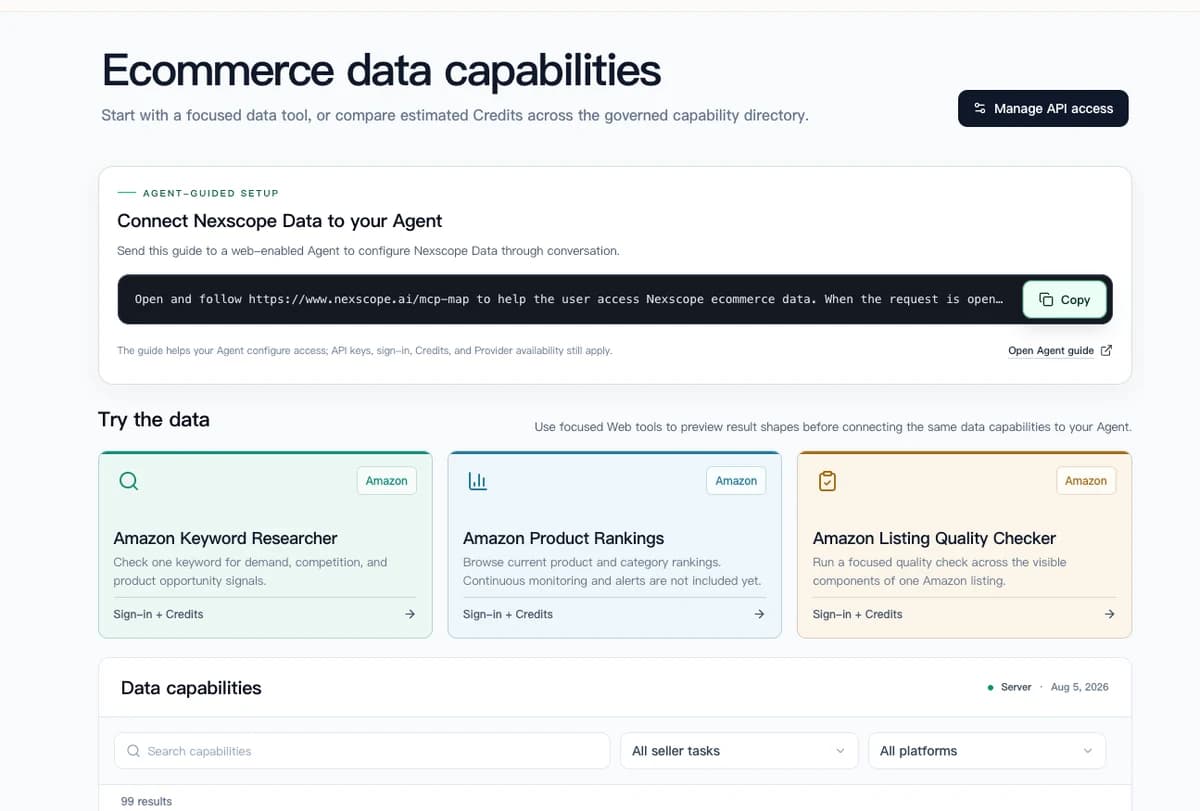
Nexscope provides structured ecommerce data that teams can use in focused web tools or connect to their existing Agent through API, MCP, or Skills. Ready workflows include Keyword to Ads, Video Clone, and Buy Box Repricer.
Developers can also access individual skills through Nexscope SkillHub for integration into any AI coding agent.
Connect Ecommerce Data to Your Agent
Use Nexscope through API, MCP, or Skills, or open a ready seller workflow.
Explore Ecommerce Data →1,000 free credits • API, MCP & Skills
FAQs
Is dropshipping still profitable in 2026?
Yes, but it requires more effort than before. Successful dropshippers focus on niche specialization, faster shipping through US/EU warehouses, and building a real brand rather than selling generic products.
How much money do I need to start dropshipping?
Most dropshipping businesses can start with $100-500. This covers platform fees (Shopify ~$29/month), domain name, and initial advertising budget. No inventory investment required.
What are the best dropshipping suppliers?
For beginners: AliExpress (huge selection, no MOQ). For scaling: CJDropshipping (faster shipping, quality control). For US/EU markets: Spocket (local suppliers, 2-5 day delivery).
How long does dropshipping shipping take?
Standard AliExpress shipping: 15-45 days. ePacket: 7-20 days. US/EU warehouse suppliers (Spocket, CJDropshipping): 2-7 days. Always set realistic expectations with customers.
Can I dropship on Amazon?
Yes, but Amazon has strict policies. You must be the seller of record, cannot use Amazon packaging from another retailer, and must handle all customer service. Many sellers prefer Shopify for dropshipping due to fewer restrictions.
What products should I avoid dropshipping?
Avoid: electronics (high returns, warranty issues), fragile items (breakage), trademarked products (legal risk), oversaturated niches (phone cases, basic jewelry), and items with thin margins under $15.
Sources
- Shopify: How to Start a Dropshipping Business
- Oberlo: Dropshipping Statistics
- BigCommerce: Dropshipping Guide