

What Is GEO? The New SEO for AI Search

GEO (Generative Engine Optimization) is the practice of optimizing your content and brand presence to appear in AI-generated responses—from ChatGPT, Google AI Overviews, Gemini, Perplexity, and other AI-powered search systems.
Think of it as SEO for AI search. Instead of competing for page 1 rankings, you're competing to be the brand that AI recommends when users ask questions.
For e-commerce brands, especially Shopify store owners building their own brand, GEO is becoming as important as traditional SEO. When someone asks ChatGPT "what's the best sustainable yoga mat," it doesn't show 10 blue links—it recommends specific brands. If your brand isn't in that answer, you just lost a potential customer.
What Is GEO (Generative Engine Optimization)?
GEO stands for Generative Engine Optimization. It's the practice of optimizing your content presence to appear in responses generated by AI-powered search systems.
Note: You may also see this called AEO (Answer Engine Optimization) or LLMO (LLM Optimization). These terms are often used interchangeably. GEO and AEO both refer to optimizing for AI-powered systems that generate answers rather than just links.
These systems include:
- ChatGPT — OpenAI's conversational AI
- Google AI Overviews — AI-generated summaries at the top of Google search results
- Google Gemini — Google's multimodal AI assistant
- Perplexity — AI-powered answer engine
- Claude — Anthropic's AI assistant
- Microsoft Copilot — AI integrated into Bing and Microsoft products
The Core Concept
With traditional SEO, you compete to rank at the top of search results. With GEO, you compete to be part of the AI's answer.
When a user asks an AI assistant a question, the AI doesn't just retrieve a list of websites. It synthesizes information from multiple sources and generates a response. Your goal with GEO is to become one of those sources—or better yet, the brand that gets recommended.
Agentic Search and Agentic Commerce
GEO becomes even more important as we move toward agentic search and agentic commerce.
Agentic search means AI systems that don't just answer questions—they complete tasks on your behalf. Instead of showing you options, they make decisions and take actions.
Agentic commerce is when AI agents make purchasing decisions for users. Imagine a customer telling their AI assistant: "Order me a good protein powder under $40." The AI researches, selects a product, and completes the purchase—all without the user ever visiting a website.
If your brand isn't visible to these AI systems, you're not even in the consideration set.
A Simple Example
Traditional search: User searches "best travel backpack" → Google shows 10 links → User clicks through multiple sites
AI search: User asks "best travel backpack for digital nomads" → ChatGPT recommends 3-4 specific brands with explanations → User may buy directly based on that recommendation
GEO vs SEO: Key Differences
GEO and SEO share the same ultimate goal—getting your brand in front of potential customers—but they work differently.
| Aspect | SEO | GEO |
|---|---|---|
| Target | Search engine algorithms (Google, Bing) | Generative AI engines (ChatGPT, Gemini, Perplexity) |
| Goal | Rank higher on SERPs, get more clicks | Get cited, referenced, or embedded in AI answers |
| Content focus | Web pages optimized for crawlers | Information optimized for AI training and retrieval |
| Content strategy | Keywords, search intent, backlinks, meta tags, structured data | Clarity, authority, quotability, citation hooks, user intent |
| Key optimizations | Keyword density, link building, technical SEO | Semantic structure, cited facts, authority signals, AI-readable data |
| Technical methods | Internal/external links, Schema markup, Sitemap, page speed, mobile-friendly | Schema markup (Article/FAQ/HowTo), citation formatting, data source submission |
| Key metrics | SERP rankings, organic traffic, CTR, bounce rate | AI mentions, citation count, AI share of voice, knowledge graph inclusion |
| Traffic pattern | Users click links on SERP to visit your site | Users read AI answers directly; brand mentioned but may not drive clicks |
| Tools | SEMrush, Ahrefs, GA, Search Console | AI visibility trackers (Semrush AI Toolkit, etc.) |
| Best for | Users who click through to websites | Users who want quick answers directly from AI |
GEO Complements SEO—It Doesn't Replace It
Here's the good news: GEO isn't a completely separate discipline. Much of what makes good SEO also helps with GEO.
- Quality content matters for both
- Authority and backlinks help you rank AND get cited by AI
- Technical accessibility is important for search craw AI crawlers
- Fresh, accurate information is rewarded by both systems
If you've been doing solid SEO for years, you already have a strong foundation for GEO. The question is whether you're optimizing for the specific factors that AI systems prioritize.
The Key Mindset Shift
With SEO, success means: "Users find my website in search results."
With GEO, success means: "AI systems mention my brand when usesition.
Why E-commerce Brands Should Care About GEO
Consumer Behavior Is Changing
More people are using AI assistants for product research:
- ChatGPT reached 100 million users faster than any app in history
- Google AI Overviews now reach billions of users monthly
- Perplexity is growing rapidly as a search alternative
When consumers ask AI "what's the best [product]," they expect direct recommendations—not a list of links to research themselves.
The Stakes for Shopify Brands
If you're building a Shopify store, you're likely already investing in SEO. GEO is the next layer—here's why it matters:
1. AI is becoming a discovery engine
Traditionally, customers discovered brands through search, ads, or social media. Now, AI assistants are becoming discovery engines. If ChatGPT recommends your competitor when someone asks about your product category, that's a lost customer.
2. Brand search can be intercepted
Even when someone searches for your brand specifically, AI overviews might appear first. Google's AI Overview could summarize your brand—accurately or not—before the user ever reaches your site.
3. Comparison shopping happens inside AI
"Should I buy [Brand A] or [Brand B]?" is a common query. AI systems will compare brands based on the information they can find. If your brand has weak online presence or outdated information, you'll lose that comparison.
4. Agentic commerce is coming
As AI agents start making purchases on behalf of users, the brands that AI systems "know about" and trust will win. Customers will never even see the alternatives.
This isn't a future problem—it's happening now.
What Makes AI Recommend a Brand?
AI systems decide which brands to mention based on several factors. Understanding these helps you know what to optimize.
1. Brand Mentions Across the Web
AI systems notice when your brand is mentioned—even without links. Discussions on Reddit, YouTube comments, forum posts, and blog articles all contribute to your AI visibility.
Unlinked brand mentions may actually carry significant weight in AI systems, unlike traditional SEO where links matter most.
2. Content with Data and Quotes
Research shows that content containing statistics, quotes, and specific data points has 30-40% higher visibility in AI responses compared to content without them.
AI systems look for extractable facts they can include in their answers. If your content provides clear, quotable information, it's more likely to be cited.
3. Content Freshness
AI systems prefer current information. Outdated content is less likely to be cited, especially for topics where recency matters.
Regularly updating your product pages, blog posts, and about pages signals that your information is current.
4. Authority Signals
AI systems favor information from credible sources:
- Coverage in industry publications
- Mentions on authoritative websites
- Wikipedia presence (a significant portion of AI training data comes from Wikipedia)
- Expert credentials and social proof
5. Technical Accessibility
AI crawlers need to access and understand your content. If your site relies heavily on client-side JavaScript rendering, AI crawlers might not see your content at all.
Server-side rendering and clean HTML structure help ensure AI systems can read and process your pages.
Scale Your Research with Nexscope
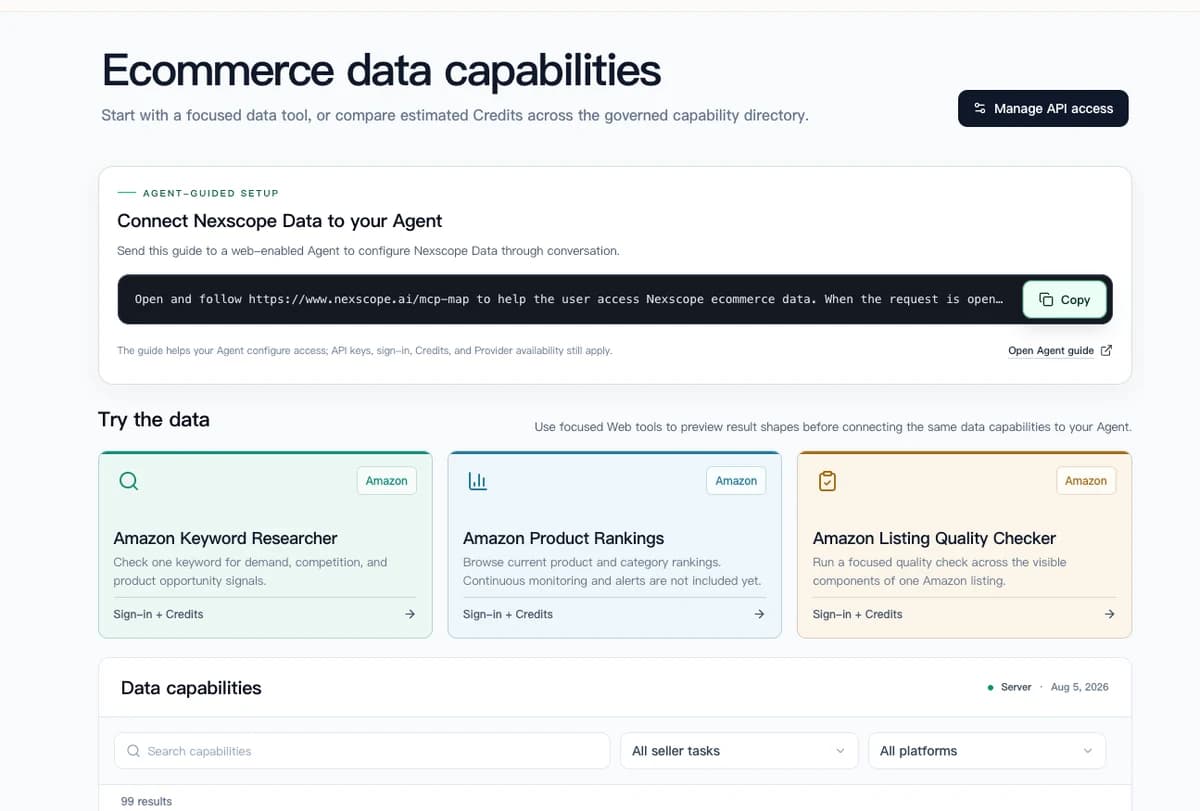
Want to understand how your brand and competitors appear in AI search? Nexscope ecommerce data can support market and competitor research in focused tools or connect to your Agent through API, MCP, or Skills.
Core Tools:
- Competitor Research — Analyze how competitors position themselves online
- Review Analysis — Extract customer language and pain points that inform content strategy
- Keyword Research — Find the queries customers use to discover products like yours
- Market Research — Understand category trends and demand signals
Need Hands-On Help?
E-commerce Growth Services — Our specialists can audit your current SEO/GEO performance, identify gaps in your AI visibility, and build a strategy to get your brand mentioned in AI-generated answers.
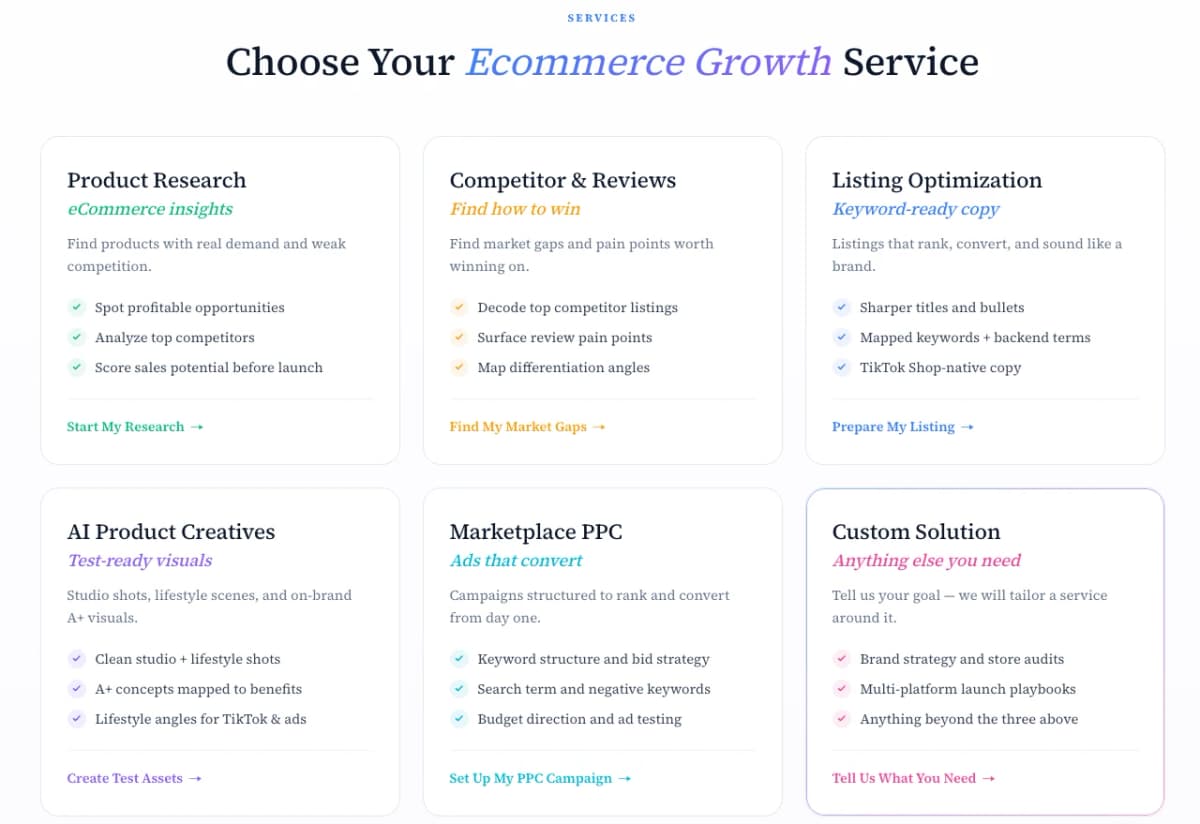
Connect Ecommerce Data to Your Agent
Use Nexscope through API, MCP, or Skills, or open a ready seller workflow.
Explore Ecommerce Data →1,000 free credits • API, MCP & Skills
FAQ
What does GEO stand for?
GEO stands for Generative Engine Optimization. It refers to the practice of optimizing content and brand presence to appear in AI-generated responses from systems like ChatGPT, Google AI Overviews, Perplexity, and other AI-powered search tools.
Is GEO replacing SEO?
No. GEO complements SEO rather than replacing it. Traditional search engines still drive significant traffic, and many SEO best practices also benefit GEO performance. Think of GEO as an additional channel to optimize for, not a replacement for your existing SEO strategy.
What's the difference between GEO and AEO?
GEO (Generative Engine Optimization) and AEO (Answer Engine Optimization) are closely related and often used interchangeably. Both refer to optimizing for AI-powered systems that generate answers rather than just links. Some practitioners use AEO specifically for featured snippets and voice search, while GEO is more commonly used for LLM-based AI assistants.
Does GEO matter for small Shopify stores?
Yes. While large brands may have more resources for GEO, small brands can compete by focusing on niche topics where they have expertise. AI systems look for authoritative, helpful content—not just content from big brands. A small brand with excellent content about a specific product category can absolutely appear in AI recommendations.
How do I know if my brand appears in AI answers?
The simplest way is to test manually. Ask ChatGPT, Perplexity, and other AI assistants questions related to your product category and see if your brand appears. For systematic tracking, tools like Semrush's AI Visibility Toolkit can monitor your brand's presence across AI platforms over time.
Sources
- Semrush. (2026). Generative Engine Optimization: A Practical Guide. Retrieved from semrush.com
- Microsoft. (2026). From Discovery to Influence: A Guide to AEO and GEO. Retrieved from about.ads.microsoft.com
- Aggarwal, P., et al. (2023). GEO: Generative Engine Optimization. arXiv:2311.09735