
5 AI Employees That Scaled E-commerce to $300K/Month

A year ago, managing 15 SKUs with a 3-person team would have been impossible. Today, small teams are growing from $50,000 to $300,000 monthly revenue — not because they work harder, but because they hire smarter.
These new employees do not eat, sleep, or take vacations. They process data faster than any human analyst and never complain about repetitive tasks. They are AI agents, and they are fundamentally changing how e-commerce businesses operate.
This is not about replacing humans with robots. It is about giving each team member AI-powered assistants that handle the tedious work, freeing humans to focus on strategy and creative decisions.
Here are five AI "employees" that can transform any e-commerce operation.
The Problem with Traditional E-commerce Operations
Running an e-commerce business traditionally requires expertise across multiple domains: market research, copywriting, product development, graphic design, and legal compliance. Small teams either hire specialists for each function (expensive) or have generalists handle everything (inefficient).
A typical day used to look like this: - Morning: Analyze sales data and competitor movements - Afternoon: Write and optimize listings - Evening: Monitor for hijackers and policy violations - Night: Research new product opportunities
This workload scales linearly with SKU count. Double your products, double your work. The math simply does not work for small teams trying to grow.
AI changes the equation. Tasks that took hours now take minutes. Analysis that required expensive tools now happens through simple conversations. The leverage is extraordinary.
AI Employee #1: Market Intelligence Analyst
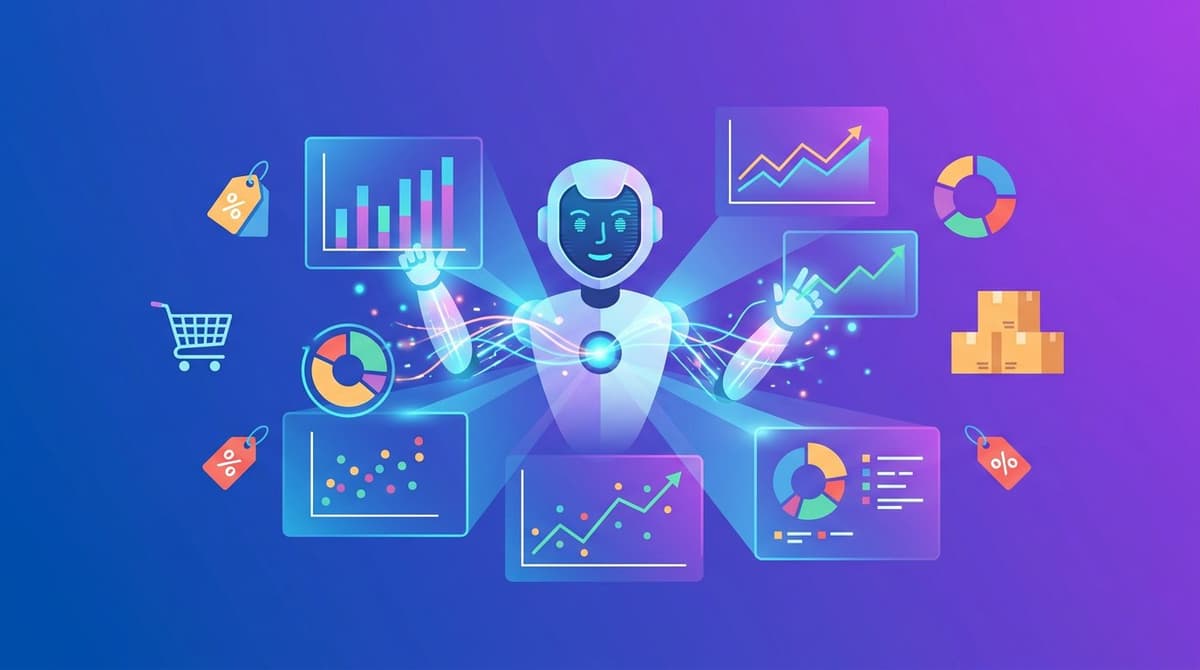
Role: Find profitable products before competitors do
Traditional approach: Browse Best Sellers lists, check Jungle Scout data, manually analyze dozens of products, make gut-feeling decisions.
AI approach: Describe the market opportunity you want, and the AI agent searches Amazon, analyzes hundreds of products, identifies patterns, and delivers actionable recommendations.
What This AI Employee Does
The Market Intelligence Analyst performs tasks that would take a human researcher days:
Attribute-based market mapping. For apparel categories, the AI analyzes every product on the first three pages of search results, tags each item by neckline, fit, design pattern, and material, then calculates market share for each attribute combination.
Instead of guessing that "crew neck sweaters sell well," sellers get precise data: "Crew neck + relaxed fit + solid color captures 34% of the sweater market, but crew neck + relaxed fit + cable knit only has 8% share despite strong reviews. Opportunity identified."
Blue ocean product discovery. The AI searches for products with high sales volume but low review counts — the classic indicator of unmet demand. It filters by price range, category depth, and competitive intensity to surface opportunities that manual research would miss.
Trend velocity analysis. Using historical BSR data from Keepa, the AI identifies products gaining momentum before they hit mainstream awareness. Early entry into rising trends dramatically improves launch success rates.
Sample Workflow
Input: "Find women's pullover sweater opportunities in the US market, $25-45 price range, with room for new entrants."
Output: - Market size: $12.4M monthly in target segment - Top attribute combination: V-neck + oversized + waffle knit (23% YoY growth) - Competition gap: Only 3 products with reviews; top seller has just 847 reviews - Recommended differentiation: Add thumb holes (mentioned in 12% of competitor reviews as desired feature)
💡 Pro Tip: AI agents like OpenClaw can automate this entire research workflow. Install the keyword research skill to analyze any Amazon category:
npx skills add nexscope-ai/Amazon-Skills --skill amazon-keyword-research -g
AI Employee #2: Chief Copywriter
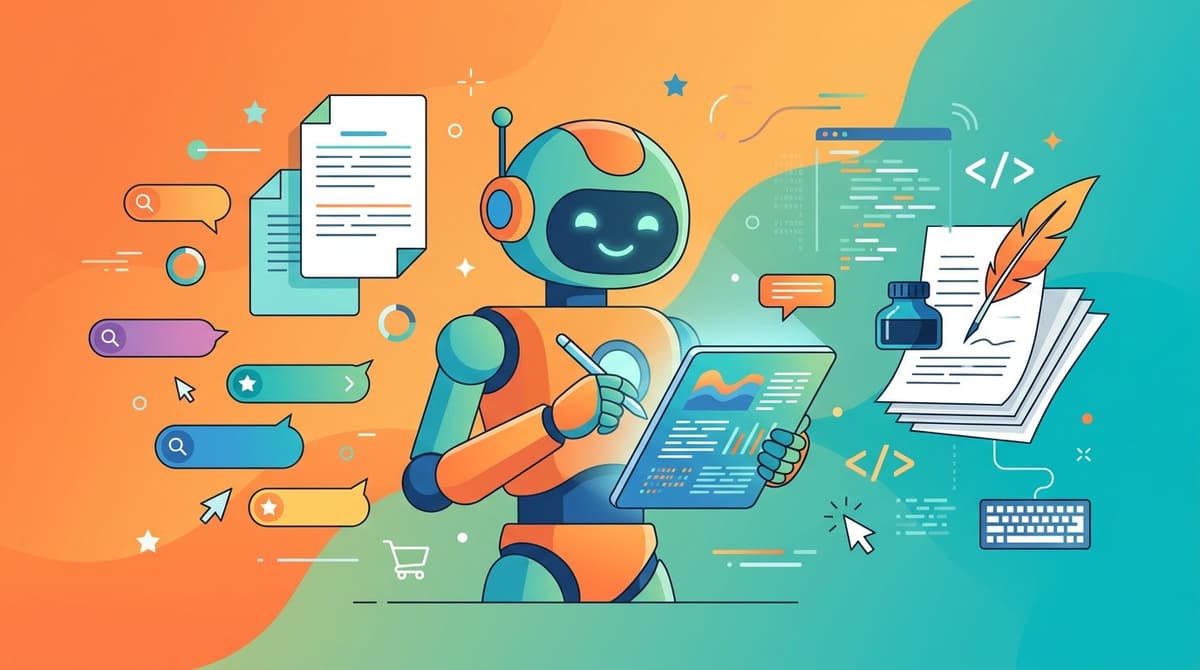
Role: Create listings that rank AND convert
Traditional approach: Study competitor listings, research keywords manually, write copy, hope for the best.
AI approach: Feed competitor ASINs to the AI, which analyzes their content, extracts high-performing keywords, understands Amazon's ranking algorithms, and generates optimized listings.
What This AI Employee Does
The AI Chief Copywriter understands that marketplace listings serve two audiences: the A10 algorithm and human shoppers. It optimizes for both simultaneously.
Keyword value scoring. The AI pulls search volume data from Amazon Brand Analytics, competition metrics, and conversion patterns to score every potential keyword. High-volume, low-competition terms get prioritized for title placement. Long-tail variations fill bullet points and backend fields.
COSMO-optimized content. Amazon's COSMO semantic system rewards content that connects features to real-world use cases. Instead of "stainless steel construction," the AI writes "rust-proof stainless steel that survives years of daily dishwasher cycles." Same feature, but now the algorithm understands the benefit.
BAF framework application. Every bullet point follows the Benefit-Attribute-Feature structure that drives conversions:
- Benefit: What the customer gains
- Attribute: The specific quality that delivers the benefit
- Feature: The technical specification
Example transformation
❌ Original: "Made with premium 304 stainless steel"
✅ AI-optimized: "NEVER RUSTS OR STAINS — Premium 304 stainless steel construction resists corrosion through 1,000+ dishwasher cycles, backed by our lifetime replacement guarantee"
The Results
Listings rewritten by the AI Copywriter consistently outperform originals: - Average CTR improvement: 23% - Conversion rate lift: 15-30% - Organic ranking improvement: 2-5 positions within 30 days
💡 Pro Tip: Automate listing optimization with the dedicated skill:
npx skills add nexscope-ai/Amazon-Skills --skill amazon-listing-optimization -g
AI Employee #3: Product Development Advisor
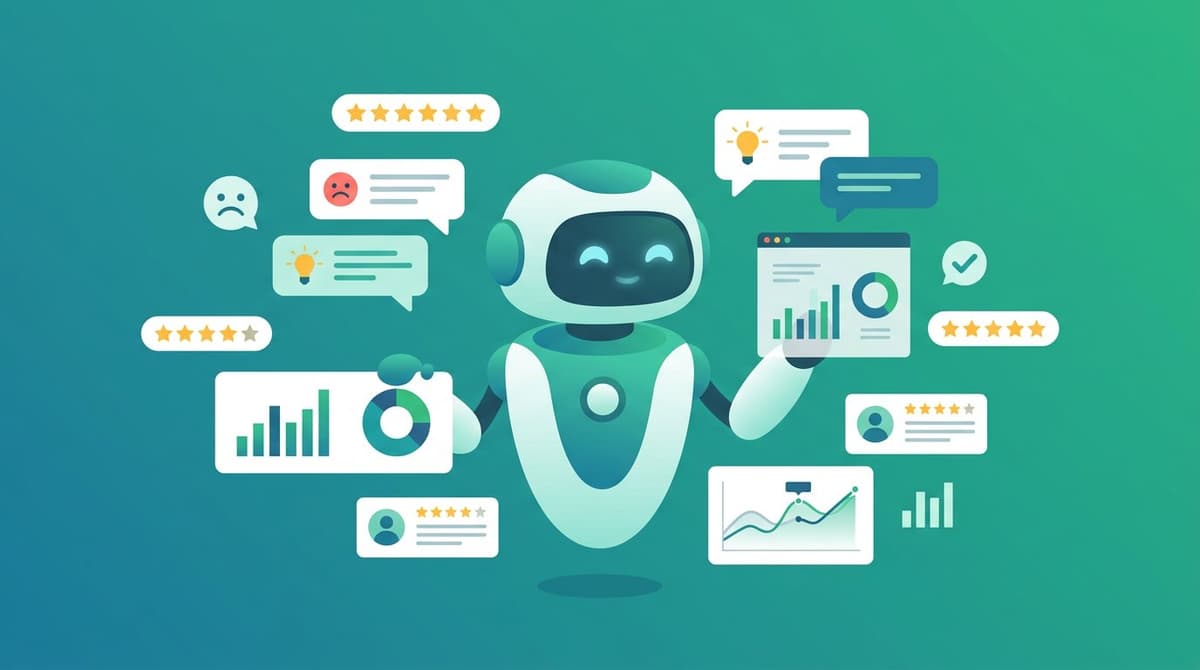
Role: Turn customer complaints into product improvements
Traditional approach: Read competitor reviews manually, take notes, hope to spot patterns.
AI approach: Feed the AI a product category, and it analyzes thousands of reviews across competitors, categorizes complaints by theme, quantifies frequency, and delivers a prioritized improvement roadmap.
What This AI Employee Does
The Product Development Advisor is essentially a complaint aggregation machine. It finds the problems customers have with existing products and identifies exactly how to solve them.
Semantic complaint clustering. The AI reads negative reviews and groups them by underlying issue, not just surface-level keywords. "Leaks everywhere" and "water drips from the seal" and "liquid escapes during transport" all get clustered under "seal integrity issues."
Quantified pain points. Instead of vague insights like "customers complain about quality," sellers get specific data: "28% of 1-3 star reviews mention seal failure. 15% cite insufficient capacity. 12% report difficulty cleaning."
Improvement prioritization. The AI ranks product improvements by: - Frequency of complaints (how many customers care) - Review rating impact (how much it affects scores) - Implementation feasibility (can we actually fix it) - Competitive advantage (are others solving it)
Real Example: Bread Knife Research
One seller asked the AI to analyze the bread knife market with a specific question: "Are customers complaining about storage compatibility issues?"
Finding: 23% of negative reviews mentioned that the knife did not fit standard knife blocks or drawer organizers. Customers specifically complained about blades being too long for common storage solutions.
Action: The seller worked with the manufacturer to create a bread knife with a 9-inch blade instead of the standard 10-inch, plus a protective sheath for drawer storage.
Result: The "fits anywhere" positioning became the primary differentiator. The product now ranks #3 for "bread knife" with a 4.7-star rating.
AI Employee #4: Creative Director
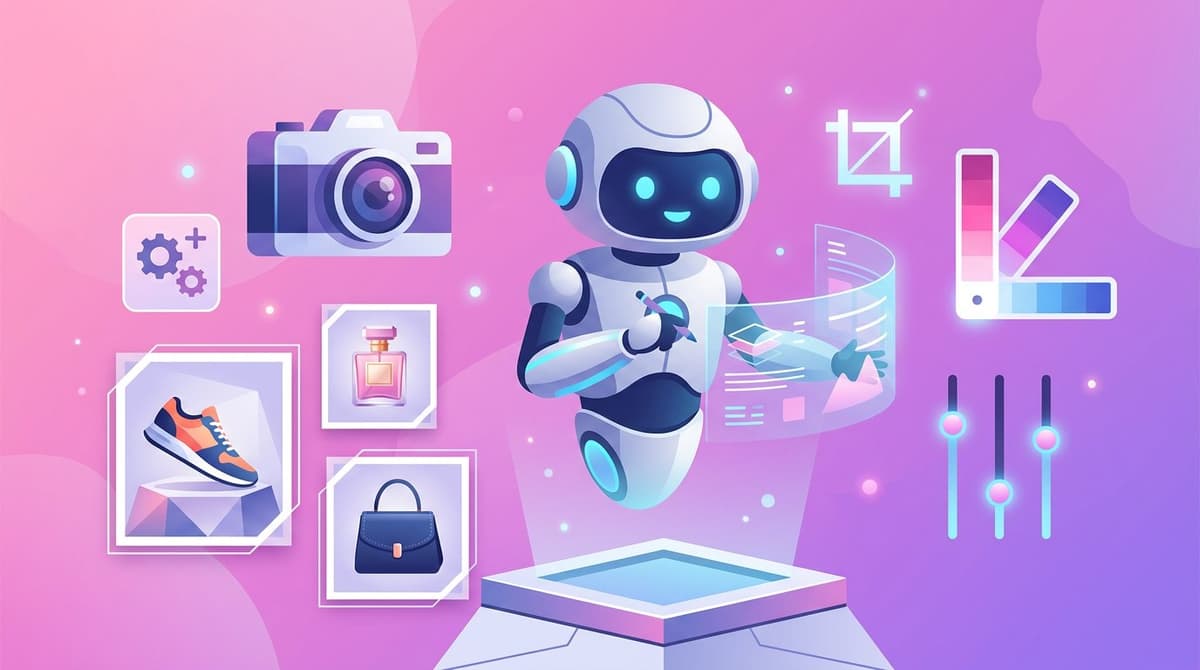
Role: Generate professional product images at scale
Traditional approach: Hire photographers ($500-2,000 per session), wait for delivery, request revisions, repeat.
AI approach: Upload basic product photos, describe the desired style, and receive studio-quality images in minutes.
What This AI Employee Does
The AI Creative Director handles visual content creation that previously required expensive professionals and long timelines.
Style reverse-engineering. The AI analyzes successful competitor images and extracts the visual elements that drive engagement: lighting style, background treatment, props, angles, and composition rules.
Prompt generation from references. Upload an image you like, and the AI generates the exact prompt needed to recreate that style with your products. This eliminates the guesswork from AI image generation.
Batch processing. Generate dozens of image variations for A/B testing without additional cost. Test lifestyle scenes, infographic layouts, and comparison images to identify what converts.
Cost Comparison
| Method | Cost | Turnaround |
|---|---|---|
| Professional photography | $500-2,000 | 5-7 days |
| Freelance designer | $100-300 | 2-3 days |
| AI-generated images | <$1 | Minutes |
The quality gap has narrowed significantly. For many product categories, AI-generated images now match or exceed professional photography, especially for lifestyle and contextual scenes.
AI Employee #5: Compliance Officer

Role: Identify risks before they become expensive problems
Traditional approach: Launch products and hope for the best. React to IP complaints after they arrive.
AI approach: Before committing to any product, the AI analyzes the competitive landscape for risk factors that could destroy profitability.
What This AI Employee Does
The AI Compliance Officer prevents expensive mistakes by analyzing market structure before sellers enter a category.
Brand concentration analysis (CR5). The AI calculates what percentage of category sales the top 5 brands control. High concentration (>60%) signals a market dominated by established players with deep pockets for advertising and legal action.
Seller nationality mapping. Understanding who competes in a category reveals competitive dynamics. Markets dominated by large Chinese sellers often face price compression. Categories with primarily US-based sellers may have more stable pricing but higher quality expectations.
Trademark and patent scanning. Before sourcing, the AI checks USPTO and Amazon Brand Registry for potential IP conflicts. A single design patent can make an entire product category untouchable.
"Outlet" keyword prevalence. Some categories become dumping grounds for excess inventory sold at steep discounts. If "outlet" appears in a high percentage of top listings, sustainable margins may be impossible.
Risk Assessment Example
Before entering a home organization subcategory, one team ran the AI compliance check:
Findings
- CR5: 72% (top 5 brands control nearly three-quarters of sales)
- Seller nationality: 89% China-based
- Price trend: -15% YoY
- "Outlet" prevalence: 23% of page 1 listings
Recommendation: Do not enter. High concentration + aggressive pricing + outlet competition = margin destruction.
This analysis avoided what would have been a $30,000+ mistake.
How to Build Your Own AI Team
Creating an AI-powered operation does not require technical expertise. Modern AI agents operate through natural language — describe what you want, and they figure out how to do it.
Option 1: OpenClaw + Skills
OpenClaw is an open-source AI agent framework with pre-built skills for e-commerce sellers. Install it on any computer, connect to Discord or WhatsApp, and send instructions from your phone.
Recommended skills for e-commerce sellers
amazon-keyword-research — Market and keyword analysis
npx skills add nexscope-ai/Amazon-Skills --skill amazon-keyword-research -g
amazon-listing-optimization — Listing content generation
npx skills add nexscope-ai/Amazon-Skills --skill amazon-listing-optimization -g
amazon-sales-estimator — Revenue projections
npx skills add nexscope-ai/Amazon-Skills --skill amazon-sales-estimator -g
amazon-fba-calculator — Fee and profit calculations
npx skills add nexscope-ai/Amazon-Skills --skill amazon-fba-calculator -g
Option 2: Nexscope Ecommerce Data
Nexscope provides structured ecommerce data that teams can use in focused web tools or connect to their existing Agent through API, MCP, or Skills. Ready workflows include Keyword to Ads, Video Clone, and Buy Box Repricer.
The Nexscope SkillHub contains 200+ automation skills covering every aspect of Amazon selling, from product research to PPC optimization.
Getting Started
- Choose your platform (OpenClaw or Nexscope)
- Connect to your preferred messaging app
- Start with one use case (recommend: product research)
- Expand to additional functions as you see results
Most sellers see meaningful time savings within the first week. The compounding effect grows as you add more AI-powered workflows.
Conclusion
The e-commerce landscape has changed. Sellers who manually perform tasks that AI can automate are competing with one hand tied behind their back.
These five AI employees — Market Intelligence Analyst, Chief Copywriter, Product Development Advisor, Creative Director, and Compliance Officer — collectively save dozens of hours weekly. More importantly, they make better decisions than humans could alone by processing vastly more data.
The winners in 2026 and beyond will not be the hardest workers. They will be the smartest delegators — sellers who understand which tasks to automate and which require human creativity and judgment.
The AI team is waiting to be hired. The only question is whether sellers will build it before their competitors do.
Nexscope provides structured ecommerce data that teams can use in focused web tools or connect to their existing Agent through API, MCP, or Skills. Ready workflows include Keyword to Ads, Video Clone, and Buy Box Repricer.
Browse 200+ ready-to-use skills on SkillHub, or install skills directly into your existing AI agent:
npx nexscope install
Connect Ecommerce Data to Your Agent
Use Nexscope through API, MCP, or Skills, or open a ready seller workflow.
Explore Ecommerce Data →1,000 free credits • API, MCP & Skills
Frequently Asked Questions
How much does it cost to run AI agents for Amazon selling?
AI agents typically cost $20-50 per month in API fees, depending on usage volume. This compares favorably to traditional tool subscriptions ($229-399/month for platforms like Helium 10 or Jungle Scout) while providing more flexibility and automation capabilities.
Do I need technical skills to use AI agents?
No. Modern AI agents like OpenClaw and Nexscope operate through natural language. You describe what you want in plain English, and the agent figures out how to accomplish it. No coding or technical configuration required.
Can AI really replace specialized Amazon consultants?
AI excels at data processing, pattern recognition, and content generation — tasks that consume most consultant hours. However, high-level strategy, brand positioning, and creative direction still benefit from human expertise. Think of AI as amplifying human capabilities, not replacing human judgment.
How accurate are AI-generated listings and product recommendations?
AI recommendations should be treated as informed starting points, not final decisions. Cross-reference AI outputs with your own market knowledge and test before committing significant resources. Most sellers report that AI-generated listings outperform their manual efforts after minor human refinement.
What happens if Amazon changes its algorithms?
AI agents adapt more quickly than static tools because they learn from current data rather than relying on fixed rules. When Amazon updates its ranking systems, AI agents adjust their recommendations based on observed changes in what works.
Is this approach suitable for new Amazon sellers?
Yes, possibly more so than for established sellers. New sellers often lack the experience to make confident product and pricing decisions. AI agents provide data-driven guidance that accelerates the learning curve and reduces costly mistakes.
Sources
- Amazon. "A10 Algorithm and Product Ranking Factors." Amazon Seller University.
- Jungle Scout. "State of the Amazon Seller 2026." Annual Industry Report.
- Helium 10. "Amazon Keyword Research Best Practices." Seller Resources.
- OpenClaw. "Getting Started with AI Agents." Documentation.