

How to Become an Amazon Reviewer: 7 Safe Steps That Work

Learning how to become an Amazon reviewer sounds simple until the rules appear. Anyone can write useful reviews on Amazon, but not every review is eligible, and the fastest-looking shortcuts can put an account, a seller relationship, or a product listing at risk.
The safe path is straightforward: use an account in good standing, review products honestly, avoid incentives, understand how the Amazon Vine program fits into the reviewer path, and build a history of helpful feedback.
For Amazon sellers, this topic has a practical business benefit. Understanding how legitimate reviewers think helps teams spot real buying objections, avoid review manipulation traps, prepare products before Vine enrollment, improve listing clarity, and turn review patterns into product research. A seller who knows what trustworthy reviewers look for can build better products, write more accurate listings, and collect feedback in a way that protects the account instead of creating policy risk.
What It Means to Become an Amazon Reviewer
Becoming an Amazon reviewer does not mean joining a public job program, applying to a paid reviewer marketplace, or receiving guaranteed free products. In the normal Amazon customer experience, a reviewer is simply a shopper who leaves product feedback that follows Amazon's Community Guidelines.
Regular Amazon reviewer vs. invited program reviewer
There are two common meanings behind the phrase "Amazon reviewer."
- Regular Amazon reviewer - A customer who posts product reviews from an eligible Amazon account. These reviews may appear as verified or non-verified depending on purchase history and Amazon's systems.
- Invited program reviewer - A trusted customer invited by Amazon to request participating products for free and publish honest reviews that are labeled through the official program.
The key difference is access. Regular reviewing is open to eligible customers. The official free-product review program is invitation-only. A customer cannot submit a standard application, pay to join, or ask a seller to make them an invited reviewer.
Why the rules are strict
Reviews influence search visibility, conversion rates, returns, product development, and buyer confidence. That makes them valuable, which also makes them a target for manipulation. Amazon's policies focus on authenticity: reviews should come from real customer experiences, not from pressure, payment, refunds, family relationships, review swaps, or hidden incentives.
For sellers, a clean review strategy begins with product quality, customer experience, and policy-safe feedback collection. The invitation-only program can help eligible brands collect early feedback, but it is still designed for honest customer opinions, not controlled five-star promotion.
The 7 Safe Steps to Become an Amazon Reviewer
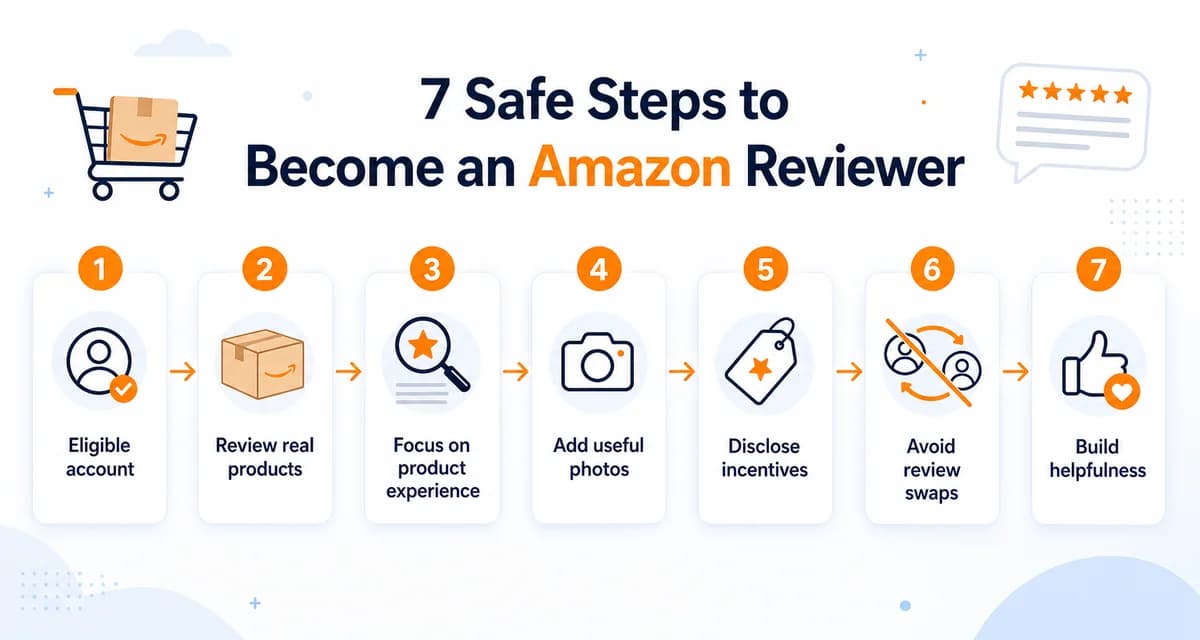
The safest route is not a trick. It is a consistency process. The goal is to become the kind of reviewer Amazon and shoppers can trust.
Step 1: Use an eligible Amazon account
Start with a real Amazon account in good standing. Amazon's review eligibility rules can vary by marketplace, but reviewers should expect Amazon to screen for account history, suspicious activity, and compliance with Community Guidelines.
A reviewer should never create multiple accounts, buy reviews, join reimbursement groups, or use account behavior that makes the review history look artificial. Short-term shortcuts create long-term risk because Amazon can remove reviews, restrict posting privileges, or take action against accounts connected to suspicious activity.
Step 2: Review products that have actually been used
Good reviews begin with real experience. Reviewers should use the product long enough to understand its quality, fit, setup, durability, packaging, missing parts, instructions, and practical limitations.
For most products, a useful review answers questions that a shopper cannot answer from the listing alone:
- Did the product match the photos and description?
- Was the size, material, capacity, or compatibility accurate?
- What worked better than expected?
- What failed, felt confusing, or required extra setup?
- Who is the product best for?
This is also why sellers should analyze Amazon reviews as product research data. Real reviewers often reveal unmet needs, unclear instructions, weak images, missing accessories, or comparison points that a listing team may overlook.
Step 3: Focus on product experience, not seller feedback
Amazon separates product reviews from seller feedback. A product review should focus on the item itself: quality, features, use case, performance, and expectations. Seller service, delivery issues, packaging complaints, and shipping experience may belong in other Amazon feedback systems rather than the product review.
The strongest product reviews stay specific to the product and avoid off-topic complaints. A shopper searching for a kitchen scale, phone holder, supplement organizer, or pet grooming tool needs to know whether the product works as promised, not whether a delivery truck arrived late.
Step 4: Add evidence when it helps
Photos and videos can make a review more helpful when they show real scale, texture, setup, before-and-after use, common defects, or the product in context. Evidence is especially useful for categories where listing images may be overly polished, such as home goods, beauty accessories, apparel, kitchen tools, and electronics.
Reviewers should keep visuals honest and simple. A useful photo can show:
- Product size next to a common object
- Included accessories or missing parts
- Close-up material quality
- Installation steps or assembled result
- Real use in the intended environment
Step 5: Disclose incentives outside Amazon and avoid hidden benefits
Amazon generally does not allow reviews that are posted in exchange for compensation, refunds, discounts, free products, future benefits, or seller pressure. The official exception is Amazon's invitation-only review program, where those reviews are labeled by Amazon.
The FTC also expects reviewers and endorsers to disclose material connections when they receive something of value, such as free products, payment, discounts, or other benefits. That matters for social media, blogs, videos, newsletters, and off-Amazon content.
If a reviewer received a free product, discount, affiliate payment, or brand relationship outside Amazon, that relationship should be disclosed wherever the endorsement appears. On Amazon itself, the reviewer also needs to follow Amazon's stricter platform rules.
Step 6: Avoid review clubs, refund groups, and seller scripts
Review clubs that promise free products for reviews are risky. So are social media groups that ask reviewers to buy a product, leave a five-star review, and receive a PayPal refund later. These arrangements may look casual, but they can violate Amazon policy because the review is tied to a benefit.
Reviewers should also avoid seller-provided scripts. A real review should not repeat a brand's marketing copy or follow instructions such as "mention fast shipping," "include this keyword," "do not mention defects," or "leave five stars."
Step 7: Build helpfulness over time
Invitation-only reviewer access is not guaranteed, but Amazon says it invites trusted customers based on their reputation for helpful reviews. That means quality matters more than volume.
Helpful reviews tend to have a few shared traits:
- They explain the buyer's use case.
- They describe pros and cons without sounding promotional.
- They include real product details.
- They compare expectations against actual use.
- They avoid exaggeration.
- They remain readable and concise.
There is no public formula that guarantees an invitation. A reviewer can only control the quality, relevance, and honesty of their review history.
What Reviewers Should Never Do
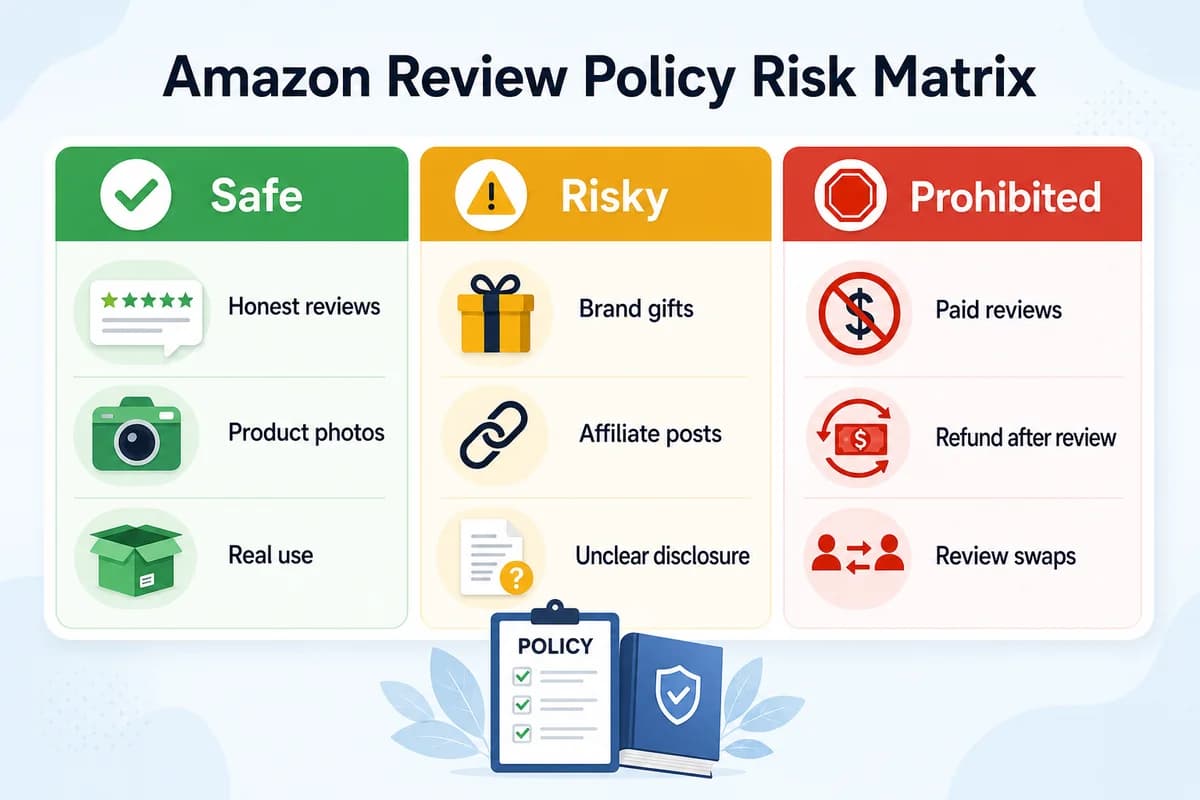
Some tactics may appear in search results, forums, or private groups, but that does not make them safe.
Do not accept payment for Amazon reviews
Payment can include cash, gift cards, PayPal reimbursement, coupons, commissions, future free products, or any other benefit connected to the review. A review tied to compensation is risky even when the reviewer says the opinion is honest.
Do not trade reviews with sellers or other buyers
Review swaps distort customer feedback. They can involve sellers reviewing each other's products, buyers exchanging reviews, or groups coordinating review activity. Amazon treats inauthentic review behavior seriously because it can mislead shoppers.
Do not review products from family, close friends, or business relationships
Reviewers should avoid conflicts of interest. A review from a relative, employee, agency partner, investor, or close personal connection can be biased even when the reviewer tries to be fair.
Do not promise positive ratings
No reviewer should promise a five-star review. No seller should ask for one. A policy-safe review request asks for honest feedback after a real product experience. It does not filter unhappy customers, pressure the reviewer, or offer benefits for a specific rating.
Do not use AI to mass-produce fake reviews
AI can help draft, summarize, or organize writing, but fake experience is still fake experience. A reviewer should only publish what reflects actual product use. Sellers should not generate synthetic reviews, rewrite customer feedback into fake posts, or ask agencies to manufacture review content.
How to Write Reviews That Shoppers Actually Trust
The best Amazon reviews are useful because they reduce uncertainty. They help a shopper decide whether a product fits their exact use case.
Use a clear review structure
A practical review can follow this simple structure:
- Context - Why the product was purchased and what problem it needed to solve.
- First impression - Packaging, setup, instructions, size, or build quality.
- Actual use - What happened after using it in a real scenario.
- Pros and cons - Specific details that matter to future buyers.
- Best fit - Who should buy it, and who should choose something else.
This structure works because it sounds like customer experience instead of marketing copy. It also gives sellers useful feedback without turning the review into a private support ticket.
Mention measurable details
Specifics make reviews more credible. Instead of saying "great quality," a reviewer can mention material thickness, battery life, wash cycles, installation time, compatibility, dimensions, odor, noise level, or performance after a week of use.
Measurable details are especially valuable when the listing makes claims that shoppers need to verify. For example, if a storage rack says it holds heavy cookware, a useful review explains what was placed on it and whether it stayed stable.
Balance positives and negatives
A trustworthy review can still be positive. The difference is that it should not sound like an ad. Even a five-star review can mention a limitation, ideal use case, or category tradeoff.
Examples of balanced details include:
- "Works well for small desks, but may feel narrow for dual-monitor setups."
- "The fabric feels soft, though the color is warmer than the listing photos."
- "Setup took 15 minutes. The included screws were fine, but the instructions could be clearer."
Keep it readable
Longer is not always better. A 150-word review with real details can be more helpful than a 900-word essay. Reviewers should use short paragraphs, plain language, and product-specific observations.
What Amazon Sellers Should Learn From Real Reviewers
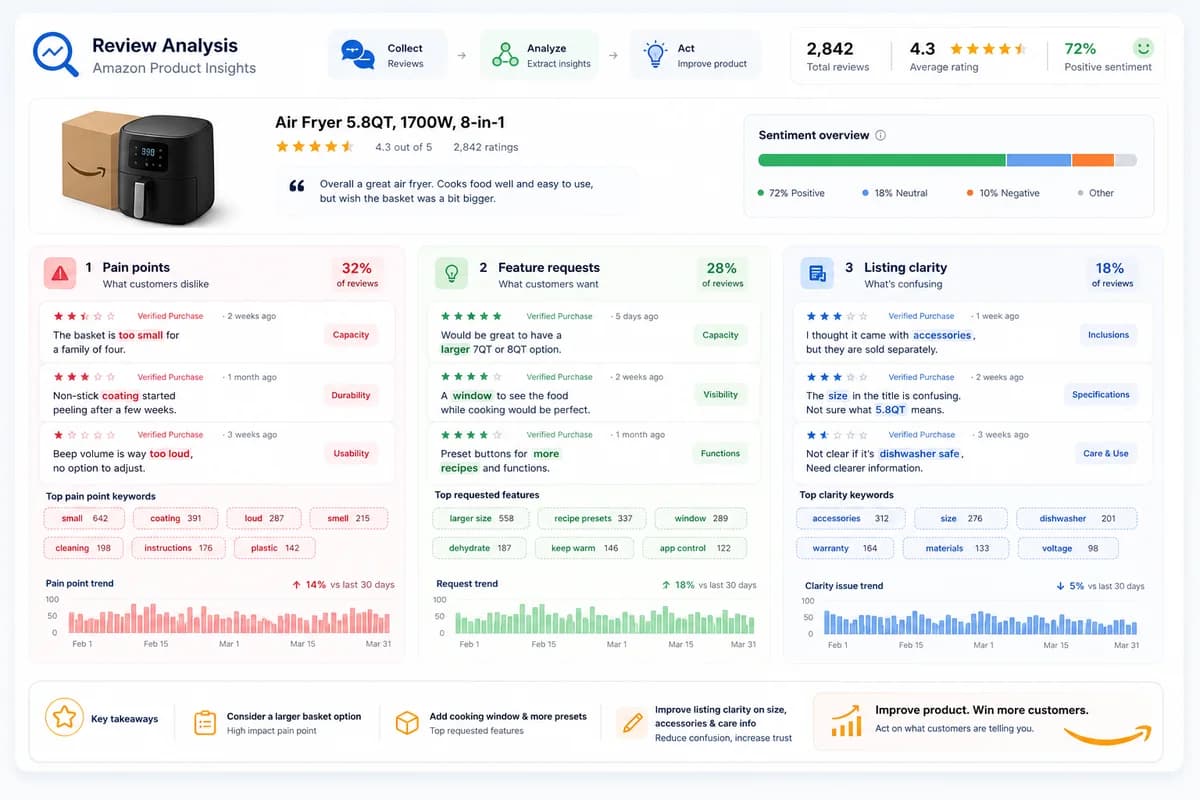
This keyword attracts consumers, but it is also useful for sellers. When sellers understand how legitimate reviewers think, they can build better products and safer review systems.
Reviews reveal product-market fit
Reviews are not only conversion proof. They are customer research. A pattern of complaints about sizing, installation, battery life, missing accessories, or misleading images points to a product or listing gap. This is why Amazon listing optimization should start with real buyer language, not only keyword volume.
Instead of chasing more reviews, sellers should ask:
- What expectation did the listing create?
- What did customers experience differently?
- Which complaints repeat across competitors?
- Which positive phrases describe the real reason people buy?
- Which questions appear before purchase and after delivery?
Nexscope provides ecommerce data capabilities for researching products, competitors, listings, keywords, and review patterns. Teams can use focused web tools or connect the data to their existing Agent through API, MCP, or Skills.
Review mining can shape product improvements
Review analysis is strongest when it connects language to action. For example, if customers repeatedly mention "hard to clean" on competing kitchen tools, a seller can improve material choice, add a cleaning brush, update images, or highlight dishwasher safety if accurate.
This is where review research connects to product development. Product research becomes stronger when review gaps are combined with demand signals, pricing, competitor quality, and launch difficulty.
Sellers need safe review collection systems
Sellers can ask customers for honest reviews, but the request should be neutral. It should not ask only happy customers, offer a benefit, pressure a buyer, or imply that support depends on rating.
Safe review collection usually means:
- Follow Amazon's official request flows where available.
- Use neutral wording.
- Do not ask for a positive review.
- Do not offer discounts, refunds, or gifts for reviews.
- Do not contact reviewers privately to change ratings.
- Fix product and listing problems that cause negative feedback.
Common Mistakes to Avoid
Reviewers and sellers both get into trouble when they treat reviews as a growth hack instead of a trust signal.
Reviewer mistakes
- Chasing free products too early - A new reviewer should focus on helpful, honest reviews before thinking about invitation-only programs.
- Joining reimbursement groups - Refund-after-review arrangements can violate Amazon's review rules.
- Writing generic praise - "Great product, fast shipping" gives shoppers almost no product information.
- Copying brand language - Repeating the listing copy makes a review look promotional.
- Ignoring disclosure rules - Material connections should be clearly disclosed in off-Amazon endorsements and handled according to Amazon's platform rules.
Seller mistakes
- Confusing review generation with review manipulation - A neutral request for honest feedback is different from controlling the rating.
- Using friends, family, or employees - Conflict-of-interest reviews can create policy risk.
- Launching before the product is ready - Early reviews can expose quality issues fast.
- Ignoring negative review patterns - Repeated complaints should trigger product, packaging, listing, or support fixes.
- Overpromising in the listing - Inflated claims create disappointed customers and preventable negative reviews.
Conclusion
The safest way to become an Amazon reviewer is to act like a real customer, follow Amazon's Community Guidelines, avoid incentives, and write feedback that helps shoppers make better decisions. Invitation-only reviewer programs can be valuable, but they cannot be forced through third-party services, seller relationships, or paid shortcuts.
For sellers, the lesson is just as important. Real reviews are not only star ratings. They are a source of product intelligence. Honest customer feedback can reveal better positioning, stronger images, clearer instructions, improved bundles, and safer launch decisions.
Connect Ecommerce Data to Your Agent
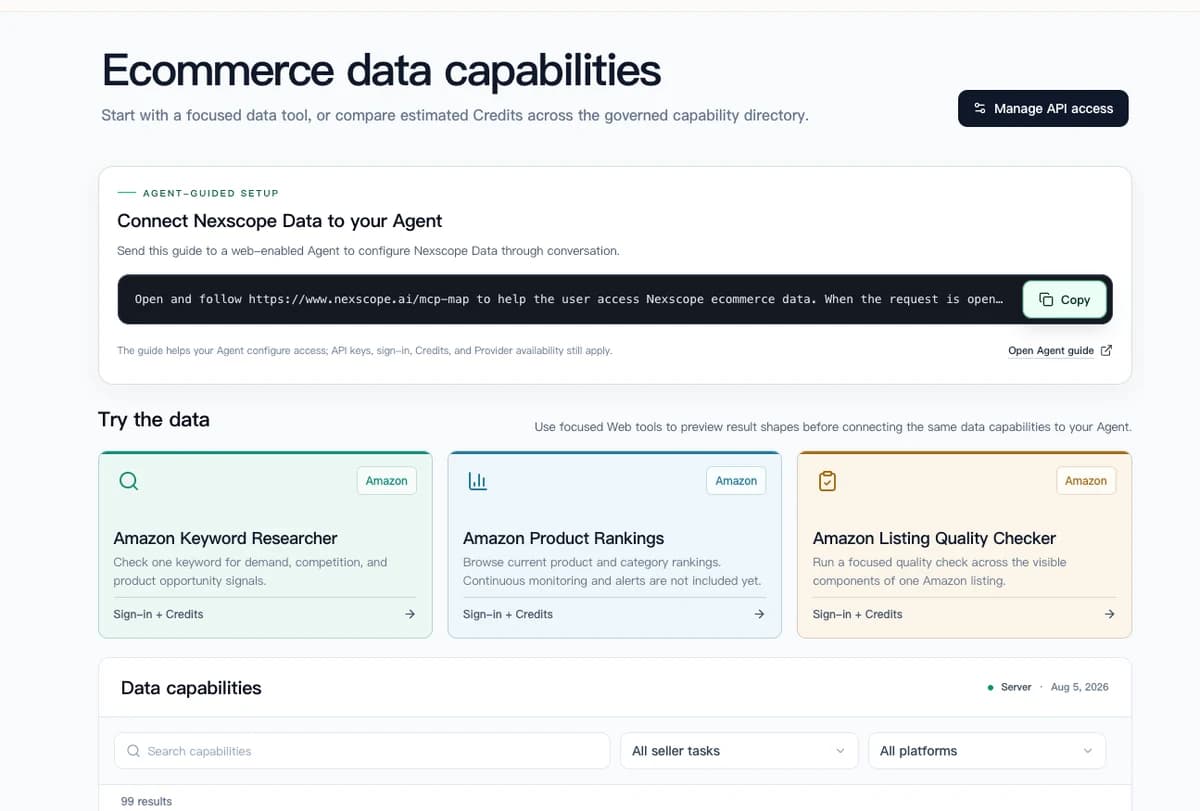
Nexscope provides structured ecommerce data and focused seller workflows. Teams can use Nexscope's web tools directly or connect governed capabilities to their existing Agent through API, MCP, or Skills. Ready workflows include Keyword to Ads, Video Clone, and Buy Box Repricer.
For a review-led workflow, Nexscope can help sellers identify recurring complaints, feature requests, confusing listing claims, and competitor weaknesses. Those insights can feed directly into product improvements, clearer bullets, stronger images, better FAQs, and more accurate launch positioning.
Nexscope also supports broader ecommerce research workflows, including:
- Review Analysis - Find customer pain points, unmet needs, feature requests, and product improvement ideas.
- Product Research - Evaluate demand, competition, launch room, trends, sales signals, and product gaps.
- Patent and IP Risk - Check obvious patent or IP risk before sourcing or launching a product.
- Keyword Research - Discover search terms, buyer intent, and listing keyword opportunities.
- Market Research - Understand niche size, category trends, buyer demand, and market entry risk.
- Competitor Research - Compare listings, pricing, reviews, images, claims, and differentiation angles.
- Product Sourcing - Shape supplier requirements, product specifications, and sourcing direction.
- Pricing Analysis - Study price bands, margins, competitor pricing, and pricing strategy signals.
- Image Generation - Create product concepts, listing visuals, lifestyle scenes, and ad creatives.
- Video Generation - Plan or generate product demos, short-form videos, and marketing clips.
Run Review Analysis with Nexscope
Use Nexscope to turn customer reviews into product improvements, listing updates, competitor insights, and clearer launch decisions.
Get Started Free →Need Done-for-You Review Analysis?
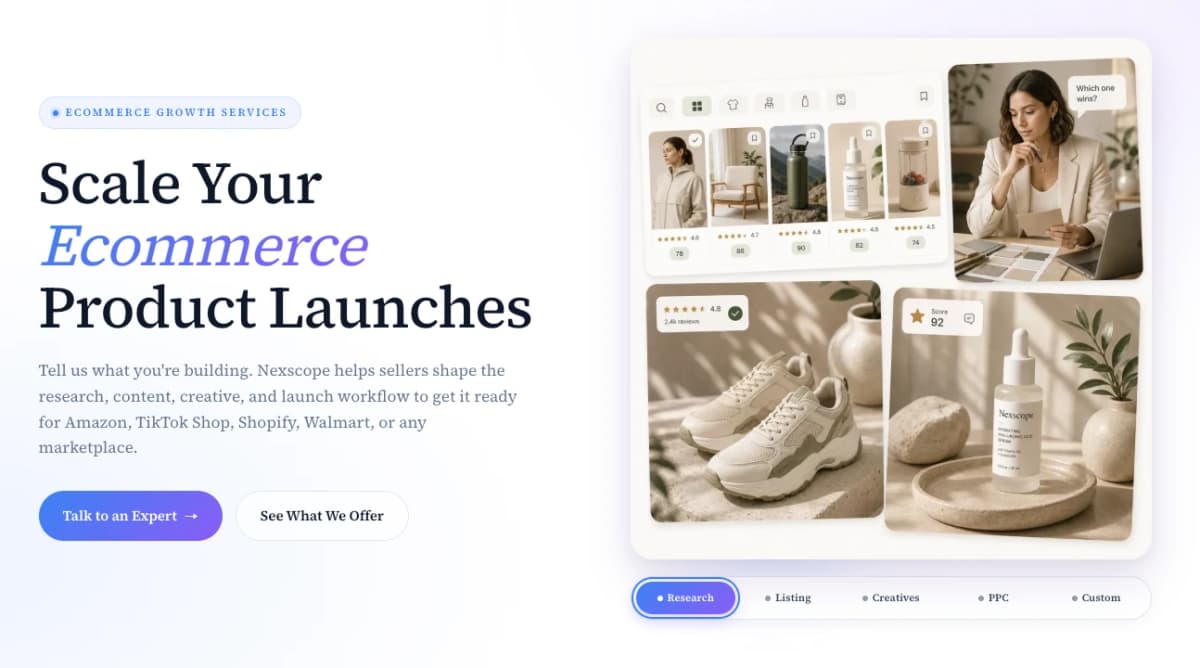
Not every seller has time to review hundreds of customer comments, tag recurring issues, compare competitor weaknesses, and turn the findings into product or listing changes. Nexscope's E-commerce Growth Services can help sellers with done-for-you review analysis, product research, listing optimization, AI creatives, PPC planning, and custom ecommerce growth projects for Amazon, TikTok Shop, Shopify, Walmart, and other marketplaces.
Let Nexscope Handle the Review Analysis
Prefer a done-for-you workflow? Nexscope can help turn review patterns, competitor gaps, and listing issues into a practical ecommerce growth plan.
Talk to an Expert →Frequently Asked Questions
Can anyone become an Amazon reviewer?
Most eligible Amazon customers can write product reviews if their account follows Amazon's rules and the review reflects a real product experience. Review eligibility can depend on marketplace-specific requirements, account history, and Amazon's fraud prevention systems. Becoming a normal reviewer is different from joining an invitation-only review program. Regular customers can post reviews, but free-product reviewer access is limited to customers Amazon identifies as trusted reviewers.
How do Amazon reviewers get free products?
The official way to receive free products for Amazon reviews is Amazon Vine. In that program, Amazon invites trusted reviewers, and participating brands enroll products through Amazon. These reviews are labeled so shoppers know the product was received through the program. Reviewers should be careful with outside offers, refund groups, and private seller arrangements because Amazon generally prohibits reviews tied to compensation, discounts, free products, or future benefits.
How can reviewers increase their chance of being trusted?
Reviewers can increase trust by writing honest, detailed, product-focused reviews over time, avoiding incentives, and explaining real product experience clearly. There is no guaranteed shortcut or public formula for invitation-only reviewer programs. The safest practical goal is to become useful to shoppers, not to chase free products or volume.
Do Amazon reviewers get paid?
Regular Amazon reviewers do not get paid by Amazon for writing product reviews. Invited program reviewers may request participating products for free, but those reviews are still expected to be honest and independent. Paid reviews, refund-for-review offers, review swaps, and seller-controlled review scripts can violate Amazon rules and may create legal or platform risk.
Can sellers ask customers for Amazon reviews?
Sellers can generally ask customers for honest reviews when the request is neutral and follows Amazon policy. The request should not ask for a positive rating, offer compensation, filter unhappy buyers, pressure the customer, or connect support to the review outcome. Sellers should rely on official Amazon request flows and improve the product experience behind recurring negative feedback.
What makes an Amazon review helpful?
A helpful Amazon review explains the buyer's use case, actual product experience, pros and cons, measurable details, and who the product fits best. Photos or videos can help when they show scale, setup, materials, defects, or real-world usage. The review should focus on the product rather than shipping, seller service, or unrelated complaints.
What should sellers learn from reviewer behavior?
Sellers should treat reviewer behavior as customer research. Helpful reviewers reveal unclear expectations, weak product details, missing accessories, confusing instructions, and listing claims that need proof. Those signals can guide product improvements, listing updates, support documentation, and safer feedback collection systems without relying on risky review tactics.
Sources
- Amazon. (2026). Community Guidelines. Retrieved from amazon.com
- Amazon. (2026). Amazon Vine. Retrieved from amazon.com
- Amazon. (2026). Anti-Manipulation Policy for Customer Reviews. Retrieved from amazon.com
- Federal Trade Commission. (2026). FTC's Endorsement Guides: What People Are Asking. Retrieved from ftc.gov