

Why Is Temu So Cheap? 9 Reasons Behind Super Low Prices

Why is Temu so cheap? The short answer is that Temu combines direct supplier access, intense merchant price pressure, demand data, gamified shopping, aggressive discounts, and cross-border logistics into a system built around very low visible prices.
The longer answer is more useful than the usual "because it comes from China" explanation. Temu's prices are shaped by sourcing, shipping, coupons, marketplace competition, product type, and changing import rules. For shoppers, that means the cheapest price can still come with tradeoffs in delivery time, quality consistency, returns, or product documentation. For brands and ecommerce teams, Temu is also a signal of how quickly generic products can become price-driven commodities.
Quick Answer: Why Is Temu So Cheap?
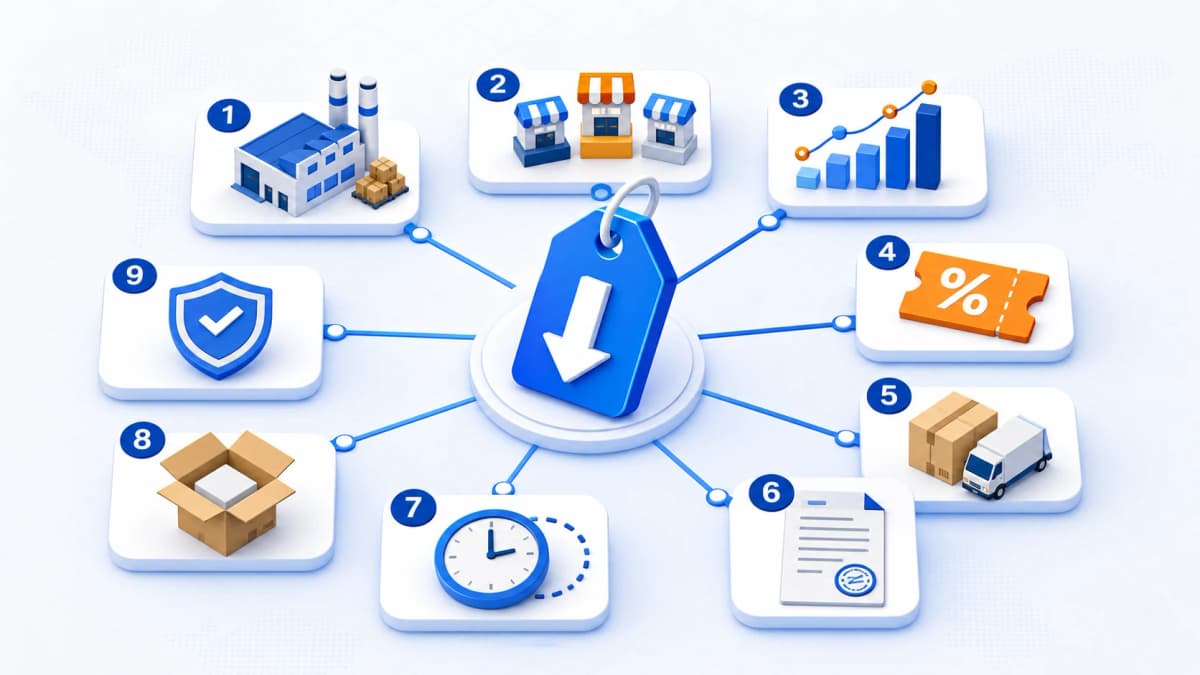
Temu is cheap because it compresses costs and margins across the value chain. Many products come from China-based merchants or manufacturers, the platform encourages highly competitive pricing, customer demand data helps reduce waste, and shoppers often accept slower delivery or less predictable quality in exchange for lower prices.
The lowest Temu price is usually a visible checkout price, not the full business cost. Some costs are absorbed by suppliers through thinner margins. Some are funded by platform discounts or marketing spend. Some are shifted into longer delivery times, simpler packaging, limited brand building, product quality variance, return friction, or regulatory exposure.
For consumers, Temu can be attractive for low-risk items where price matters more than brand, warranty, speed, or consistency. The key is knowing which products are safe to treat as cheap finds and which products need more caution. The trust question behind whether Temu is a scam site usually comes down to this: Temu is a real marketplace, but the purchase experience depends heavily on product type, merchant quality, shipping expectations, and buyer protection.
What Temu Actually Is
Temu is an online marketplace owned by PDD Holdings, the parent company behind Pinduoduo. PDD's 2025 annual report describes Temu as a global platform serving consumers across major markets and primarily helping China-based merchants reach buyers internationally.
A Marketplace Built Around Value
Temu's promise is simple: broad product selection at attractive prices. PDD describes both Pinduoduo and Temu as platforms that help merchants streamline manufacturing and operations, which can support more competitive prices and reduced waste.
That structure is different from a traditional retail chain that buys inventory, marks it up, stores it locally, and sells through stores or warehouses. It is also different from many Amazon private-label models, where a seller sources from a manufacturer, imports inventory, pays fulfillment fees, invests in listing assets, buys ads, and needs a margin after all of that.
Why Temu Matters Beyond One App
Temu often competes hardest in categories where products are generic, lightweight, unbranded, and easy to compare visually. Phone accessories, storage items, kitchen tools, craft supplies, beauty accessories, simple apparel, pet accessories, and household gadgets are common examples.
That is why Temu shows up in so many price comparisons with Amazon, Shein, AliExpress, and other marketplaces. The point is not that every product on Temu is automatically a better deal. The point is that Temu has trained shoppers to ask why one similar-looking item costs $3 on one app and $18 somewhere else.
9 Reasons Behind Temu's Low Prices
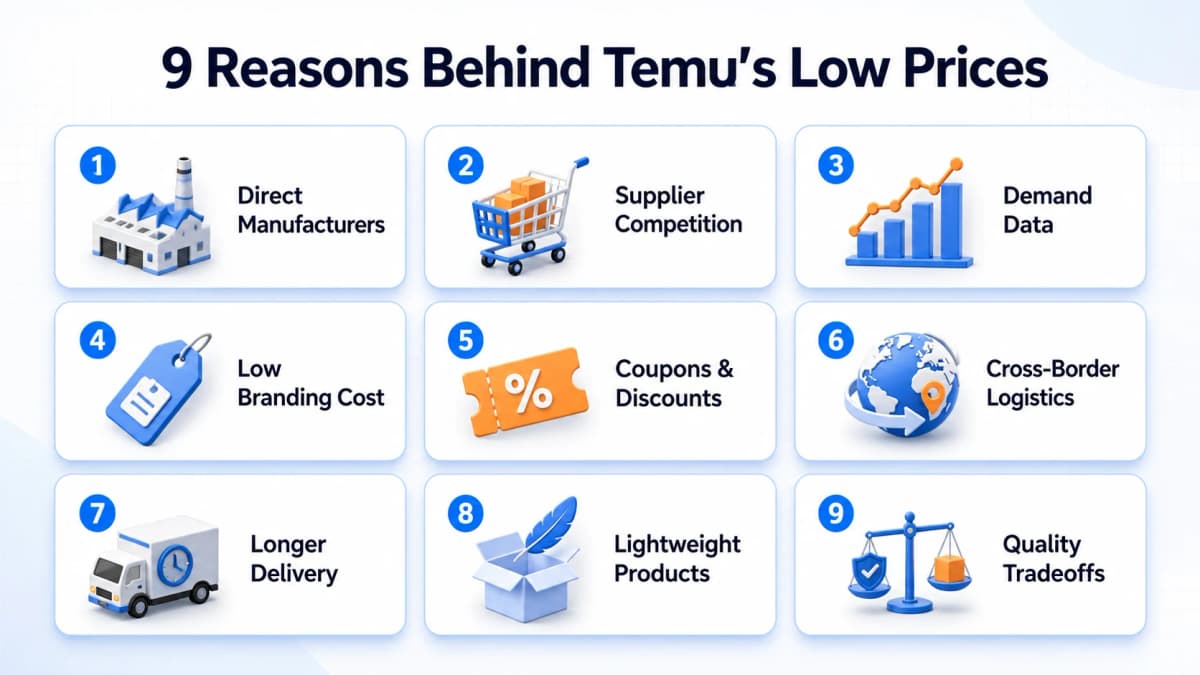
1. Direct Access to Manufacturers and China-Based Merchants
Many Temu products come from merchant networks close to China's manufacturing base. This can reduce layers between factory, trading company, wholesale buyer, distributor, retail seller, and consumer.
Traditional retail pricing often stacks markups at each step. A product may move from factory to exporter, importer, brand, distributor, retailer, and marketplace before the shopper sees it. Temu's model can remove or compress several of those steps.
The core price advantage comes from fewer visible layers between production and checkout. That does not make every item high quality, but it helps explain why simple goods can appear much cheaper than similar products sold through more traditional retail channels.
2. Supplier Competition Pushes Margins Down
Temu's low prices are also driven by competition among merchants. If many factories can produce similar items, the platform can surface lower-priced offers and pressure suppliers to accept thinner margins in exchange for order volume.
This creates a hard environment for undifferentiated products. If two items look identical and neither has strong proof of better materials, support, warranty, or safety documentation, the shopper mostly sees price.
3. Data Reduces Demand Guesswork
Temu's parent company has deep experience in demand aggregation and marketplace recommendation systems. Harvard Business School has described the broader Shein and Temu model as a way to match consumer demand with dispersed production.
That matters because inventory mistakes are expensive. When a brand guesses wrong, it pays for overproduction, storage, markdowns, and dead stock. A marketplace with large-scale search, browse, cart, and purchase data can test demand signals quickly and feed them back into supply decisions.
This is one reason Temu is often compared with Shein. Shein vs Temu discussions usually focus on shopping categories and delivery experience, but the deeper similarity is data-driven demand testing. Both models try to detect what people want before committing too much inventory in the wrong place.
4. Low Brand-Building Cost Per Item
Many Temu products are sold as inexpensive, utility-first items. The product page usually does not need to support a long brand story, premium packaging, influencer-led positioning, or an expensive creative system.
That keeps the unit economics lean. A premium brand may spend on product photography, A+ Content, packaging design, insert cards, warranty support, influencer seeding, and paid acquisition. Temu can often win when the shopper's mindset is "cheap enough to try."
This is also where better brands can defend a higher price. Better images, clearer claims, proof of quality, fast shipping, strong warranties, and review-backed trust can justify a higher price when the product solves a meaningful problem.
5. Aggressive Discounts and Customer Acquisition
Temu's shopping experience is built around coupons, countdowns, bundles, gamified rewards, referral offers, and aggressive promotional pricing. Some of the cheapest prices are not stable everyday economics. They are part of a customer acquisition and retention engine.
Discounts can make a marketplace feel cheaper than its true long-term cost structure. A product may be subsidized to win app installs, reactivate users, build habit, or increase basket size.
Shoppers should separate promotional price from normal price. A coupon-heavy shopping experience can make the app feel cheaper than its long-term economics. A $2 item may be a customer acquisition offer, a temporary campaign, or a low-margin product used to build shopping habit.
6. Cross-Border Logistics and Small-Parcel Economics
Historically, low-value cross-border parcels benefited from de minimis rules in markets such as the United States and the European Union. In the U.S., the de minimis threshold allowed many sub-$800 shipments to enter without normal duty treatment. That helped direct-from-China ecommerce models keep prices low. The shipping origin question matters because where Temu ships from affects delivery time, tracking, customs exposure, and whether a product is fulfilled locally or cross-border.
That advantage has been changing. The U.S. ended duty-free de minimis treatment for covered goods from China and Hong Kong starting May 2, 2025. The EU Council also agreed to apply a fixed customs duty of EUR3 on small parcels valued under EUR150 from July 1, 2026.
The regulatory picture is now a moving cost variable, not a stable loophole. Tariffs, customs entries, postal fees, country-of-origin rules, and local fulfillment changes can all affect the final price a shopper sees.
7. Longer Delivery Windows Lower the Promise Cost
Fast delivery is expensive. Local inventory, fulfillment centers, carrier contracts, replacement stock, and customer service all add cost. Temu shoppers often accept a different tradeoff: lower prices in exchange for longer or less predictable delivery.
Retailers with faster delivery promises usually carry a different cost structure. Local inventory, returns processing, replacement stock, and customer support can raise prices, but they also create trust and convenience.
The strategic question is which promise the customer values for the product. A cheap craft accessory may tolerate slow shipping. A gift, replacement part, baby item, beauty refill, or time-sensitive household item may not.
8. Lightweight, Generic, and Easy-to-Ship Products
Many of Temu's strongest price comparisons appear in products that are small, lightweight, and cheap to manufacture. These products are easier to ship, easier to discount, and less likely to require complex after-sales support.
That is why every category should not be compared to Temu in the same way. A branded supplement, electronic device, safety-sensitive baby product, tool with warranty requirements, or furniture item with bulky logistics has a different cost structure.
9. Quality, Compliance, and Return Tradeoffs
Low prices can come with tradeoffs. Product consistency, material quality, safety documentation, labeling, intellectual property checks, and reliable after-sales support all cost money.
That does not mean every low-priced product is bad. It means shoppers should understand where costs may have been removed. The more safety-sensitive, size-sensitive, material-sensitive, or warranty-sensitive the product is, the more carefully the listing should be checked.
Why Temu Prices Are Changing
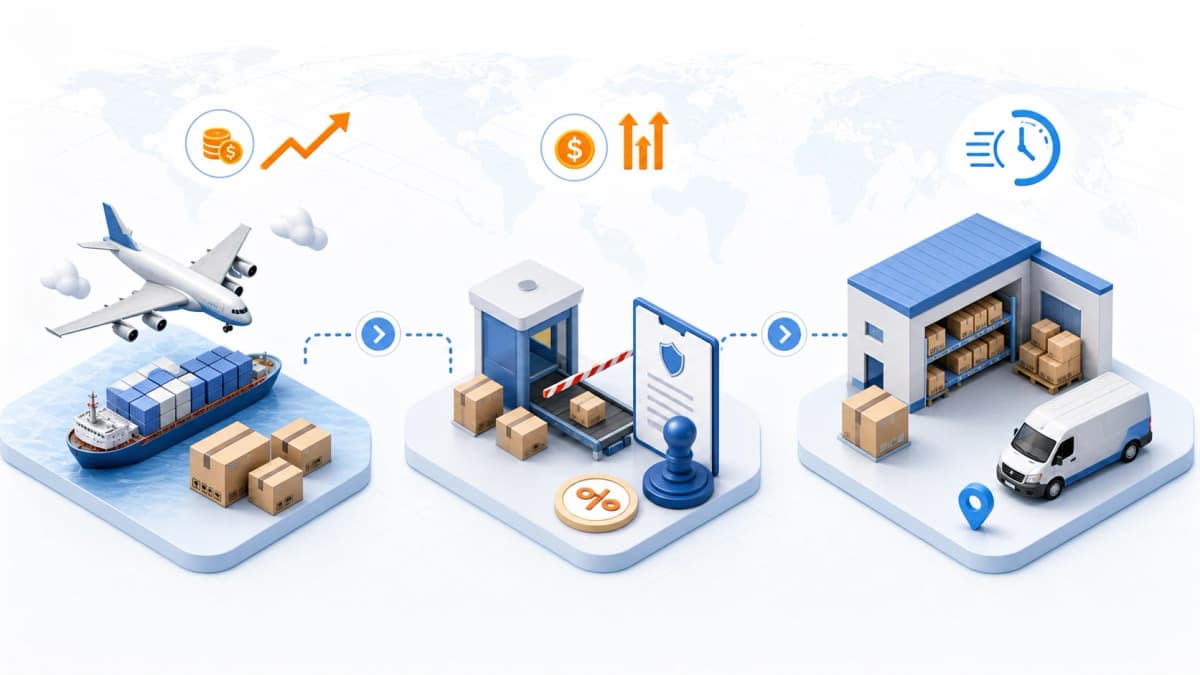
Temu's original price advantage was shaped by direct shipping, supplier competition, platform subsidies, and regulatory conditions. Several of those conditions are now changing.
U.S. De Minimis Changes
The U.S. policy shift in 2025 changed the economics for China and Hong Kong origin low-value imports. Retail Dive reported that direct shipping models faced tariff and compliance turbulence after the change, with de minimis shipment volume falling sharply and more merchants exploring U.S. storage or alternative import methods.
That does not make Temu disappear. It does mean the cheapest direct-shipping model is harder to sustain in the same form. Local fulfillment, bulk imports, warehousing, customs compliance, and new seller incentives can all change the real cost base.
EU Small Parcel Duties
The EU is also moving against low-value parcel advantages. The Council of the EU agreed on a fixed EUR3 duty for small parcels valued below EUR150 entering the EU from July 1, 2026, largely through ecommerce flows.
For shoppers, this matters because the same item may not stay the same price forever. If a platform shifts from direct small-parcel shipping to more local inventory, the checkout price, delivery promise, return process, and product selection can all change.
More Local Fulfillment
As small-parcel rules tighten, platforms and brands are pushed toward more local inventory. Local fulfillment can improve delivery speed and compliance control, but it adds forecasting risk, warehousing cost, and inventory planning pressure.
For buyers, this can be good or bad. Local fulfillment may mean faster delivery and easier returns. It may also mean some ultra-cheap items become less available or less heavily discounted.
What Shoppers Should Check Before Buying
Temu can be a good place to buy low-risk, low-cost items, but the cheapest price should not be the only filter. The better question is whether the product category can tolerate tradeoffs in shipping time, quality consistency, returns, and documentation.
Check the Product Risk Level
Some items are naturally safer to buy cheaply than others. A phone stand, storage bin, craft tool, hair clip, or party decoration usually has a different risk profile from a charger, skincare product, baby item, supplement, helmet, tool, or anything with electrical or safety requirements.
Before buying, check:
- Material claims that affect safety, durability, or skin contact
- Size and compatibility details that could create return friction
- Electrical or battery information for chargers, lights, tools, and gadgets
- Review photos that show the real item, not only polished listing images
- Return terms if the product arrives damaged, late, or different from the listing
Compare Delivery and Return Expectations
A cheap item is less attractive if it arrives too late for the intended use or is difficult to return. Delivery time is part of the real price. So are replacement risk, refund friction, and customer support.
This is especially important for gifts, event supplies, seasonal items, travel products, and replacement parts. A slower delivery window may be fine for "nice to have" items, but it can be a problem when timing matters.
Look for Signs of Real Value
The best Temu purchases are often simple items where the product does not need much brand trust. The risk rises when the product needs exact sizing, long-term durability, safety documentation, or reliable after-sales support.
Good signs include clear dimensions, specific materials, realistic photos, consistent recent reviews, clear shipping estimates, and a return process that makes sense for the item's value.
What Brands Can Learn From Temu
Temu also gives ecommerce teams a useful market signal. It shows which products are becoming visually generic and where shoppers may no longer understand why one version costs much more than another.
Brands do not need to copy Temu's model. They do need to make the value gap obvious. Better materials, faster delivery, stronger instructions, verified compliance, clearer images, better bundles, warranty coverage, and responsive support all help explain why a shopper should pay more.
Use Price Pressure as a Research Signal
When a product has a Temu alternative at a much lower price, the next question is whether the higher-priced product has proof. Strong Amazon listing optimization should make material quality, use case, bundle logic, and risk reduction visible quickly.
For ecommerce teams, product research should include a Temu check when the category is generic and lightweight. If the only difference between two products is price, the category may be too easy to commoditize.
Turn Temu Price Pressure Into Better Product Decisions
Temu's low prices are useful data, but the price tag alone does not explain what to do next. Ecommerce teams still need to know which products are becoming commodities, which reviews reveal unmet needs, where a higher price can be justified, and what creative assets can make that value clearer.
Nexscope helps turn Temu-style price pressure into a research workflow that connects market signals with product, listing, pricing, sourcing, and creative decisions:
- Review Analysis finds the complaints cheap competitors leave unresolved.
- Product Research checks whether a product still has demand, margin room, and launch potential.
- Competitor Research compares listings, prices, reviews, positioning, and weak spots.
- Keyword Research shows whether shoppers are searching for generic deals or premium solutions.
- Product Sourcing helps evaluate supplier options, specifications, and differentiation paths.
- Pricing Analysis reviews price bands, margin pressure, and competitor movement.
- Image Generation and Video Generation help teams build clearer product visuals, demos, lifestyle scenes, and ad creatives.
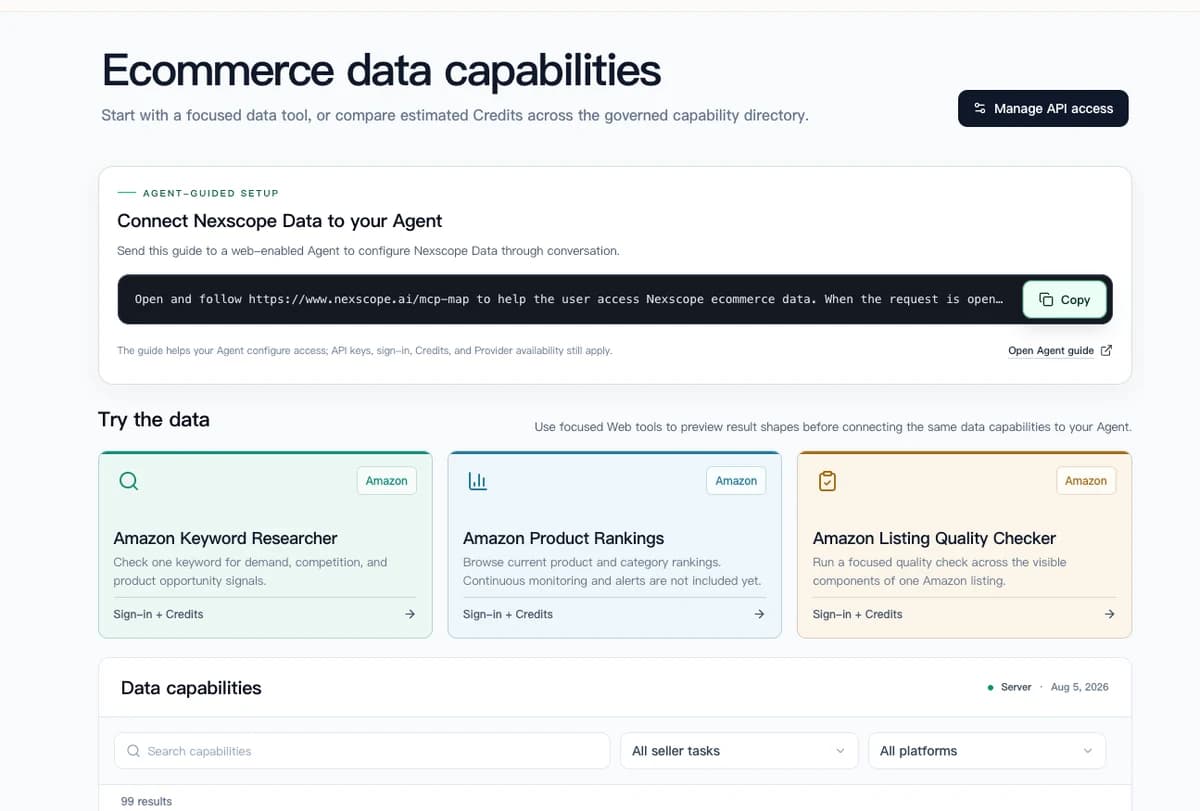
The goal is not to match Temu's lowest price. It is to understand which product differences shoppers can actually see, trust, and care about.
For Temu-specific research, Nexscope also connects Temu data through dedicated Skills Marketplace workflows. Teams can search the marketplace for Temu and use skills such as Temu Product Query to discover products by price, sales, ratings, reviews, fulfillment mode, listing activity, and tags, or Temu Store Query to compare store performance across sales, revenue, ratings, followers, product count, category focus, and market activity.
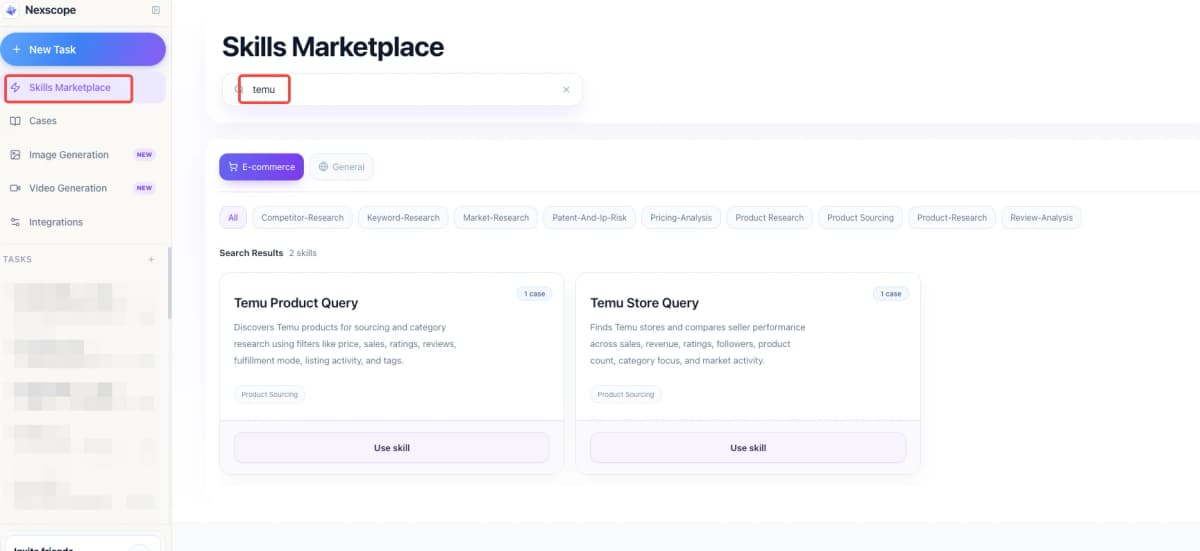
That makes Temu less of a mystery box. Instead of only seeing low prices from the outside, teams can treat Temu as a live research source for sourcing signals, category movement, competitor patterns, and pricing pressure.
Need Help Turning Temu Price Pressure Into a Growth Plan?
Nexscope's E-commerce Growth Services help ecommerce teams turn competitive price pressure into product research, competitor and review analysis, listing optimization, AI product creatives, marketplace PPC, and custom launch planning.
Talk to an Expert →Done-for-you ecommerce research • Listing strategy • Growth execution
Common Mistakes to Avoid
Mistake 1: Assuming the Lowest Price Is Always the Best Deal
The lowest visible price can still come with tradeoffs in shipping speed, product consistency, return friction, warranty coverage, and documentation. For low-risk items, that may be fine. For safety-sensitive or time-sensitive items, it may not be worth it.
Mistake 2: Assuming Cheap Means Low Quality Every Time
Some Temu products are poor quality. Others are acceptable for the price. The smarter response is evidence-based: test the product, read reviews, compare materials, and identify the exact tradeoff.
Mistake 3: Ignoring Product Category Risk
A cheap organizer and a cheap charger should not be judged the same way. Category risk changes how much attention shoppers should pay to materials, certifications, sizing, durability, and return terms.
Mistake 4: Ignoring Tariffs and Local Fulfillment Shifts
The de minimis environment has changed in the U.S. and is changing in the EU. If import costs rise or fulfillment shifts locally, some prices, shipping promises, and product availability may change.
Mistake 5: Treating Temu as Only a Threat
Temu is also a research signal. Its bestsellers can reveal demand patterns, impulse-buy categories, bundle ideas, and price ceilings. The opportunity is to understand which cheap products are genuinely good deals and which ones are cheap because important costs have been removed.
Conclusion
Temu is cheap because it combines direct manufacturer access, supplier competition, demand data, promotional subsidies, cross-border logistics, and shopper willingness to trade speed or consistency for a lower price. That model works especially well for lightweight, generic, low-risk products.
For shoppers, the right response is not automatic suspicion or automatic trust. The better response is category judgment. Cheap, simple, low-risk items may be worth trying. Products involving safety, skin contact, exact sizing, batteries, warranties, or urgent delivery deserve more scrutiny.
For ecommerce teams, Temu is a reminder that weakly differentiated products can become price-comparison products very quickly. Understanding why Temu is cheap helps both shoppers and brands see the full cost system behind the price tag.
Frequently Asked Questions
Why is Temu so cheap compared with Amazon?
Temu is often cheaper than Amazon because many products are sourced from China-based merchants, supplier competition is intense, and the platform has historically used direct cross-border shipping and aggressive discounts. Amazon products may include different costs, such as local inventory, faster delivery promises, advertising, returns, brand content, and customer support. That higher cost structure can produce higher prices, but it can also provide stronger trust, speed, and reliability.
Is Temu cheap because the products are fake?
Not necessarily. Some Temu products are generic, unbranded, or lower-spec versions of common items. Others may resemble popular products without being identical. The risk is category dependent. Sellers and shoppers should pay close attention to materials, certifications, safety claims, intellectual property risk, reviews, and product consistency. Low price alone does not prove a product is fake, but it does require more careful quality evaluation.
Did de minimis make Temu cheaper?
Yes, de minimis rules helped many low-value direct-from-China ecommerce shipments avoid normal duty treatment in the U.S. for years. That reduced the landed cost of small parcels and supported low visible prices. The U.S. ended duty-free de minimis treatment for covered China and Hong Kong goods starting May 2, 2025, and the EU is adding new small-parcel duties from July 1, 2026. These changes make landed cost more important.
What should shoppers check before buying from Temu?
Shoppers should check product category risk, real review photos, size details, material claims, shipping estimates, return terms, and whether the item has safety or compatibility requirements. Temu can be useful for simple low-risk products, but products involving electronics, batteries, skin contact, baby use, medical claims, or important durability should be evaluated more carefully.
Can brands compete with Temu?
Brands can compete with Temu when they offer value beyond the lowest price. Strong areas include faster shipping, verified quality, safer materials, clearer instructions, better bundles, warranties, responsive support, and review-backed improvements. The key is making that value visible. If a product looks identical to a cheaper alternative, many shoppers will choose the lower price.
What products are most vulnerable to Temu-style competition?
The most vulnerable products are lightweight, generic, easy to manufacture, easy to ship, and visually similar across marketplaces. Examples include simple accessories, household organizers, small craft supplies, phone cases, inexpensive kitchen tools, and novelty items. Products with safety requirements, strong brand loyalty, complex sizing, high return risk, bulky shipping, or meaningful after-sales support are less directly comparable.
Should ecommerce teams use Temu for product research?
Temu can be useful for product research, especially in low-cost impulse categories. It can reveal product ideas, price ceilings, bundle patterns, and emerging shopper interest. However, teams should not copy products blindly. A better workflow compares Temu demand with search volume, competitor reviews, sales estimates, fulfillment cost, return risk, tariff exposure, and listing differentiation.
Sources
- PDD Holdings. (2026). 2025 Annual Report. Retrieved from investor.pddholdings.com
- Harvard Business School Working Knowledge. (2023). How SHEIN and Temu Conquered Fast Fashion and Forged a New Business Model. Retrieved from library.hbs.edu
- The White House. (2025). Fact Sheet: President Donald J. Trump Closes De Minimis Exemptions. Retrieved from whitehouse.gov
- Council of the European Union. (2025). Customs: Council Agrees to Levy Customs Duty on Small Parcels as of 1 July 2026. Retrieved from consilium.europa.eu
- Retail Dive. (2025). How Lower China Tariffs Will Affect Direct-to-Consumer Imports. Retrieved from retaildive.com