

8 Ways AI Agents Can Automate Your Amazon Business

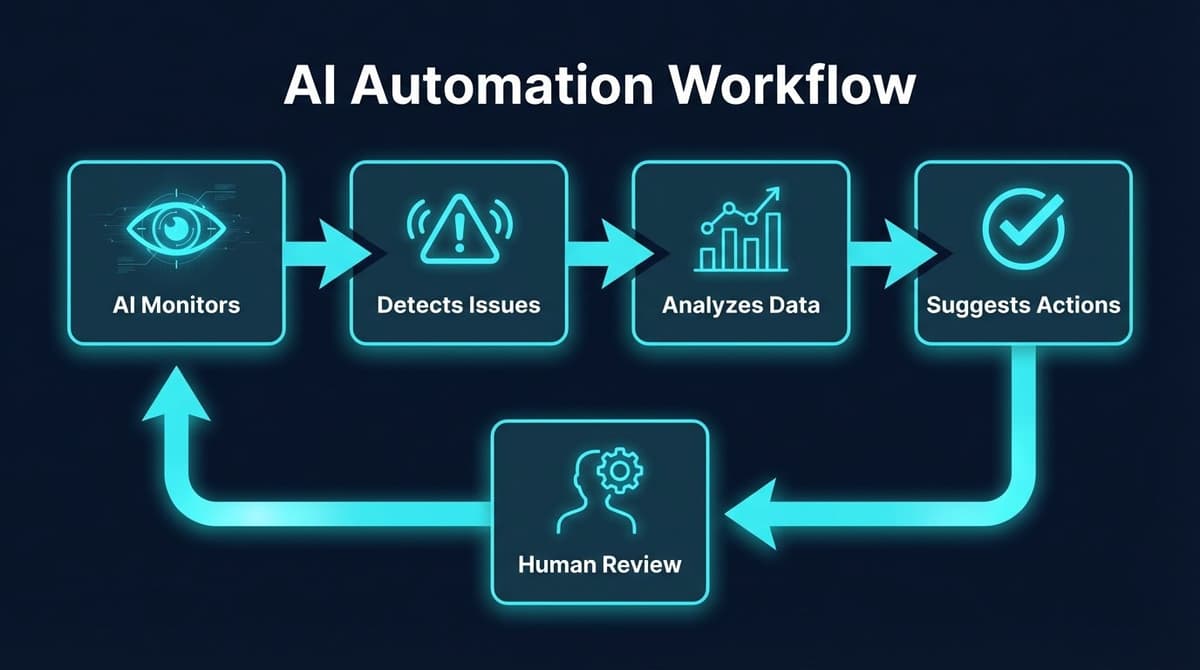
AI is no longer just about writing product descriptions. Today's AI agents can take over entire chunks of Amazon seller operations—monitoring, analyzing, and even executing tasks that used to require hours of manual work.
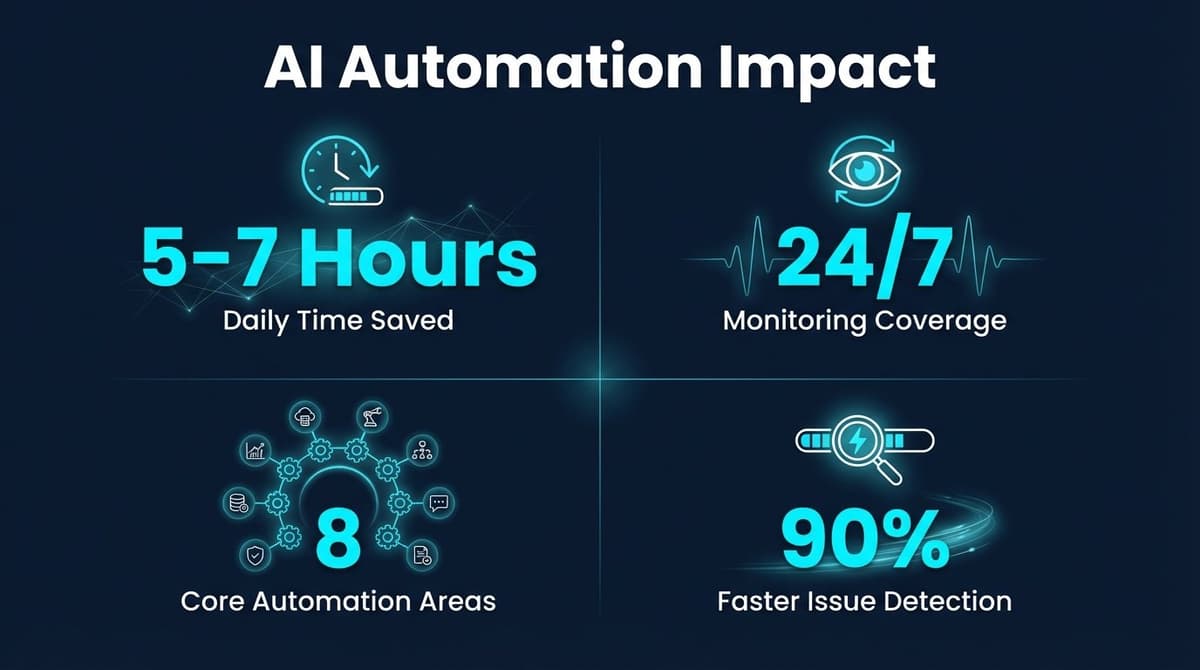
The reality: sellers using AI automation report saving 5-7 hours daily on routine operations. That time goes back into product development, sourcing, and strategic decisions that actually grow the business.
This article breaks down 8 specific ways AI agents can automate Amazon operations, with practical examples of what each automation actually does.
1. Automated Negative Keyword Management
The problem: PPC campaigns bleed money on irrelevant clicks. A search term gets 50 clicks, zero conversions, and $75 in ad spend before anyone notices.
What AI automation does:
- Monitors search term reports 24/7
- Identifies high-click, zero-conversion keywords automatically
- Flags "budget drains" with specific data (clicks, spend, CTR, conversions)
- Suggests or executes negative keyword additions
Example output from an AI agent:
⚠️ Budget Drain Alert

Search term: "cheap wireless earbuds"
Campaign: Premium Audio - Exact Match
Clicks: 47 | Orders: 0 | Spend: $68.42
CTR: 0.8% | ACOS: ∞

Recommendation: Add as negative exact match
Action: [Auto-negated] or [Pending approval]
The difference between checking this manually once a week versus having an AI check every 4 hours is substantial. Waste gets caught faster.
2. Inventory Monitoring and Alerts
The problem: Stockouts kill listing momentum. Excess inventory ties up capital and incurs storage fees. Both happen because sellers check inventory reactively, not proactively.
What AI automation does:
- Calculates days of inventory remaining based on sales velocity
- Sends stockout warnings before it's too late
- Identifies slow-moving SKUs that need clearance
- Generates reorder recommendations with quantities
Example alert structure:
🔴 Stockout Risk Alert (7 SKUs flagged)

Critical (< 7 days):
• SKU: AB-1234 | 6 days remaining | 240 units in stock
  14-day avg: 40 units/day | In-transit: 120 units
  → Action: Raise price 15% + reduce ad spend

Warning (7-14 days):
• SKU: CD-5678 | 12 days remaining | 180 units in stock
  → Action: Expedite next shipment

Overstock (> 90 days):
• SKU: EF-9012 | 142 days remaining | 850 units
  → Action: Lightning Deal + 20% coupon
The AI doesn't just flag problems—it provides context and actionable next steps.
3. Review Monitoring and Sentiment Analysis
The problem: Negative reviews surface product issues, but manually reading hundreds of reviews across multiple ASINs is impractical. Problems get discovered late.
What AI automation does:
- Tracks all new reviews across the catalog
- Alerts immediately when negative reviews appear
- Extracts root causes from review text (not just star ratings)
- Identifies patterns across multiple reviews
Example analysis:
🔔 New Negative Review Detected

ASIN: B0XXXXXXXX | "Wireless Charging Pad"
Rating: ⭐⭐ (2 stars)
Date: April 10, 2026

Review Summary: "Stopped working after 2 weeks.
Customer service was unhelpful."

AI-Extracted Issues:
1. Product durability (mentioned in 12 other reviews)
2. Customer service response (new complaint pattern)

Suggested Actions:
• Quality check with supplier on component X
• Update customer service scripts for this ASIN
Pattern recognition is where AI excels. A human might notice one bad review. An AI notices that 15% of negative reviews mention the same component failure.
4. Sales Data Analysis and Diagnostics
The problem: Sales dropped 30% this week. Why? Answering that question requires pulling data from multiple reports, cross-referencing dates, and building a hypothesis. Most sellers skip this and just guess.
What AI automation does:
- Monitors key metrics continuously (sales, sessions, conversion rate, ad spend)
- Automatically diagnoses when metrics deviate from baseline
- Provides root cause analysis, not just alerts
- Generates actionable recommendations
Example diagnostic report:
📊 ASIN Health Check: B0XXXXXXXX

Status: ⚠️ Needs Attention

Dimension Analysis:
✅ Sales: Normal (within baseline)
🟡 Traffic: -18% vs. last 14 days
🔴 Conversion: Down 2.1% → 1.4%
✅ Reviews: Stable (4.3 stars, +12 new)
🟡 Ad Spend: Up 23%, ACOS up 8 points

AI Diagnosis:
Primary issue: Conversion rate drop
Likely causes:
1. Main image unchanged while competitor B0YYYY updated theirs
2. Price increased $2.99 on April 8 (competitor held steady)
3. Buy Box win rate dropped to 87%

Recommended Actions:
1. A/B test new main image (lifestyle vs. product-only)
2. Price test: $X.99 vs. current
3. Check FBA inventory for Buy Box eligibility
This kind of analysis would take 30-60 minutes to do manually. An AI agent can run it on every ASIN, every day.
5. Market Opportunity Discovery
The problem: Amazon is saturated—but opportunities still exist in keyword gaps, underserved niches, and emerging search trends. Finding them manually requires hours of keyword research.
What AI automation does:
- Analyzes search term data to identify gaps
- Finds keywords where demand exists but competition is weak
- Tracks emerging search trends before they peak
- Maps keywords to user intent (informational vs. transactional)
Example opportunity report:
🎯 Market Opportunity Analysis

Product: Model Y Wheel Rim (21x10.5)

High-Opportunity Keywords Found:

1. "model y 21x10.5 wheel rim"
   Search volume: 2,400/mo | Competition: Low
   Intent: Direct purchase (specs match)
   Current ranking: Not indexed
   → Add to title and backend keywords

2. "tesla model y replacement wheel"
   Search volume: 5,100/mo | Competition: Medium
   Intent: Replacement/damage scenario
   Current ranking: Page 3
   → Create content around "single wheel replacement"

3. "model y wheel scratch repair"
   Search volume: 890/mo | Competition: Very Low
   Intent: Alternative to buying new
   → Consider bundling with touch-up kit
The AI connects search data to product positioning, not just keyword lists.
💡 Pro Tip: The Amazon Keyword Research Skill helps discover untapped keyword opportunities:
bash
npx skills add nexscope-ai/Amazon-Skills --skill amazon-keyword-research -g
6. Competitor Price and Promotion Tracking
The problem: Competitors change prices, run promotions, and update listings constantly. Missing these changes means reacting late—or not at all.
What AI automation does:
- Monitors competitor ASINs for any changes
- Tracks price movements with timestamps
- Detects new promotions (coupons, Lightning Deals, Subscribe & Save)
- Alerts on listing changes (images, titles, bullet points)
Example daily digest:
📡 Competitor Activity Report (Last 24 Hours)

Price Changes (6 detected):
• B0XXXX: $40.48 → $40.49 (promotional price)
• B0YYYY: $49.98 → $67.99 (FBA price increase)
• B0ZZZZ: $35.99 → $29.99 (15% drop)

Listing Changes (3 detected):
• B0XXXX: New main image uploaded
• B0YYYY: Variation count 21 → 19 (2 removed)
• B0ZZZZ: Title updated (added "2026 Model")

New Promotions:
• B0XXXX: 10% coupon activated
• B0ZZZZ: Lightning Deal scheduled (April 12)

AI Analysis:
B0ZZZZ price drop + Lightning Deal = aggressive push.
Expect their BSR to improve 30-50% this week.
Consider defensive coupon or increased ad spend.
Real-time intelligence beats guessing.
7. Competitor Deep Analysis
The problem: Knowing a competitor dropped their price is surface-level. Understanding why they're winning—their traffic sources, keyword strategy, review velocity—is the real insight.
What AI automation does:
- Reverse-engineers competitor ranking improvements
- Identifies which keywords drive their traffic
- Analyzes their review accumulation patterns
- Maps their promotional calendar and pricing strategy
Example deep analysis:
🔍 Competitor Deep Dive: B0COMPETITOR

BSR Trend: 188 → 152 (19% improvement in 14 days)

What Changed:
1. Price drop: $45.99 → $39.99 on April 1
   → BSR impact: +2.73% improvement

2. New video added: April 3
   → BSR impact: +1.60% improvement

3. Lightning Deal: April 5-6
   → BSR impact: +8.2% improvement (temporary spike)

Keyword Strategy:
• Ranking for 47 keywords (up from 39)
• New page-1 rankings: "wireless earbuds workout", "sweatproof earbuds"
• Indexing but not ranking: "earbuds for running" (opportunity)

Review Analysis:
• 234 new reviews in 30 days (7.8/day average)
• Vine reviews: 12 detected
• Review velocity 2.3x higher than 90 days ago

Takeaway:
Competitor invested heavily in launch push (video + deal + Vine).
Their organic rank is fragile—built on promo velocity.
Counter-strategy: Match keywords, don't match price.
8. Product Lifecycle Management
The problem: New products need aggressive investment. Mature products need profit optimization. Declining products need exit strategies. Treating them all the same wastes resources.
What AI automation does:
- Classifies products by lifecycle stage (Launch, Growth, Mature, Decline)
- Provides stage-appropriate recommendations
- Tracks trajectory changes (growth slowing, decline accelerating)
- Generates stage-specific action plans
Example lifecycle dashboard:
📈 Product Lifecycle Overview

Launch Phase (2 ASINs):
• B0NEW01: Day 23 | 67 reviews | BSR 4,521
  Status: On track. Maintain ad spend.
• B0NEW02: Day 45 | 23 reviews | BSR 12,340
  Status: ⚠️ Review velocity too slow. Activate Vine.

Growth Phase (5 ASINs):
• All performing within targets
• B0GROW03 approaching mature phase (review velocity declining)

Mature Phase (8 ASINs):
• Average margin: 34%
• Recommendation: Reduce ad spend 15%, harvest profits

Decline Phase (2 ASINs):
• B0OLD01: -23% sales YoY | 847 units remaining
  Action: Clearance deal, stop reorders
• B0OLD02: -8% sales YoY | 156 units remaining
  Action: Let inventory drain, no action needed
Different stages require different playbooks. AI keeps track so sellers don't have to.
How to Get Started with AI Automation
AI automation for Amazon doesn't require building custom software. Several approaches exist:
Option 1: AI Agent Platforms
Tools like OpenClaw, Claude Code, and Cursor allow installing pre-built "skills" that automate specific tasks. These work like plugins—install once, use repeatedly.
Example installation:
# Install Amazon automation skills
npx skills add nexscope-ai/Amazon-Skills -g
This installs 50+ Amazon-specific automation skills covering everything from keyword research to inventory management.
Option 2: Custom Scripts with SP-API
For sellers with technical resources, Amazon's Selling Partner API (SP-API) allows building custom automation. AI coding assistants can help write and maintain these scripts.
Option 3: Managed Automation Services
Several SaaS tools offer AI-powered automation with no technical setup required. These typically charge monthly fees but handle all the infrastructure.
Conclusion
AI automation is not about replacing human judgment—it's about eliminating the repetitive monitoring and data-gathering that consumes most operational time.
The 8 automation categories covered here represent the highest-impact areas for Amazon sellers:
- Negative keywords → Stop budget waste automatically
- Inventory monitoring → Prevent stockouts and overstock
- Review tracking → Catch problems early
- Sales diagnostics → Understand performance changes
- Market opportunities → Find growth pockets
- Competitor tracking → React faster to market moves
- Competitor analysis → Understand why competitors win
- Lifecycle management → Right strategy for each product stage
The sellers who implement these automations consistently report gaining 5-7 hours per day. That's time that compounds—more product research, better sourcing relationships, and strategic planning that drives long-term growth.
For sellers looking to implement AI automation, Nexscope provides free AI tools and skills covering all 8 areas discussed in this article. Explore the SkillHub to get started.
Automate your Amazon workflow
AI-powered tools to save hours on research, listing, and optimization
Get Started Free →No coding required • Instant access
FAQs
Do I need technical skills to use AI automation for Amazon?
No. Most AI agent platforms offer pre-built skills that install with a single command. If you can copy and paste a command into a terminal, you can use these tools.
How much does AI automation cost?
Many AI automation tools are free or low-cost. Open-source skills (like those from Nexscope) are completely free. AI agent platforms like OpenClaw have free tiers. The main cost is the AI model usage, which typically runs $10-50/month for moderate use.
Will AI automation replace Amazon virtual assistants?
Partially. AI handles monitoring and data analysis better than humans. But strategic decisions, supplier negotiations, and creative work still benefit from human involvement. The best setup combines AI automation with human oversight.
How long does it take to set up AI automation?
Basic setup takes 15-30 minutes. Installing skills and configuring alerts for your ASINs can be done in an afternoon. More advanced customization takes longer but isn't required to get value.
Is AI automation allowed by Amazon's Terms of Service?
Yes, as long as the automation doesn't violate specific policies (like automated review solicitation). Monitoring your own data, analyzing competitors' public listings, and automating advertising adjustments are all permitted.
Sources
- Amazon Seller Central documentation on SP-API capabilities
- Seller surveys on operational time allocation (multiple industry reports, 2025-2026)
- Internal analysis of AI automation implementation patterns