

TikTok Shop Black Friday 2026 Seller Readiness Playbook

TikTok Shop Black Friday preparation starts long before shoppers see the first major discount. Sellers need enough inventory in the right warehouse, approved campaign products, competitive prices, creator coverage, tested shoppable content, and a plan for the sales waves that begin before Thanksgiving and continue through Christmas.
The commercial opportunity is substantial. In its August 2026 cross-border seller announcement, TikTok Shop reported that peak-period GMV during the 2025 Black Friday and Cyber Monday season exceeded $500 million. TikTok's U.S. newsroom also reported more than 4 billion views for #TikTokShopBlackFriday and 3.5 billion views for #TikTokShopCyberMonday during the prior campaign.
That scale also increases execution risk. A viral video cannot recover inventory that is still in transit. A deep discount cannot protect margin when campaign pricing, creator commissions, advertising, and returns were modeled separately. This 90-day plan turns the original TikTok Shop preparation materials, including the timelines and product-demand graphics, into an actionable seller playbook.
TikTok Shop BFCM Timeline
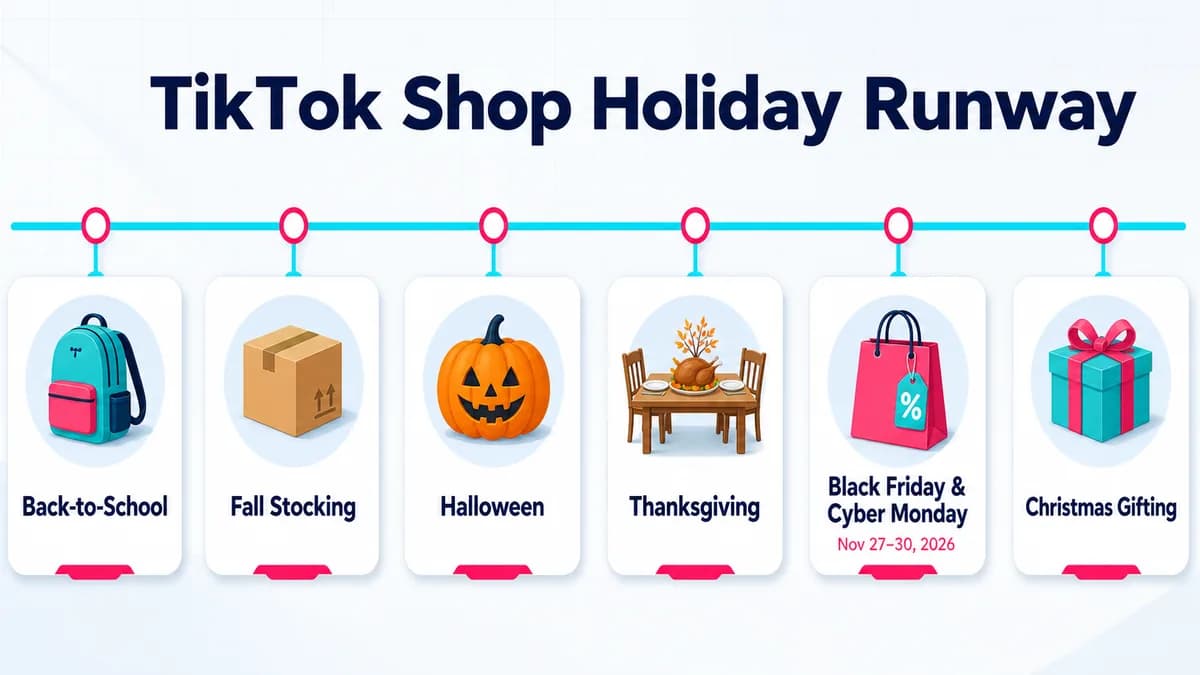
The holiday season behaves like a sequence of connected demand waves. Back-to-school demand gives way to fall stocking, Halloween, Thanksgiving, Black Friday and Cyber Monday, then Christmas gifting. Sellers that wait for Black Friday week lose the opportunity to test products and content during the earlier waves.
Black Friday falls on November 27, 2026, and Cyber Monday falls on November 30, 2026. TikTok Shop's published 2026 U.S. creator challenge runs from November 1 through December 1. Creator sample selection begins October 18 and closes October 31. Those dates establish a useful content-planning window, but sellers should still confirm their exact campaign dates and registration deadlines in Seller Center.
The practical planning sequence is:
- August: Select the product portfolio, choose the U.S. warehouse, secure production capacity, and build the margin model.
- September: Ship the first inventory, recruit creators, send samples, and produce the first content batch.
- October: Land inventory, optimize product detail pages, test short videos and LIVE formats, and register eligible products.
- Early November: Increase content frequency, expand creator coverage, respond to campaign price requests, and build a replenishment buffer.
- BFCM peak: Protect stock availability, maintain content output, monitor margin, and move budget toward proven creatives.
- December: Continue with gift-focused products, holiday bundles, shipping cutoffs, and post-purchase service.
Three Holiday Demand Themes
The source material identifies three product-demand themes: value-driven Black Friday shopping, gathering-driven Thanksgiving purchases, and gift-driven Christmas demand. Each theme needs its own assortment and creative angle.
Black Friday Demand
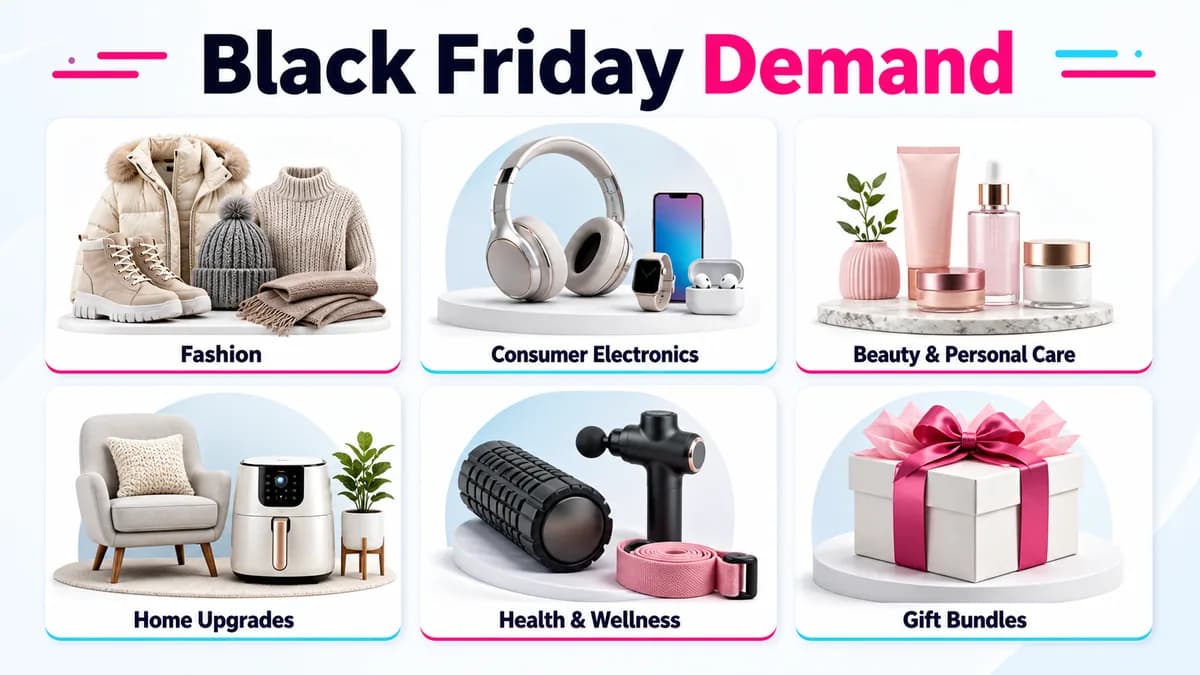
Black Friday demand concentrates on visible value, practical upgrades, and products that are easy to compare. The original TikTok Shop material highlights the following categories:
- Fashion: Seasonal wardrobe updates, coordinated outfits, shoes, and accessories.
- Consumer electronics: Headphones, compact devices, smart accessories, and giftable gadgets.
- Beauty and personal care: Skincare sets, hair tools, cosmetics, and routine bundles.
- Home upgrades: Small appliances, furniture accents, and products that improve daily routines.
- Health and wellness: Massage devices, fitness accessories, and self-care products.
- Gift bundles: Curated sets that make the discount and gifting value easy to understand.
The offer should be clear within the first seconds of a video or LIVE segment. Bundles need a visible price advantage, while higher-ticket products need proof, demonstrations, or comparison content that reduces purchase uncertainty.
Thanksgiving Demand
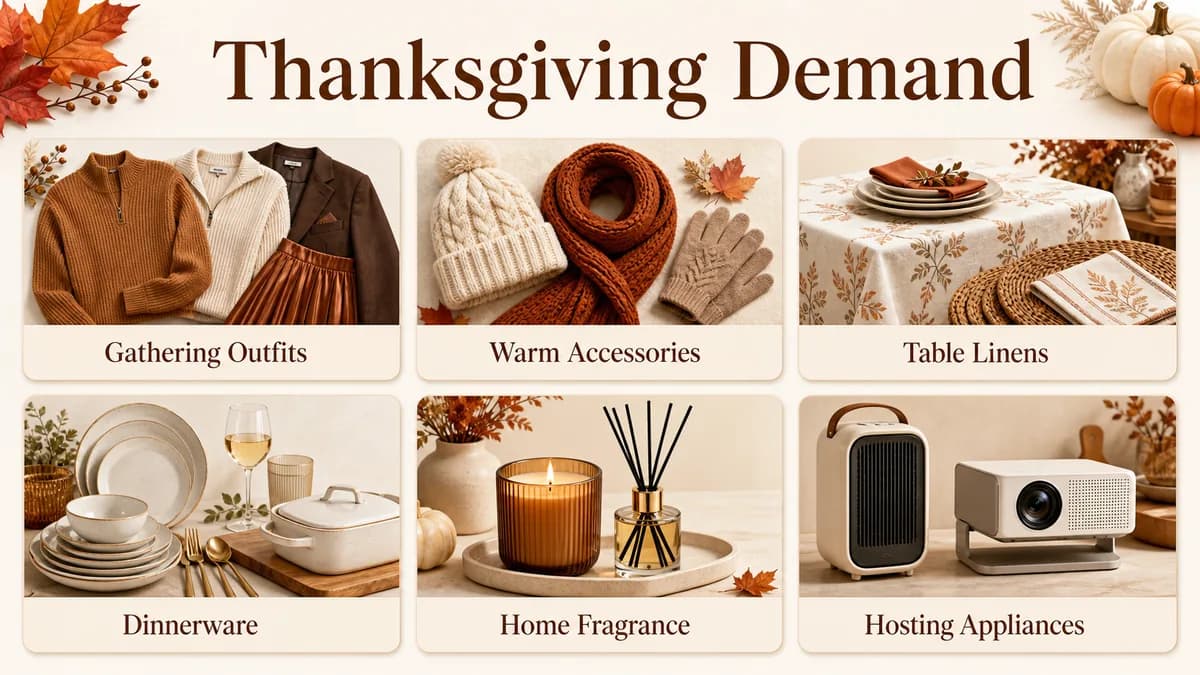
Thanksgiving demand is organized around hosting, family gatherings, seasonal comfort, and shared meals. Relevant products include:
- Gathering outfits: Coordinated looks for hosts, guests, couples, or families.
- Warm accessories: Hats, scarves, gloves, and other early-winter add-ons.
- Table linens: Tablecloths, placemats, runners, and decorative textiles.
- Dinnerware: Plates, glasses, serving pieces, and food-presentation tools.
- Home fragrance: Candles, reed diffusers, and seasonal scents.
- Hosting appliances: Compact heaters, projectors, kitchen appliances, and entertaining equipment.
Creative should show the product in a recognizable gathering context. A table runner is easier to evaluate when shown on a complete table. A projector is more persuasive when the content demonstrates how it fits a family movie night. Each asset should focus on one use case rather than stacking unrelated holiday claims.
Christmas Gifting Demand
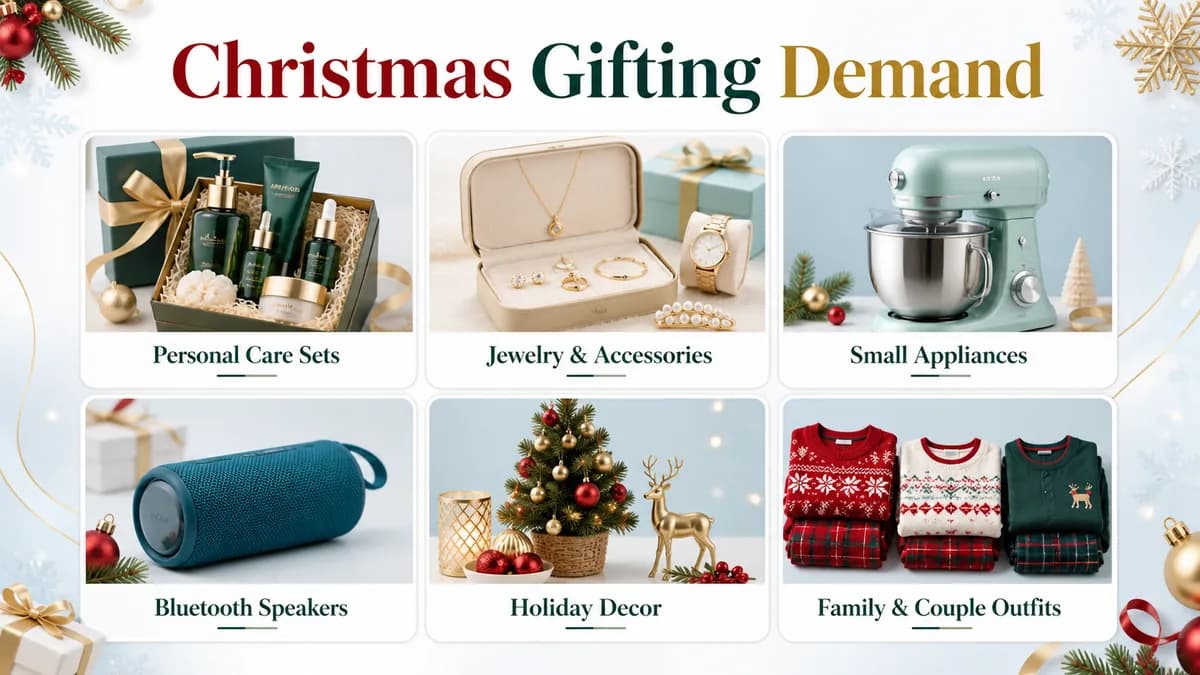
The Christmas phase rewards giftability, presentation, and shipping confidence. TikTok Shop's source material emphasizes personal-care sets, jewelry, small appliances, Bluetooth speakers, holiday decor, coordinated outfits, and household gifts.
Gift-focused listings should answer four questions quickly:
- Who is the product for?
- What is included in the package?
- Does it arrive ready to give?
- Can it arrive before the buyer's deadline?
Packaging quality matters more during this phase because damaged presentation can turn an otherwise functional product into a return. Listings should show the exact bundle contents, packaging dimensions, color options, and any items that are not included.
Holiday Product Mix
A BFCM assortment should contain multiple product roles. Depending on one hero SKU creates an inventory bottleneck and limits the range of creator angles available during the campaign.
Portfolio Roles
- Hero products: Proven items with enough margin and inventory to support creator commissions, discounts, and paid traffic.
- Traffic products: Accessible products that attract clicks and first-time buyers without consuming the entire promotional budget.
- High-value products: Higher-ticket products supported by demonstrations, proof, and reliable fulfillment.
- Exclusive bundles: Combinations that improve average order value and reduce direct price comparison.
- Seasonal products: Thanksgiving, winter, and Christmas items with a defined selling window.
- Clearance products: Inventory that can support aggressive offers without confusing the pricing of core products.
Selection Checks
Product selection should combine demand with operational readiness. A trending product is a weak BFCM candidate when the supplier cannot replenish it, the listing has unresolved quality complaints, or the margin disappears after discounts and creator commissions.
Before increasing inventory, sellers should review:
- Recent order and sales direction
- Creator and content fit
- Available production capacity
- Warehouse arrival time
- Product rating and negative-review themes
- Return and refund risk
- Campaign price and contribution margin
- Bundle and upsell opportunities
Early TikTok Shop trend signals can support the initial shortlist. A structured holiday product research process should then test whether the demand, competition, content, and fulfillment evidence support a larger commitment.
Cross-Border POP Roadmap
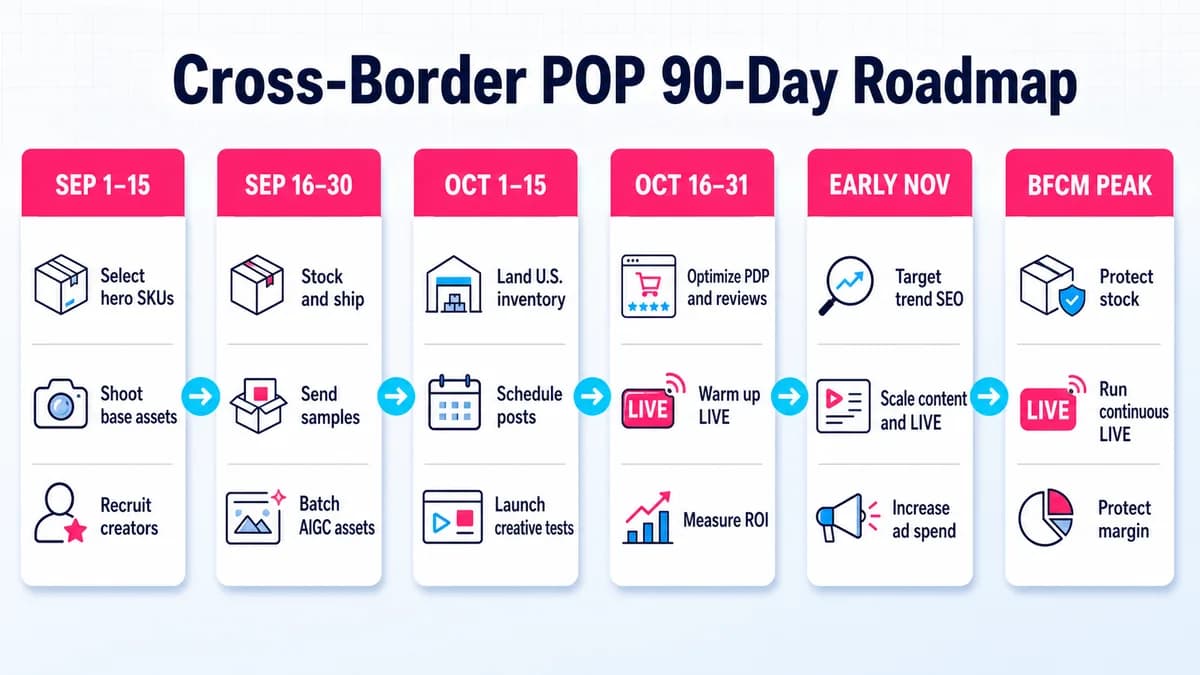
This roadmap applies to cross-border POP sellers that control their assortment, warehouse plan, content, advertising, and creator relationships. It should not be treated as a universal schedule for every U.S. domestic shop.
September 1–15
Select the hero products and assign a role to every SKU. Confirm the target price, discount range, creator commission, advertising allowance, shipping cost, return reserve, and minimum acceptable margin.
At the same time, shoot the base asset library. Each product should have clean product footage, demonstrations, problem-and-solution clips, packaging shots, close-ups, and accurate product-detail images. Begin recruiting creators whose audience and content style match the category. High follower count alone is insufficient.
September 16–30
Move from planning to physical execution. Place replenishment orders, ship inventory toward the selected warehouse, and confirm tracking and estimated arrival dates. Send creator samples in waves so content does not depend on a single delivery batch.
Build the first repeatable content system. Human-shot assets can be combined with AI-assisted variations for hooks, backgrounds, captions, storyboards, and alternative formats, but all product claims and visible product details should remain accurate.
October 1–15
Confirm that inventory has landed in the U.S. warehouse and that Seller Center quantities match physical availability. Schedule the first creator posts and identify which products receive strong watch time, clicks, add-to-cart activity, and orders.
Launch controlled creative tests. Change one major variable at a time, such as the opening hook, demonstration, offer, creator, or video length. This makes the results easier to interpret than testing entirely different videos without a shared structure.
October 16–31
Optimize product pages using the questions and objections visible in comments, reviews, returns, and creator feedback. Improve images, descriptions, variations, bundle contents, and shipping information without changing the product's identity or making unsupported claims.
Warm up LIVE sessions before peak traffic. Test hosts, scripts, product order, pin timing, demonstrations, and handoffs. Measure return on ad spend and contribution margin together. Revenue growth does not protect the business when the promotional stack creates a negative margin.
Early November
Increase the frequency of proven content and LIVE formats. Align listing language with relevant seasonal searches, but avoid keyword stuffing or unrelated holiday terms. Maintain a reserve of approved creatives so one fatigue event does not stop the campaign.
Expand spend gradually around content that already demonstrates conversion potential. TikTok Shop analytics can help separate first-party shop performance from competitor estimates and public market signals.
BFCM Peak
Protect in-stock rates for hero products and bundles. Keep LIVE coverage consistent, refresh high-frequency assets, and monitor price changes, creator posts, cancellations, and warehouse exceptions throughout the day.
Budgets should follow proven products and creatives. A sales spike should trigger a replenishment and margin review, not an automatic increase across every campaign.
Managed Fulfillment Roadmap
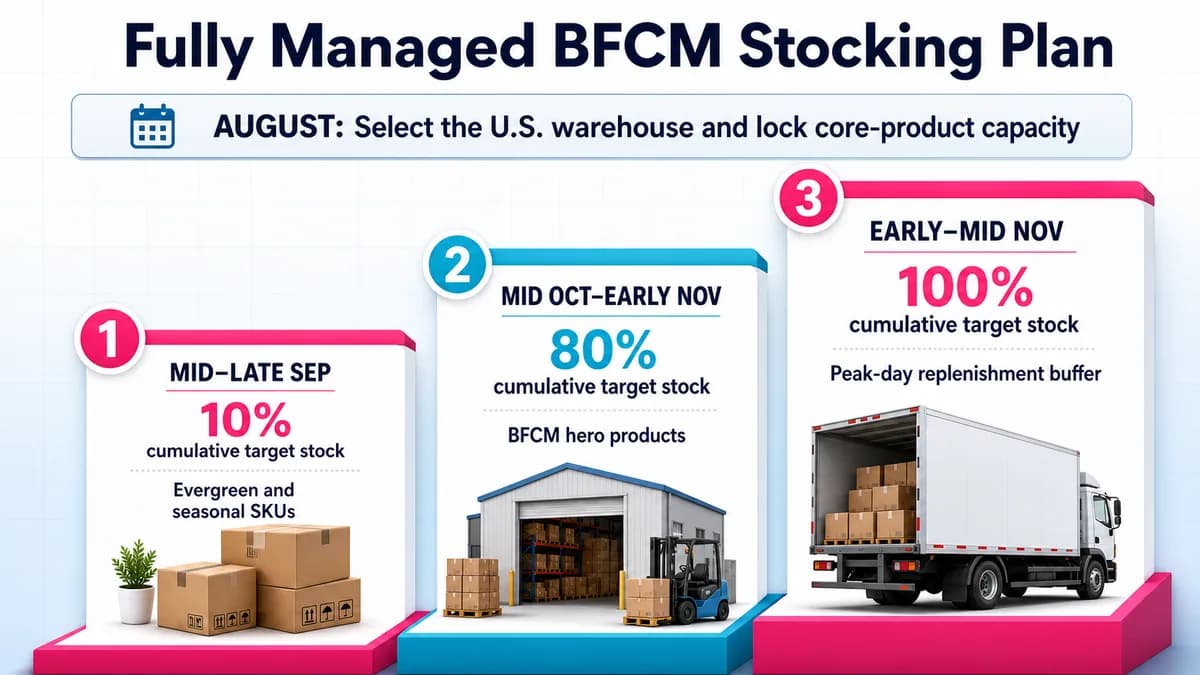
The original material also provides a separate plan for merchants enrolled in TikTok Shop's fully managed cross-border model. These percentages describe the source's suggested cumulative stocking milestones. They are planning references, not universal platform requirements.
August Preparation
Select the overseas warehouse and begin the first stock plan before the end of August. Lock production capacity for evergreen products, Thanksgiving products, Christmas gifts, and fall or winter seasonal items.
Complete the listings for approximately five core products. Confirm that titles, images, product attributes, package contents, and compliance information match the actual product.
First Stocking Wave
Target window: mid to late September. Suggested cumulative level: 10% of the BFCM target.
Use the first wave to validate warehouse receiving, packaging, labeling, product quality, and inventory visibility. The source recommends beginning with stable evergreen products and seasonal SKUs rather than sending the entire target in one shipment.
Second Stocking Wave
Target window: mid October to early November. Suggested cumulative level: 80%.
The second wave carries most hero-product inventory. By this point, sellers should have early content results, creator feedback, and a better view of which products deserve deeper stock. Continue sample distribution and improve the product experience before adding the final inventory.
Final Stocking Wave
Target window: early to mid November. Suggested cumulative level: 100%.
Use the final wave to complete the target and build a peak-day replenishment buffer. The source emphasizes rapid replenishment for products that show clear breakout signals. Sellers should still cap exposure according to cash flow, margin, shelf life, and return risk.
Creator Outreach Plan
Creator work needs its own calendar because recruiting, sample delivery, content production, revisions, and publication all take time.
Creator Fit
Prioritize creators with strong category relevance, dependable delivery, and a format that matches the product. A high-ticket appliance may need a detailed demonstration. A low-cost accessory may benefit from a fast problem-and-solution video. Spanish-language creators may expand reach for products and audiences where that fit is supported by the shop's market data.
Sampling Schedule
Send samples in September and early October so creators can test the product before the peak window. Maintain a tracker with the creator, product, delivery status, agreed deliverable, deadline, commission, usage rights, and publication status.
TikTok Shop's official 2026 U.S. BFCM creator challenge states that participating creators can select samples beginning October 18 and must complete selection by October 31. Sellers should prepare sample inventory and product information before that window.
Content Capacity
Do not assume every creator will publish on time or generate usable sales. Recruit enough qualified creators to absorb normal attrition, then increase support around the creators and formats that produce reliable results. Reuse creator learnings across brand content without copying a creator's work beyond the agreed rights.
Content Testing System
The source recommends testing short video, image posts, LIVE, auctions, and AI-assisted creative before the main campaign. The objective is to find a repeatable product-content combination while inventory and budgets are still controllable.
Short Video Tests
Build a test matrix around the hook, audience problem, product demonstration, proof, offer, and call to action. A creative test should have a specific question, such as whether a direct demonstration outperforms a lifestyle opening.
LIVE Preparation
Test the host, session duration, product sequence, pin timing, demonstration script, coupons, and traffic source. LIVE should have enough product depth to maintain momentum if the first hero item sells out.
Creative Reserve
Produce more approved assets than the initial media plan requires. Organize them by product, hook, creator, format, and funnel stage. AI-assisted production can accelerate resizing, variation, and editing, but final review should check product accuracy, claims, spelling, prices, and policy compliance.
Paid Amplification
Use early organic and creator performance to decide which content deserves paid support. Evaluate clicks, conversion, cancellations, refunds, commission, ad spend, and product margin together. A library of TikTok ads that drive sales can provide creative patterns, but every concept still needs product-specific testing.
Campaign and Pricing Readiness
Campaign eligibility can change, and Seller Center remains the final source for each shop. TikTok Shop's current U.S. campaign guidance lists the following minimum shop criteria for campaigns including BFCM:
| Metric | Current Published Threshold |
|---|---|
| Shop Performance Score | 3.5 or higher for enrollment |
| Account Health Rating | Greater than 150 |
| On-Time Delivery Rate | At least 80% over the prior 30 days |
| Seller Fault Cancellation Rate | No more than 5% over the prior 30 days |
| Shop visibility | Not limited because of excessive violations |
| Unpaid postage orders | None |
Shops without a Shop Performance Score must meet the alternative conditions displayed by TikTok Shop, including recent prohibited-policy violation requirements. Products can also be rejected for quality problems, negative reviews, abnormal pricing, inaccurate descriptions, counterfeiting, intellectual-property issues, or content-policy violations.
TikTok Shop states that campaign review can take 5 to 14 business days. Sellers should not wait until the final week to register. Go to Seller Center, then Marketing, Campaigns, and review all shop and product criteria on the campaign page.
TikTok Shop may issue campaign price recommendations through the Seller Center To-Do module or campaign registration pages. Ignoring a required pricing action can temporarily remove benefits such as campaign tags, coupons, subsidies, or campaign exposure. Review each recommendation against contribution margin before accepting it.
Inventory and Fulfillment Control
Inventory planning continues after stock reaches the warehouse. TikTok Shop's current U.S. guidance directs sellers to Products, Manage Stock to monitor sufficient, low, and out-of-stock SKUs and configure low-stock alerts.
Stock Dashboard
Set alerts by units or days of supply for hero products. Review warehouse-level inventory when multiple locations are active. Seller Center quantities should reconcile with warehouse reports before campaign traffic increases.
Dispatch Readiness
Confirm packaging, labels, carrier handoff, and order-status updates. TikTok Shipping and Fulfilled by TikTok orders update after carrier collection. Ship by Seller orders require accurate carrier and tracking information within the applicable handling time.
Exception Monitoring
Track late dispatch, cancellations, returns, negative reviews, and damaged-product complaints daily during the peak. A stockout needs a clear response: pause or reduce promotion, shift to a substitute product, or communicate a revised delivery promise only when the platform permits it.
Conclusion
TikTok Shop Black Friday 2026 readiness depends on coordinated execution across products, inventory, creators, content, pricing, campaigns, and fulfillment. The strongest plan starts with a small number of products, tests them early, moves stock in controlled waves, and scales only after demand and margin signals support the decision.
The photo-based source materials reinforce the same operating sequence. Select products in August and early September. Ship inventory and samples in September. Test content and improve listings in October. Increase proven content, LIVE, and advertising in November. Protect stock and margin throughout the peak.
Research Smarter. Create Holiday Content Faster.
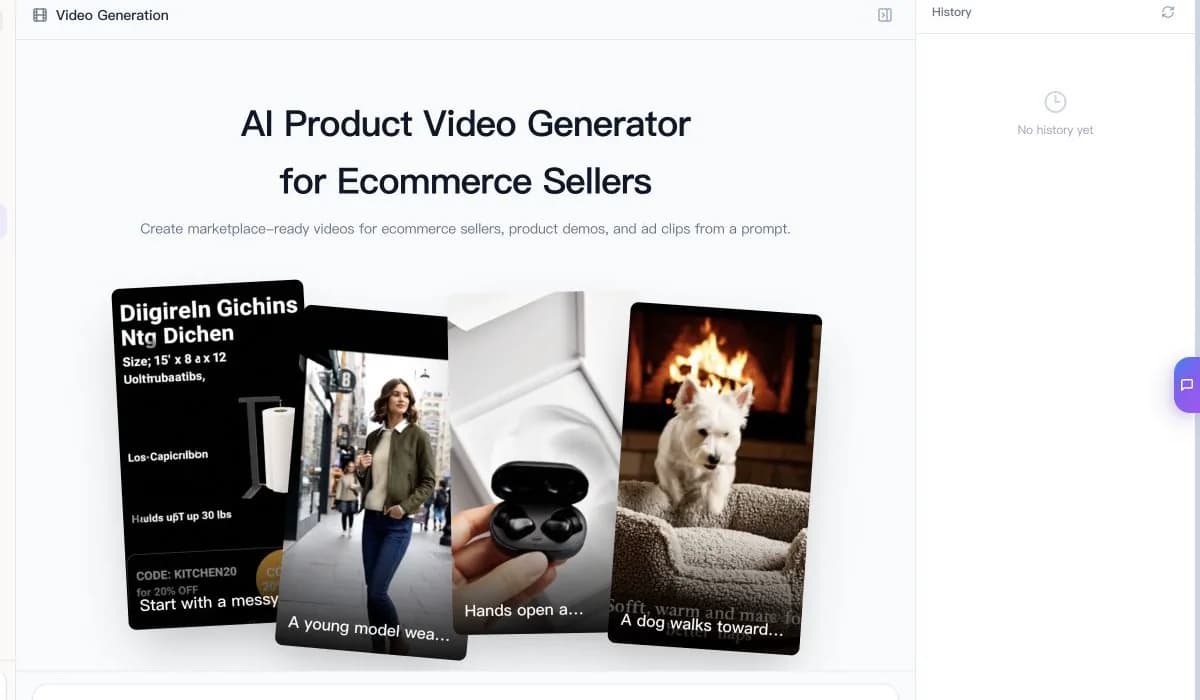
Use Nexscope Ecommerce Data APIs through REST API or MCP to validate products, pricing, demand, and competitors. Then create ecommerce product videos directly in Nexscope or automate production with Creative APIs.
Frequently Asked Questions
When should TikTok Shop sellers start BFCM preparation?
Sellers should begin approximately 90 days before the Black Friday and Cyber Monday peak. August is the right time to choose products, model margins, reserve production, and select warehouse capacity. September should focus on inventory movement, creator recruitment, sampling, and base content. October is the main testing and optimization window. Exact campaign registration dates vary, so Seller Center should be checked throughout the preparation period.
How much BFCM inventory should sellers prepare?
There is no universal inventory percentage for every seller. The fully managed source roadmap suggests cumulative milestones of 10% by mid to late September, 80% by mid October to early November, and 100% by early to mid November. Those figures should be adjusted for sales history, content performance, supplier lead time, cash flow, margin, return risk, shelf life, and warehouse replenishment speed.
Which products fit TikTok Shop Black Friday?
Strong candidates combine visible value, content potential, reliable inventory, acceptable margins, and low fulfillment risk. The source highlights fashion, electronics, beauty, personal care, home upgrades, health products, small appliances, gift bundles, holiday decor, and seasonal outfits. A product still needs evidence from sales, creator feedback, reviews, and operational capacity before receiving deep inventory.
When should creator outreach begin?
Creator outreach should begin in September for products expected to scale during BFCM. This allows time for selection, negotiation, sample delivery, product testing, content production, revisions, and scheduling. TikTok Shop's 2026 U.S. creator challenge opens sample selection on October 18 and closes it on October 31, which makes early sample and product preparation important.
What content should sellers test before Black Friday?
Test short shoppable videos, LIVE sessions, product demonstrations, problem-and-solution hooks, comparison formats, bundles, image posts, and paid amplification. Each test should isolate a major variable and connect the result to clicks, conversion, cancellation, refund, and margin data. Maintain a reserve of approved assets so content fatigue or delayed creator delivery does not stop the campaign.
How do sellers register for TikTok Shop campaigns?
Eligible sellers can open Seller Center, go to Marketing, select Campaigns, and review available campaign details. TikTok Shop displays shop and product eligibility on the campaign page. Published guidance states that review can take 5 to 14 business days. Sellers should monitor requests for product information, price recommendations, and policy corrections after submission.
Sources
- TikTok Shop Academy. (2026). ALL IN FOR BFCM: Creator Community Challenge. Retrieved from seller-us.tiktok.com
- TikTok Shop Academy. (2026). Campaign Eligibility Requirements. Retrieved from seller-us.tiktok.com
- TikTok Shop Academy. (2026). Inventory and Dispatch Preparation. Retrieved from seller-us.tiktok.com
- TikTok Newsroom. (2025). TikTok Shop Kicks Off Our Biggest Holiday Season Ever. Retrieved from newsroom.tiktok.com