

Best Products to Sell During FIFA World Cup 2026
The 2026 FIFA World Cup isn't just the biggest sporting event of the year—it's the largest World Cup in history. For e-commerce sellers, it's a once-in-four-years opportunity to ride a massive wave of consumer demand.
This tournament is different. Three host countries. 48 teams instead of 32. 104 matches over 39 days. Summer timing in North America. These factors combine to create product opportunities that didn't exist in previous World Cups.
Whether you sell on Amazon, TikTok Shop, or Shopify, this guide breaks down exactly what's selling, when demand peaks, and how to capture your share without running into IP trouble.
Why 2026 Is Different from Every Previous World Cup
Before diving into products, understand what makes this tournament unique—because these differences directly shape what sells.
Three Host Countries = Triple the Demand
The US, Canada, and Mexico are co-hosting for the first time. That means:
- 500+ million people in the host region
- Three national teams with home-field advantage
- Fans buying merchandise for three countries, not one
- Local viewing parties across an entire continent
For comparison, Qatar 2022 had a population of 2.9 million. The demand difference is staggering.
48 Teams = More Fans, More Products
The tournament expanded from 32 to 48 teams. More qualifying nations means:
- More fan bases actively buying merchandise
- More "smaller nation" opportunities (first-time qualifiers)
- Longer tournament = sustained demand over 39 days
- 104 matches vs. 64 in previous tournaments
Summer Timing = Outdoor Everything
Previous World Cups were held in winter (Qatar) or during cooler months. 2026 runs June 11 to July 19—peak North American summer.
This changes what sells:
- Outdoor viewing gear (projectors, portable speakers, shade structures)
- Backyard party supplies
- Coolers, ice buckets, cold drink accessories
- Outdoor furniture for watch parties
Prime Time Matches for North America
Most matches will air during afternoon and evening hours in US time zones. No more 5 AM kickoffs. This means:
- Higher viewership = higher demand
- Watch parties become mainstream
- Impulse purchases during matches spike
Top 10 Product Categories for World Cup 2026
Based on historical data from 2018 and 2022 World Cups, combined with early 2026 trends from Amazon and TikTok Shop, here are the highest-potential categories:
1. Host Country Merchandise (Growth: 1000-2000%)
The biggest opportunity of this World Cup. Products featuring USA, Mexico, or Canada will massively outsell other nations.
What's selling:
- USA soccer jerseys (searches up 143% year-over-year)
- Mexico team gear (3rd largest fan base in the US)
- Canada merchandise (first World Cup since 1986)
- Tri-nation combo products (flags, decorations featuring all three)
- Official mascot items (Clutch, Sayo, and Maple)
Why it works: Home team advantage drives emotional purchases. In 2022, host nation Qatar saw 800%+ increases in merchandise sales despite being a small market.
2. Team Jerseys and Fan Apparel (Growth: 300-600%)
The most visible World Cup category and a proven seller every tournament.
What's selling:
- Official and replica jerseys (especially USA, Mexico, Argentina, Brazil)
- Player-specific jerseys (Messi, Pulisic, star players)
- Customized jerseys with buyer's name
- Fan t-shirts and casual wear
- Scarves, hats, headbands in team colors
Pro tip: Customized jerseys with buyer names command 2x the price of standard versions and have 15% lower return rates.
3. Watch Party Supplies (Growth: 400-700%)
North American summer + evening matches = massive watch party demand.
What's selling:
- Themed party decorations (banners, balloons, tablecloths)
- Disposable plates, cups, napkins in team colors
- LED string lights in national colors
- Photo booth props and fan accessories
- Party game sets (soccer-themed drinking games, trivia)
What's trending on TikTok: A trophy-shaped beer glass went viral before the tournament—5,000+ units sold in 3 months with zero ad spend.
4. Outdoor Viewing Gear (Growth: 400-700%)
Summer timing makes this category explode compared to winter tournaments.
What's selling:
- Portable projectors + outdoor screens
- Bluetooth speakers (waterproof, high-volume)
- Folding tables and chairs
- Shade canopies and pop-up tents
- Portable fans and misting systems
- Outdoor extension cords and power stations
Data point: Bluetooth speaker sales increased 300% during Qatar 2022 (a winter tournament). Summer 2026 projections are significantly higher.
5. Collectibles and Trading Cards (Growth: 600-900%)
The collector market has exploded since 2022. Trading cards are now mainstream.
What's selling:
- Panini 2026 World Cup sticker albums and packs
- Panini Prizm trading card boxes
- Trophy replicas (various sizes)
- Pop Mart × FIFA collaboration blind boxes
- Signed memorabilia and limited editions
Why it's big: Trading cards were the #1 sports collectible category in 2022. The 48-team format means more rare cards and more collector interest.
6. Food and Beverage Accessories (Growth: 200-350%)
Watch parties need food and drinks. This category has high margins and repeat purchase potential.
What's selling:
- Insulated cups and tumblers (team-themed)
- Beer glasses, shot glasses, trophy cups
- Ice buckets and coolers
- BBQ tools and outdoor cooking accessories
- Snack serving sets (chip bowls, dip trays)
- Mexican-themed food items (taco holders, salsa bowls)
Angle: Mexico as a host country drives demand for Mexican-themed party food accessories.
7. Pet Soccer Gear (Growth: 250-450%)
A surprise growth category that's been building since 2018.
What's selling:
- Pet jerseys (team versions for dogs and cats)
- Soccer ball pet toys
- Team-colored collars, leashes, bandanas
- Pet beds and mats with team logos
- Pet costumes (referee, player themes)
Why it works: 70% of US households have pets. Pet humanization trends mean owners want their pets included in celebrations. This is a low-competition niche with loyal buyers.
8. Car Decorations (Growth: 150-300%)
American car culture meets soccer fandom.
What's selling:
- Car flags and window flags
- Mirror covers in team colors
- Bumper stickers and window decals
- Steering wheel covers
- Air fresheners (team-shaped)
- Antenna toppers
Cultural context: "Tailgating" (parking lot parties) is huge in North America. Fans decorate cars as part of the pre-match ritual.
9. Phone and Tech Accessories (Growth: 200-400%)
Everyone watches matches on their phones. Accessories follow.
What's selling:
- Team-themed phone cases
- Portable chargers / power banks
- Phone stands for watching matches
- Anti-glare screen protectors
- Wireless earbuds cases (team colors)
TikTok trend: A Mexico-themed phone case sold 4,500+ units in under 2 months on TikTok Shop.
10. Home Viewing Accessories (Growth: 200-350%)
Not everyone watches outdoors. Home viewing still dominates.
What's selling:
- TV soundbars and speaker systems
- Streaming device accessories
- Team-themed throw blankets and pillows
- Wall-mounted TV brackets
- LED bias lighting for TVs
- Snack trays and couch organizers
Low-Competition Niches That Are Already Selling
Big categories attract big competition. Smart sellers find underserved niches. Here's what's working on TikTok Shop with minimal ad spend:
Face Paint and Temporary Tattoos
- Low cost, high margin
- Impulse purchase at low price point
- No IP issues with generic flag designs
- Easy to bundle with other fan accessories
Customized Fan Items
Products with personalization options:
- Custom name jerseys
- Personalized fan scarves
- Name-engraved accessories
Why it works: Customization commands premium prices, reduces competition (harder to copy), and creates emotional connection.
Watch Party Bundles
Pre-packaged kits combining multiple items:
- "Ultimate Watch Party Kit" (decorations + disposable tableware + accessories)
- "Backyard Match Kit" (outdoor viewing essentials)
- "Pet Fan Kit" (jersey + toy + bandana)
Why it works: Bundles increase average order value by 40-60% and differentiate you from single-item sellers.
Country-Specific Niche Products
Instead of generic "soccer" products, focus on specific team fans:
- Argentina mate cups (traditional drink)
- Mexico-themed party supplies (extends beyond just soccer)
- Brazilian-themed accessories (samba drums, carnival elements)
Sales Timeline: When to Stock and When to Sell
World Cup demand follows a predictable pattern. Time your inventory accordingly.
April - Early May (6-8 Weeks Before)
- Search volume starts climbing
- Early-bird fans begin purchasing
- Action: Ensure inventory is stocked and listings are optimized
Late May - June 10 (1-2 Weeks Before)
- Conversion rates peak
- Last-minute shoppers rush to buy
- Action: Maximize ad spend, this is your highest-ROI window
June 11 - June 29 (Group Stage)
- Daily matches = sustained demand
- Sales remain high and steady
- Action: Monitor inventory levels, restock fast movers
June 30 - July 19 (Knockout Stage)
- Demand spikes for advancing teams
- Eliminated team merchandise drops sharply
- Action: Shift focus to favorites (USA, Mexico, Argentina, Brazil, etc.)
July 19-22 (Finals + 72 Hours After)
- Champion team merchandise explodes
- Final demand spike of the tournament
- Action: If you have champion team inventory, this is your last big push
After July 22
- Demand drops dramatically
- Clear remaining inventory at discount
- Action: Don't get stuck with excess stock
Missed the Early Window? Here's What You Can Still Sell
If you're reading this mid-tournament without pre-stocked inventory, you haven't missed everything. Focus on these fast-turnaround opportunities:
Print-on-Demand Products
- Custom t-shirts, phone cases, and posters require no inventory
- React to match results in real-time (winner celebration designs)
- Platforms like Printful, Printify can ship within days
Digital Products
- Watch party planning templates
- Trivia game printables
- Social media templates for fans
Dropshipping with Fast Shipping
- Source from US-based suppliers (2-3 day delivery)
- Focus on consumable party supplies
- Target the knockout rounds and finals (still 3+ weeks of demand)
Advancing Team Merchandise
- As teams get eliminated, demand concentrates on survivors
- USA, Mexico (host countries) guaranteed sustained interest
- Argentina, Brazil typically go deep in tournaments
Key principle: Speed beats selection. A mediocre product that ships tomorrow beats a perfect product stuck in transit from China.
IP Risks: What You Can and Can't Sell
FIFA aggressively protects World Cup trademarks. Violating IP rules can get your listings removed, your account suspended, or worse.
What's Protected (Don't Use Without License)
- "FIFA World Cup" (the phrase)
- "World Cup 2026" in certain contexts
- Official logos and emblems
- Official mascot images (Clutch, Sayo, Maple)
- "Qatar 2022" or previous tournament branding
- Team crests and official logos
What's Generally Safe
- Country flag designs (flags are public domain)
- Generic soccer imagery (balls, goals, players)
- Team colors without logos
- Generic phrases ("Soccer Fan," "Football Lover")
- Custom designs that don't copy official artwork
- Player names (with caution—varies by jurisdiction)
Best Practices
- Never claim "official" or "licensed" unless you are
- Avoid exact replicas of official merchandise
- Use country colors and flags, not team logos
- Create original designs inspired by the event
- When in doubt, consult an IP attorney
Check IP Risk Before You Source
Not sure if a product design crosses the line? Nexscope includes 6 patent and IP risk skills that help you check before you invest:
- Patent Risk Checker — Quick first look at potential patent issues
- Patent Legal Status — Check if a patent is still active or expired
- Design Patent Analyzer — Assess risk based on product appearance
- Patent Family Explorer — See if protection exists in your target markets
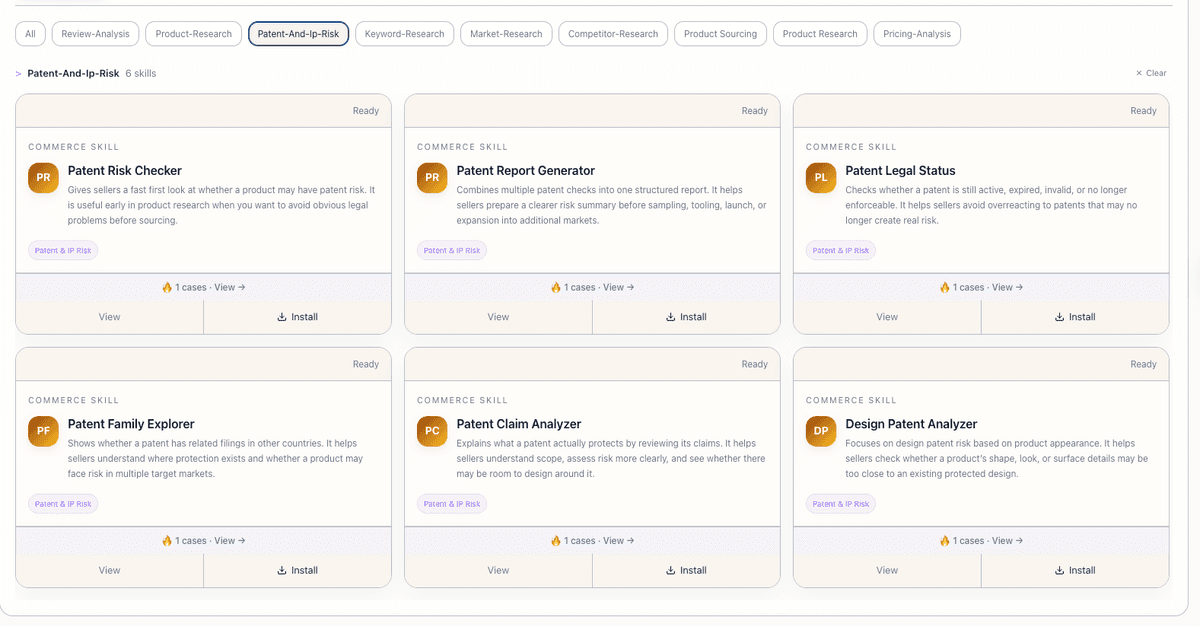
Run a quick IP check before placing that bulk order. It's faster than consulting a lawyer and catches obvious red flags early.
Platform-Specific Strategies
Amazon Sellers
- FBA is essential — Prime delivery matters during time-sensitive events
- Stock early — FBA processing times increase during demand spikes
- Optimize for search — Include country names, "2026," "soccer," "football" in listings
- A+ Content — Use enhanced content to stand out in crowded categories
- PPC strategy — Bid on team names and event-related keywords
TikTok Shop Sellers
- Content is king — Short videos showcasing products during matches perform well
- AIGC tools — Use TikTok's AI video generator for quick content creation
- Niche targeting — Target specific fan communities (Argentina fans, Mexico fans)
- Low price point wins — Impulse purchases dominate; keep items under $30
- Trend-jack — React quickly to match results and viral moments
Shopify Store Owners
- Print-on-demand integration — Connect Printful or Printify for zero-inventory World Cup products
- Dropshipping flexibility — Source from US suppliers for faster delivery during the tournament
- Email marketing — Segment your list by country/team preference for targeted campaigns
- Flash sales — Run 24-48 hour sales tied to match schedules and results
- Social proof — Feature customer photos with World Cup products to drive conversions
- SEO for long-tail keywords — Target specific team + product combinations ("Argentina fan t-shirt," "Mexico watch party supplies")
Validate Before You Invest
Before committing to inventory, validate demand and competition for your target products. Search volume data, competitor analysis, and sales estimates help you avoid costly mistakes.
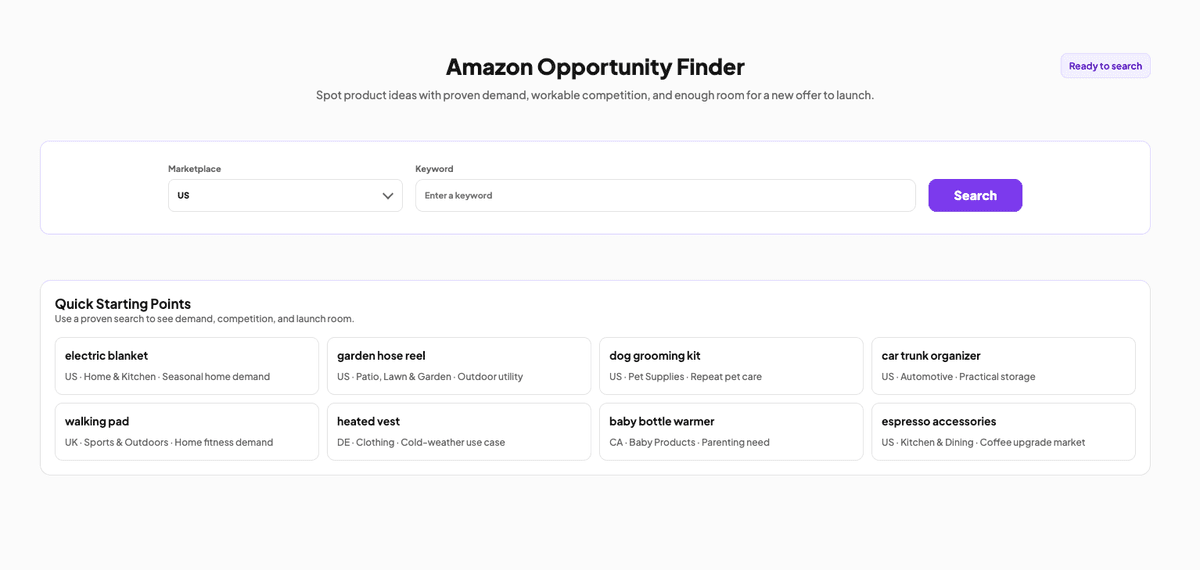
Nexscope's Opportunity Finder shows real-time demand data for any product keyword. Enter your World Cup product idea and see:
- Search volume trends
- Competition levels
- Estimated sales for top sellers
- Market saturation indicators
Conclusion
The 2026 FIFA World Cup is a rare alignment of factors for e-commerce sellers:
- Massive market — Three host countries with 500M+ population
- Extended timeline — 39 days of sustained demand
- Summer timing — Unlocks outdoor product categories
- Expanded tournament — 48 teams means more fans buying
The sellers who win will be those who:
- Stock inventory before demand peaks
- Focus on host countries (USA, Mexico, Canada) and favorites (Argentina, Brazil)
- Find low-competition niches instead of fighting for crowded categories
- Respect IP boundaries while still capturing the opportunity
- Use data to validate ideas before investing
The tournament runs June 11 to July 19. If you're reading this during that window, there's still time to capture late-stage demand. If you're reading after, save this guide for 2030—the next one's in Spain, Portugal, and Morocco.
Research Smarter with Nexscope
Nexscope provides structured ecommerce data and focused seller workflows. Teams can use Nexscope's web tools directly or connect governed capabilities to their existing Agent through API, MCP, or Skills. Ready workflows include Keyword to Ads, Video Clone, and Buy Box Repricer.
Try These Prompts for World Cup Research
Product validation:
"Analyze the market opportunity for USA soccer jerseys on Amazon. What's the search volume, competition level, and estimated sales for top sellers?"
Competitor analysis:
"Find the top 5 best-selling World Cup party supplies on Amazon. What keywords are they ranking for and what's their pricing strategy?"
Review insights:
"Analyze customer reviews for soccer fan merchandise. What are the most common complaints and what product improvements do customers want?"
Niche discovery:
"What World Cup related products have low competition but growing demand on TikTok Shop right now?"
Trend tracking:
"Compare search trends for Argentina vs Brazil soccer merchandise over the past 30 days. Which team's products are gaining momentum?"
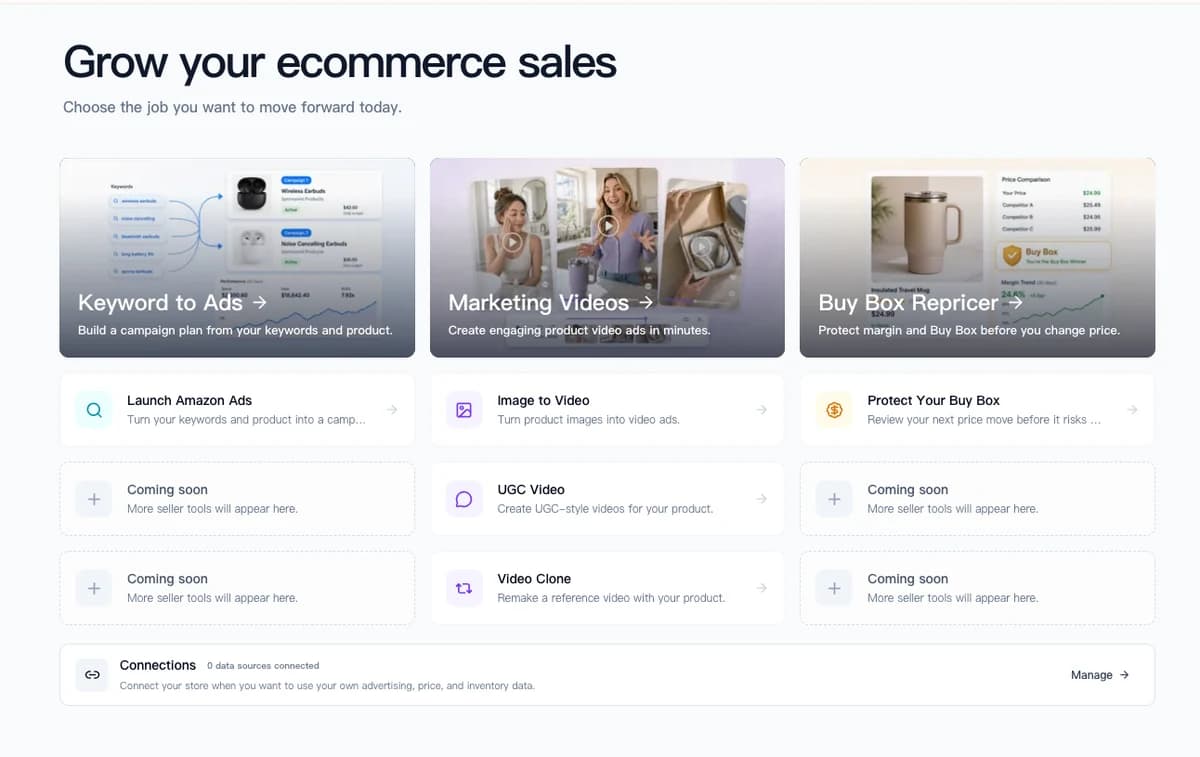
Stop guessing. Ask Nexscope and get data-backed answers in seconds.
Connect Ecommerce Data to Your Agent
Use Nexscope through API, MCP, or Skills, or open a ready seller workflow.
Explore Ecommerce Data →FAQ
When should I start stocking World Cup products?
Ideally 6-8 weeks before the tournament (April-May for 2026). Search volume begins climbing early, and FBA processing times increase as demand grows. If you're using FBA, account for 2-3 weeks of inbound shipping and processing. Last-minute sellers can still capture demand during the tournament, but margins and selection will be tighter.
What products have the highest profit margins?
Customized items (personalized jerseys, engraved accessories) typically have 50-70% margins because they command premium prices with less direct competition. Bundled products (watch party kits, fan accessory sets) also perform well with 40-60% margins. Avoid commoditized items like generic flags where price competition is fierce.
Can I sell World Cup products without an official FIFA license?
Yes, but with limitations. You cannot use FIFA trademarks, official logos, mascot images, or phrases like "FIFA World Cup." You can sell products featuring country flags (public domain), team colors, generic soccer imagery, and original designs. Many successful sellers create "fan gear" that captures the spirit without infringing trademarks.
Which teams should I focus on?
Prioritize host countries (USA, Mexico, Canada) and traditional powerhouses with large fan bases (Argentina, Brazil, England, Germany, France). USA merchandise has the highest growth potential due to home-field advantage. Mexico is especially strong in the US market—over 37 million Mexican-Americans create massive demand.
What's the difference between Amazon and TikTok Shop for World Cup products?
Amazon favors higher-priced items ($20-$50+) where Prime shipping matters. TikTok Shop excels at impulse purchases under $30 driven by short-form video content. Amazon requires more upfront inventory investment; TikTok Shop can work with smaller quantities and print-on-demand. Many sellers use both—TikTok for viral discovery, Amazon for conversion.
How quickly does demand drop after the World Cup ends?
Dramatically. Within 1-2 weeks of the final, World Cup-specific product demand falls 80-90%. Champion team merchandise sees a brief spike (72 hours post-final) then drops. Plan to clear inventory by late July. Products with year-round appeal (generic soccer gear, team jerseys) retain some value; event-specific items (2026 decorations) become nearly worthless.
What are the biggest mistakes sellers make during World Cup?
Over-ordering inventory (getting stuck with unsold stock after July), ignoring IP rules (account suspension), waiting too long to stock (missing the pre-tournament peak), and focusing only on obvious categories (missing low-competition niches). The most expensive mistake is ordering large quantities of eliminated teams' merchandise during the tournament.
Is it too late to start selling if the World Cup has already begun?
No, but your strategy shifts. During the tournament, focus on fast-shipping options (Prime, local fulfillment), advancing teams' merchandise, and consumable party supplies (decorations, disposable items). Avoid large inventory commitments—sell what you can quickly. The knockout rounds and finals still generate significant demand spikes.
Sources
- FIFA. (2026). 2026 FIFA World Cup Official Information. Retrieved from fifa.com
- Amazon Seller Central. (2026). World Cup 2026 Category Trends. Retrieved from sellercentral.amazon.com
- TikTok Shop. (2026). Trending Products Report Q2 2026. Retrieved from seller.tiktok.com
- eMarketer. (2026). World Cup 2026 Consumer Spending Projections. Retrieved from emarketer.com
- ASI Central. (2026). World Cup Merchandise Market Analysis. Retrieved from asicentral.com