

15 GPT Image 2 Prompts for Ecommerce Ads and Brand Visuals
GPT Image 2 prompts are becoming a practical part of ecommerce creative work, especially for sellers who need product photos, ad visuals, social covers, and campaign concepts without starting from a blank canvas. The best results usually come from prompts that read like a short creative brief, with the product, scene, lighting, composition, brand tone, text layout, and aspect ratio clearly defined.
For ecommerce teams, the value is speed and structure. A seller can test a product hero image, a TikTok cover, an Amazon A+ style layout, or a seasonal ad direction before booking a studio shoot or building a full design file. This guide collects 15 practical prompt patterns for product photography, beauty campaigns, coffee packaging, car posters, store concepts, social media covers, and PSD-ready layer workflows.
What Makes GPT Image 2 Prompts Useful for Ecommerce Visuals
OpenAI's image generation documentation describes GPT Image models as tools for generating and editing images from text prompts, with support for output controls such as size, quality, format, and background transparency. For ecommerce marketers, the most useful part is not only image generation. It is the ability to turn a clear creative direction into a visual draft that can be reviewed, edited, or handed to a designer.
A Prompt Should Work Like a Creative Brief
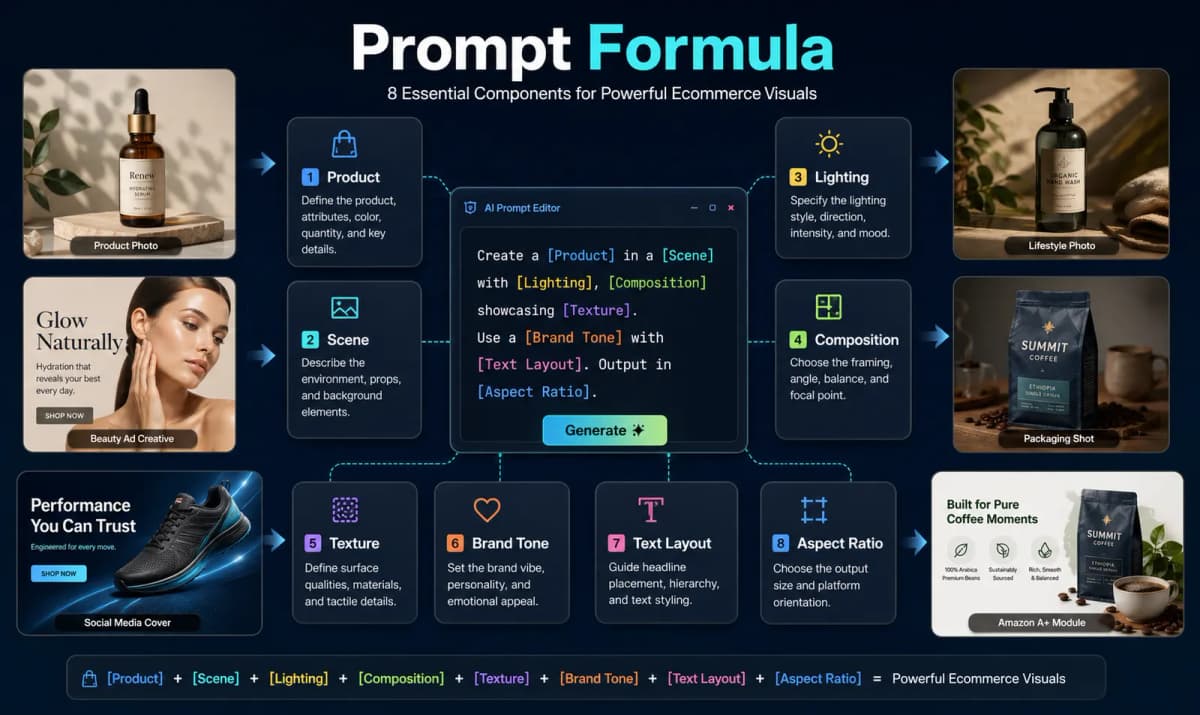
A strong ecommerce prompt usually includes eight parts:
- Product or subject: The specific item, category, or campaign object.
- Scene: The environment where the product appears.
- Lighting: Natural daylight, soft studio light, high-contrast flash, or cinematic light.
- Composition: Centered product shot, lifestyle angle, hero banner, close-up, or split layout.
- Material and texture: Matte packaging, stainless steel, glossy makeup, fabric weave, condensation, or paper stock.
- Brand tone: Minimal, premium, playful, clean, youthful, technical, wellness-focused, or luxury.
- Text layout: Big title, feature callouts, product labels, sticker-style tags, or clean editorial type.
- Aspect ratio: 1:1 for product grids, 3:4 for social covers, 9:16 for vertical ads, 16:9 for banners, or 4:3 for interiors.
That structure keeps prompts useful across Amazon, Shopify, TikTok Shop, Instagram, Pinterest, and paid ad channels.
15 GPT Image 2 Prompts for Commercial Visuals
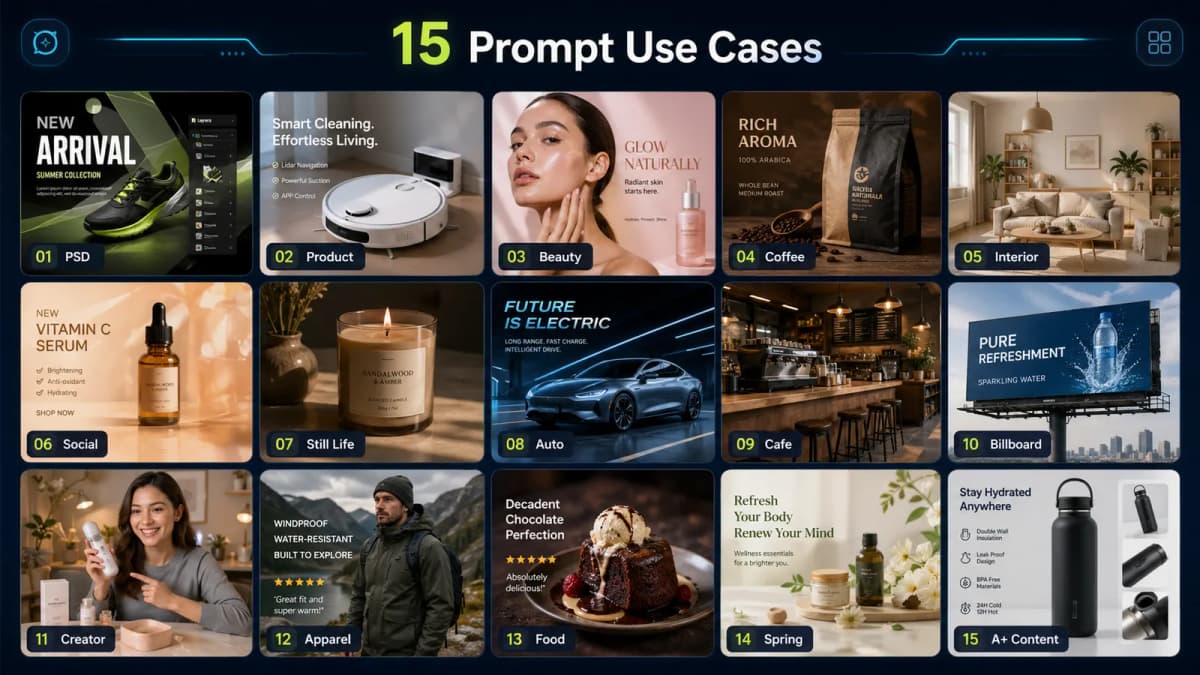
The following prompts are written for U.S. and global ecommerce contexts. Brand names are used as familiar style references and product examples. For real campaigns, sellers should use assets, logos, claims, and product details they have permission to use.
1. PSD Layer Splitting Workflow
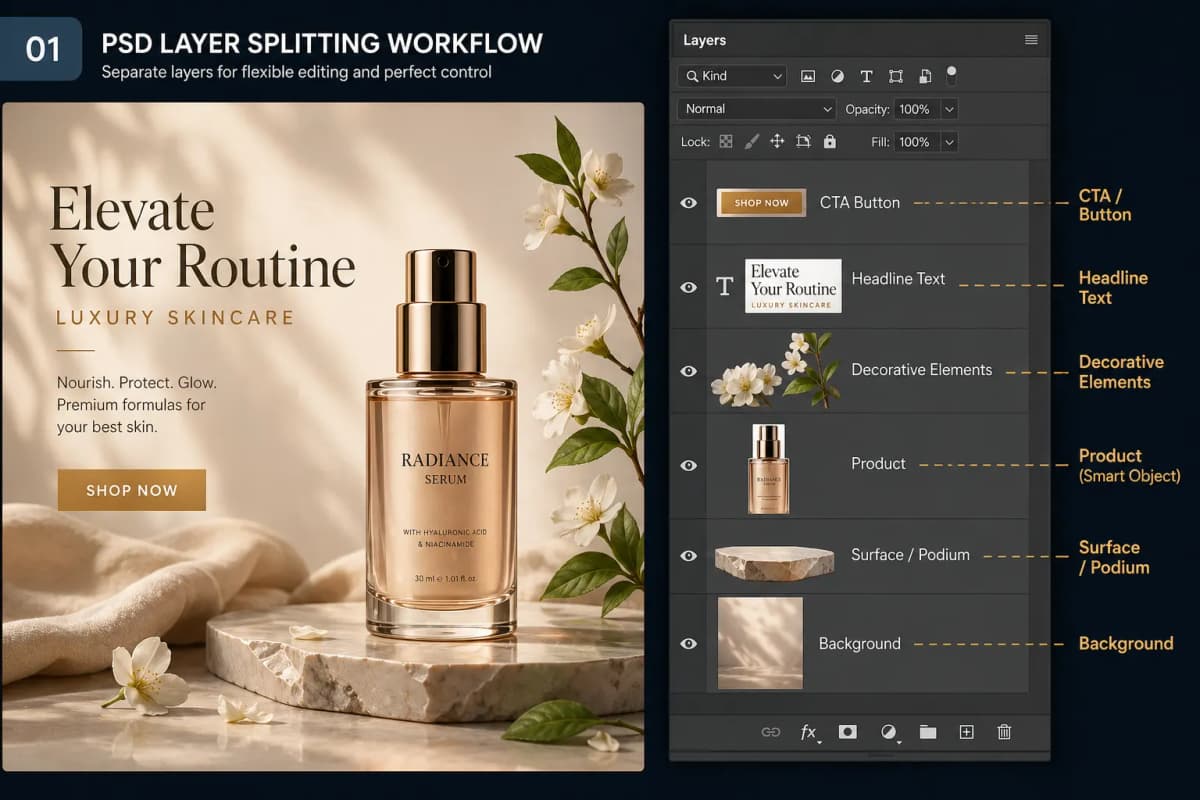
This workflow is useful when a poster concept needs to move into Photoshop for manual adjustment. The goal is to preserve the same composition while separating the background, product, decorative elements, and text areas into editable assets.
Prompt:
Split this poster into editable layers. First create the full background image as one clean base layer. Then create each visible element as a separate image in the exact same position, scale, and alignment as the original poster, so the files can be placed into Photoshop without manual repositioning. Do not change the layout. Do not use fake transparent backgrounds. Keep edges clean for later background removal.
Follow-up prompt:
Combine the separated images into one PSD-style layered composition. Remove white backgrounds, keep each element on its own layer, preserve the original position of every element, and keep the final design aligned with the original poster.
This is best for seasonal campaign posters, landing page hero graphics, and ad concepts that still need designer review.
2. Ecommerce Product Hero Image: iRobot Roomba
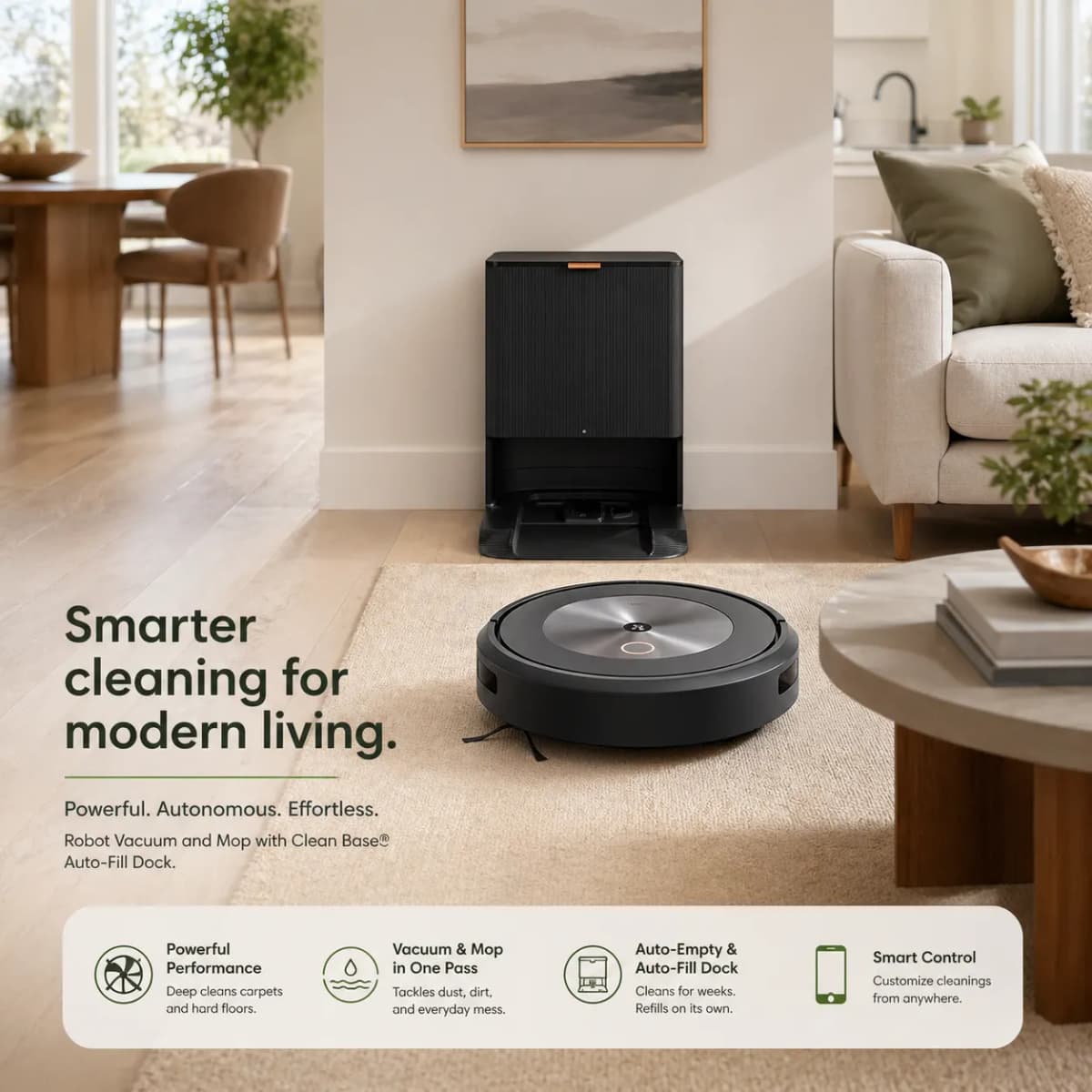
Product hero images need a clear subject and a clean commercial setting. This prompt adapts the robot vacuum example into a U.S. smart-home context.
Prompt:
iRobot Roomba Combo j9+ robot vacuum in a modern American apartment living room, bright even natural daylight, premium smart-home feel, clean white and warm neutral background, product centered in the composition, professional ecommerce product photography, realistic high-definition details, subtle text layout matching a premium home technology brand, 1:1 square image.
This type of prompt works well for Shopify product pages, Amazon-style gallery concepts, and paid social product ads.
3. Brand Campaign Key Visual: Rare Beauty
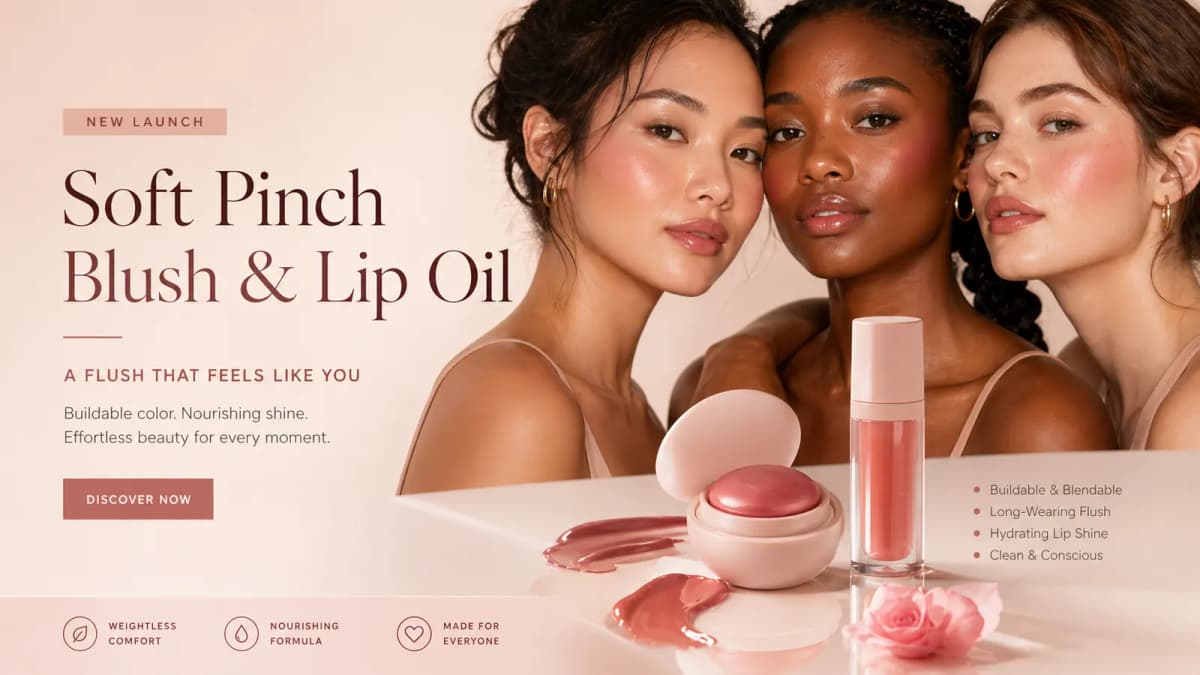
A key visual should communicate campaign tone. The prompt needs to describe the product, launch context, color direction, and layout.
Prompt:
Rare Beauty soft pinch blush and lip oil, modern inclusive beauty campaign visual, warm studio lighting, soft rose and neutral color palette, glossy cosmetic texture, clean negative space, elegant product arrangement, suitable for a new product launch hero banner, refined typography layout matching a modern beauty brand, 16:9 landscape.
The same structure can be adapted for Fenty Beauty, Glossier, or Sephora Collection.
4. Product Packaging: Blue Bottle Coffee
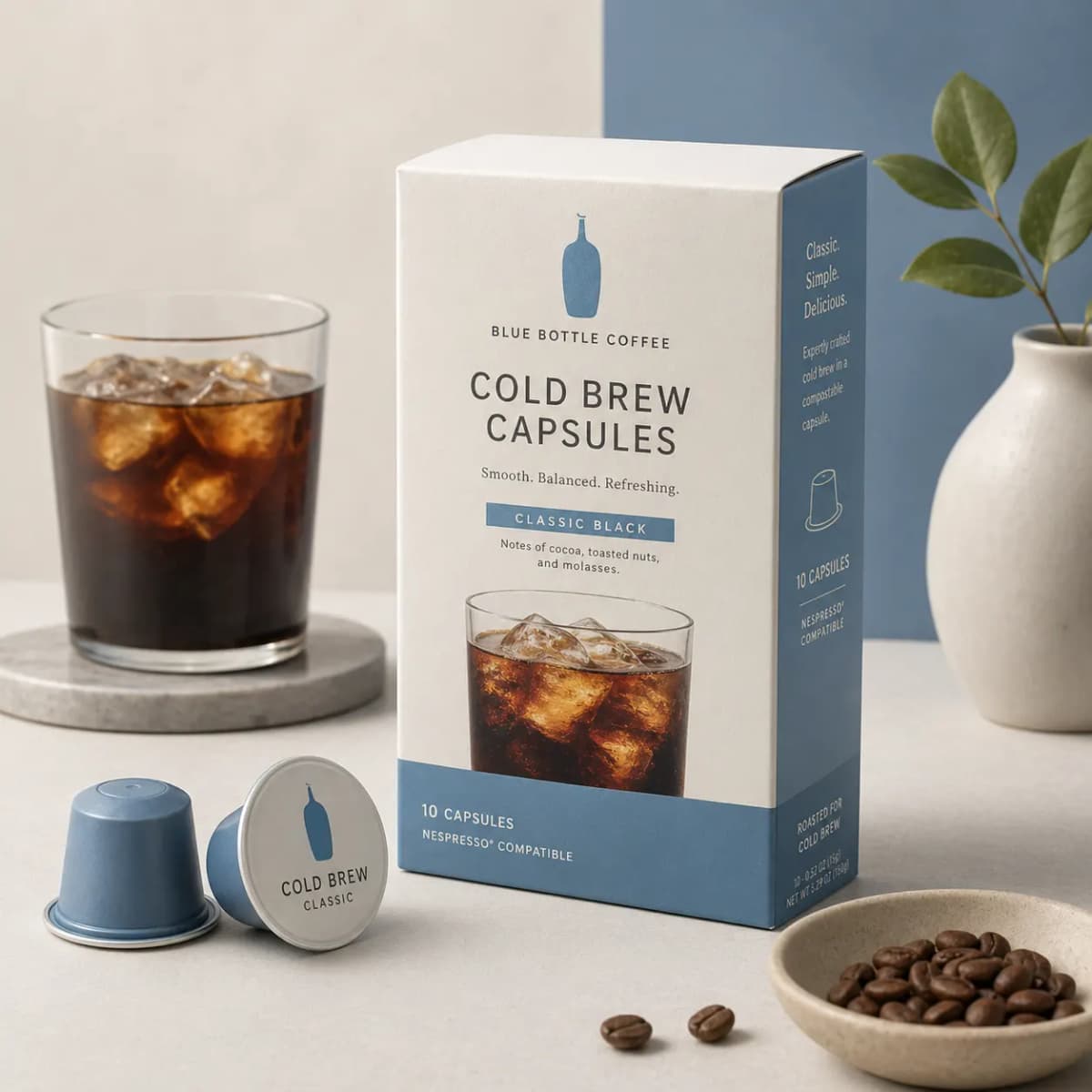
Packaging prompts benefit from material detail and shelf context. This version turns a coffee capsule example into a premium coffee packaging concept.
Prompt:
Blue Bottle Coffee cold brew capsule packaging concept, minimalist industrial packaging style, matte paper texture, soft blue and neutral color palette, clean tabletop still life arrangement, gentle even shadows, realistic product rendering, refined ecommerce packaging composition, text layout matching a premium specialty coffee brand, 1:1 square image.
Use this format for coffee, tea, supplements, candles, skincare sets, and gift boxes.
5. Home Interior: IKEA Dining Room
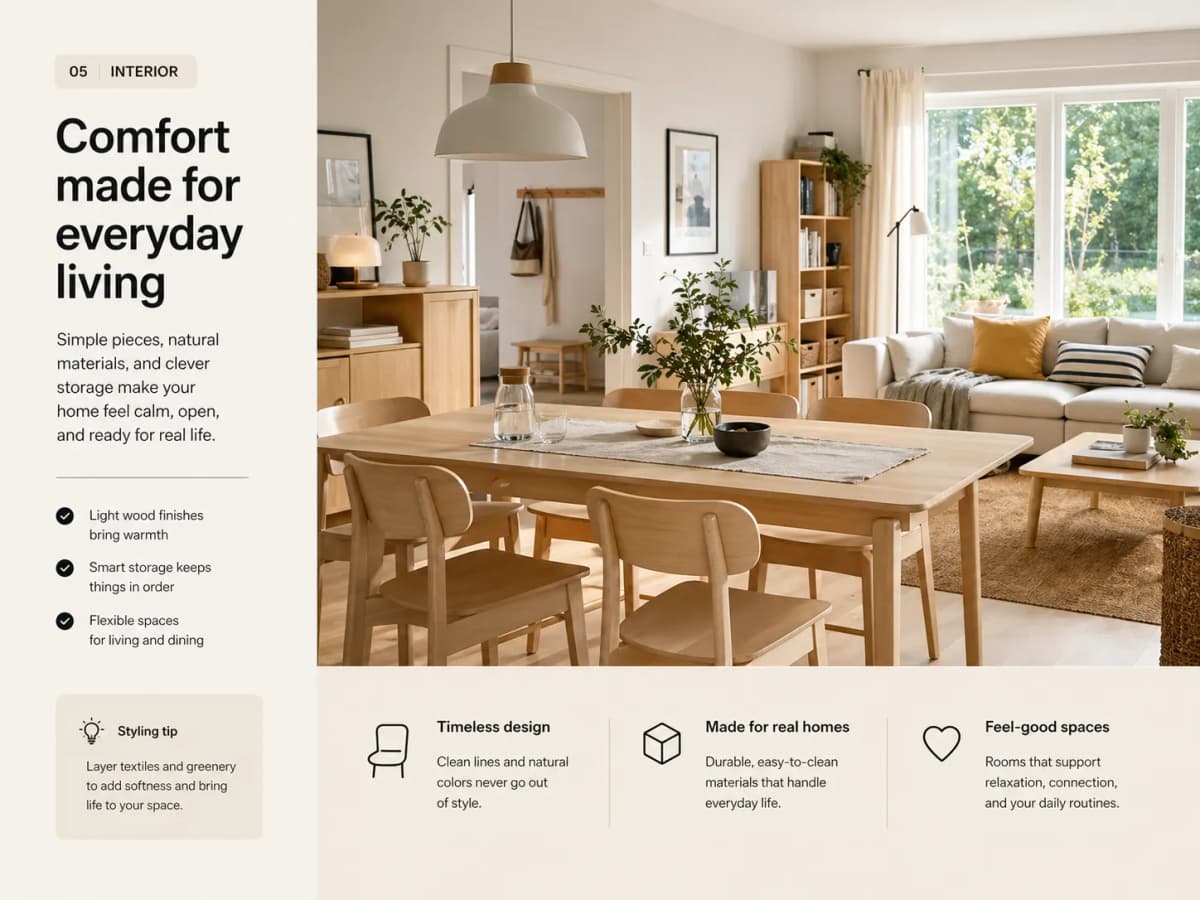
IKEA already fits the international context, so it should stay. The prompt should focus on room type, furniture tone, light, and livability.
Prompt:
IKEA Scandinavian-style dining and living room space, light wood furniture, large windows with natural daylight, simple warm textiles, clean open layout, realistic interior design rendering, fresh and practical home atmosphere, text layout matching IKEA's clean everyday living style, 4:3 landscape image.
This prompt style works for home goods, furniture bundles, rug brands, lighting products, and interior moodboards.
6. Beauty Social Post: e.l.f. Cosmetics
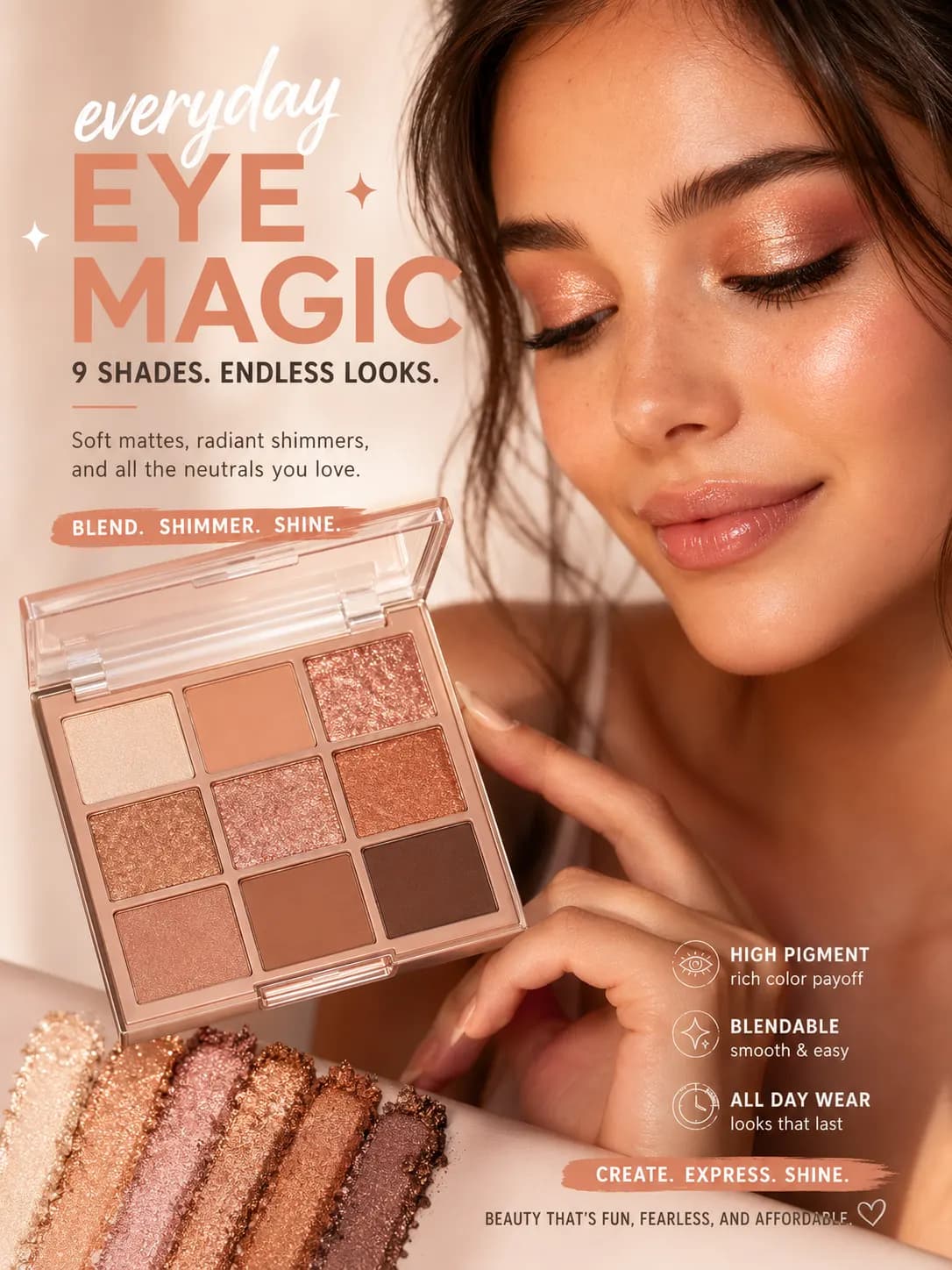
Social beauty visuals need close-up texture and a cover-friendly layout. The image should feel ready for Instagram, TikTok, or Pinterest.
Prompt:
e.l.f. Cosmetics eyeshadow palette, high-definition beauty close-up, fine shimmer and pearl texture, warm atmospheric lighting, youthful social media beauty style, clean natural makeup look, product and swatches arranged for a scroll-stopping cover, bold but tasteful text layout matching an affordable trend-driven beauty brand, 3:4 vertical image.
The prompt can also work for ColourPop, NYX Professional Makeup, or Ulta Beauty campaign concepts.
7. Luxury Still Life: NEST New York
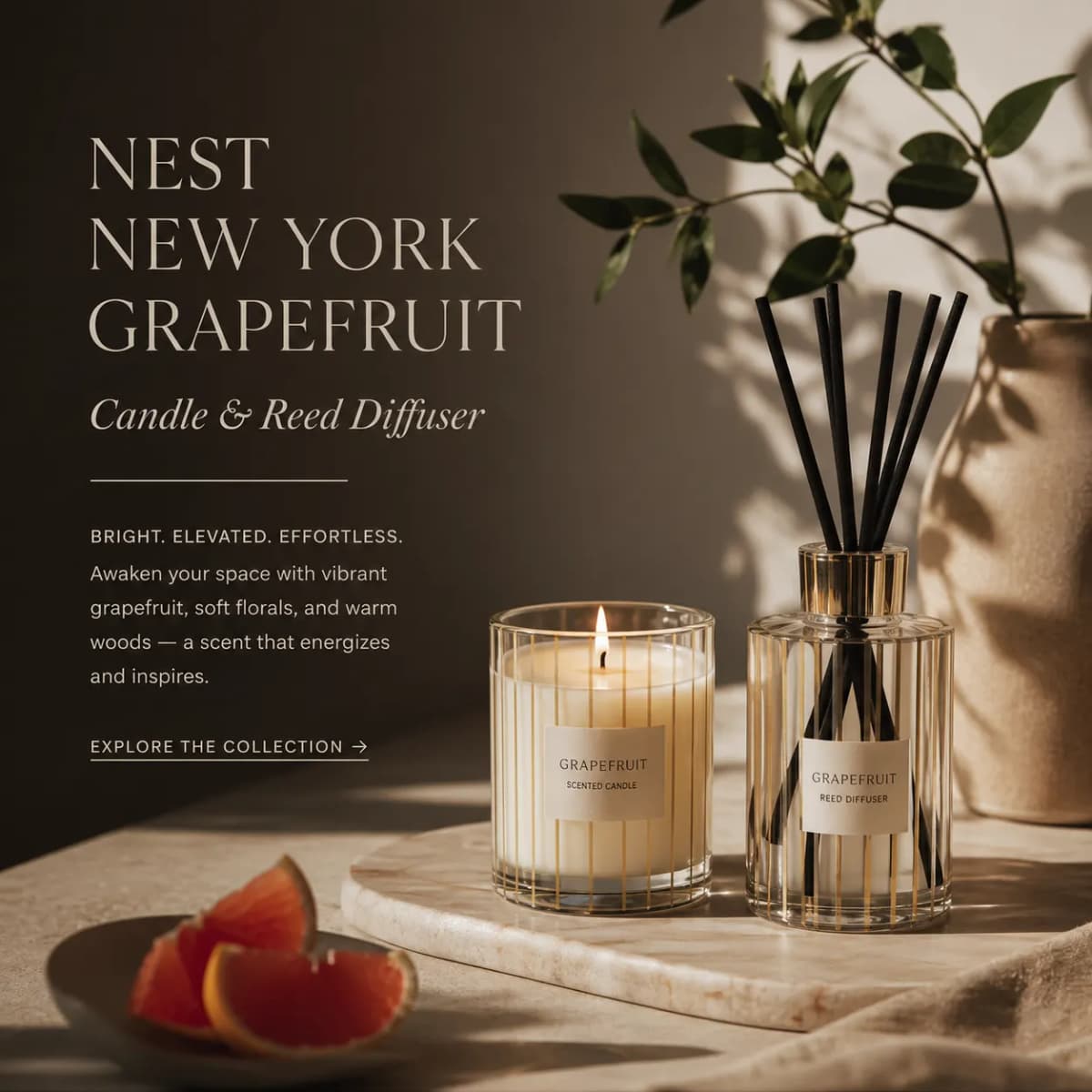
Fragrance and candle brands often need controlled shadows, surfaces, and lifestyle cues.
Prompt:
NEST New York grapefruit candle and reed diffuser, premium lifestyle still life photography, soft side lighting, deep elegant shadows, refined tabletop styling, glass texture and warm fragrance atmosphere, minimal luxury home decor setting, text layout matching a sophisticated fragrance brand, 1:1 square image.
For candles, perfumes, and home fragrance, details such as glass reflections, wax texture, labels, and shadow direction matter.
8. Automotive Tech Poster: Tesla Model 3
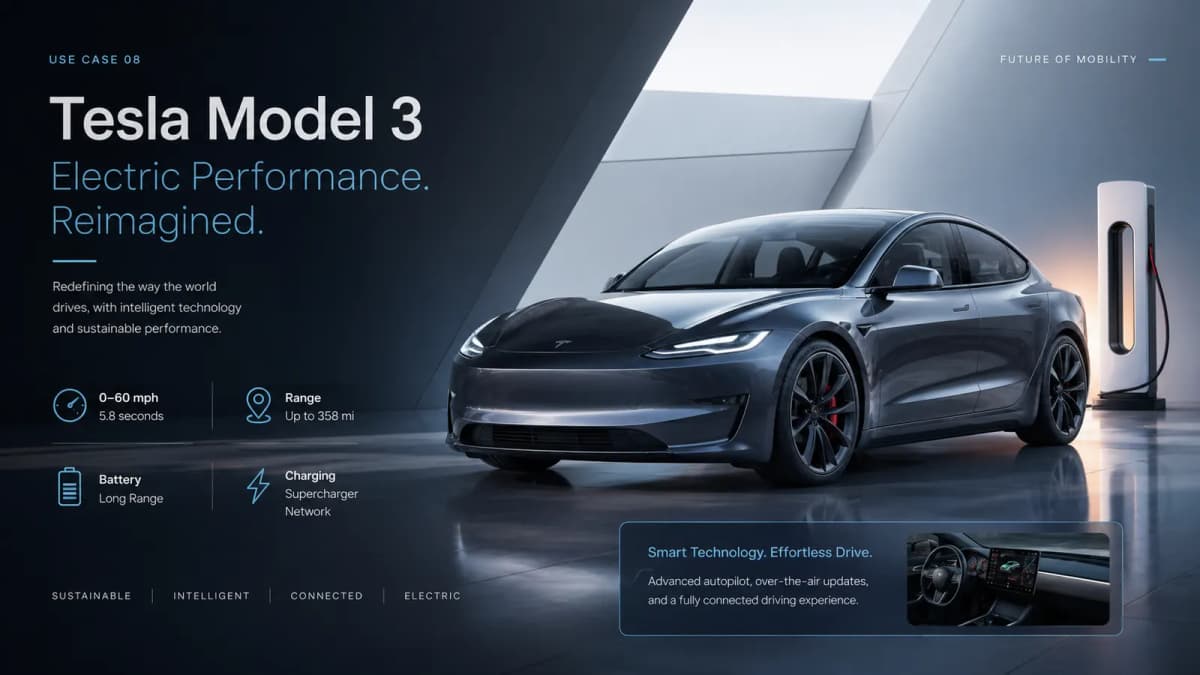
Car visuals need more spatial control than product still life. This prompt uses a tech poster direction.
Prompt:
Tesla Model 3 electric vehicle, futuristic technology poster, minimalist geometric studio space, clean metallic reflections, smooth gradient background, controlled cinematic lighting, 3D commercial poster effect, premium electric mobility atmosphere, text layout matching a clean technology brand, 16:9 landscape.
Rivian, Lucid, and Ford EV concepts can use the same prompt structure with adjusted terrain, color, and brand tone.
9. Commercial Space: Starbucks Reserve
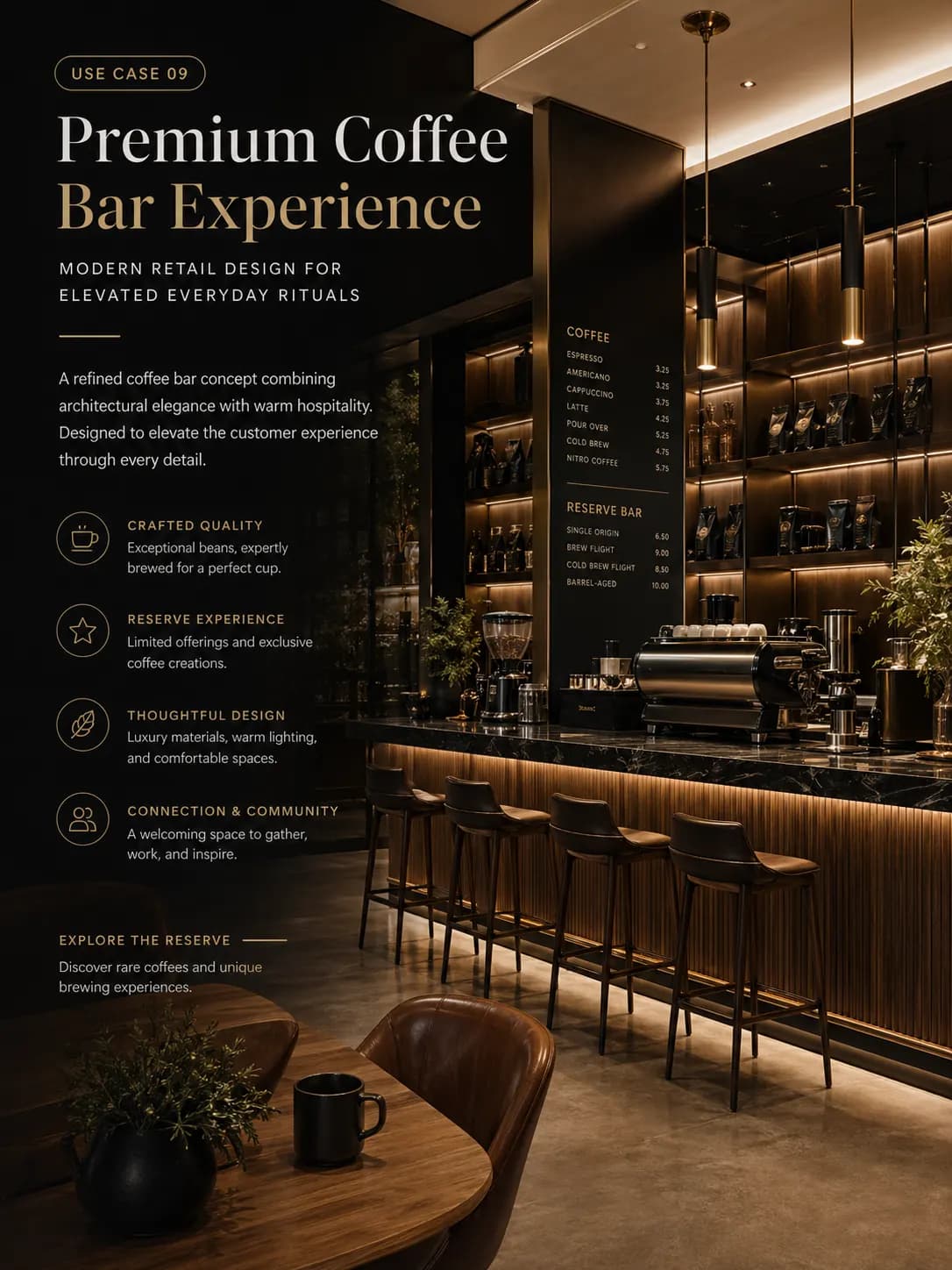
Store concepts should describe the materials and customer environment, not only the brand.
Prompt:
Starbucks Reserve premium coffee bar interior, modern luxury retail design, black, walnut, brass, and warm white color palette, clean architectural lines, bright but atmospheric lighting, polished counter and seating area, upscale urban coffee shop environment, text layout matching a premium coffee retail concept, 3:4 vertical image.
This type of prompt helps visualize cafe concepts, pop-up stores, boutique retail spaces, and restaurant moodboards.
10. Outdoor Billboard Ad: LaCroix Sparkling Water
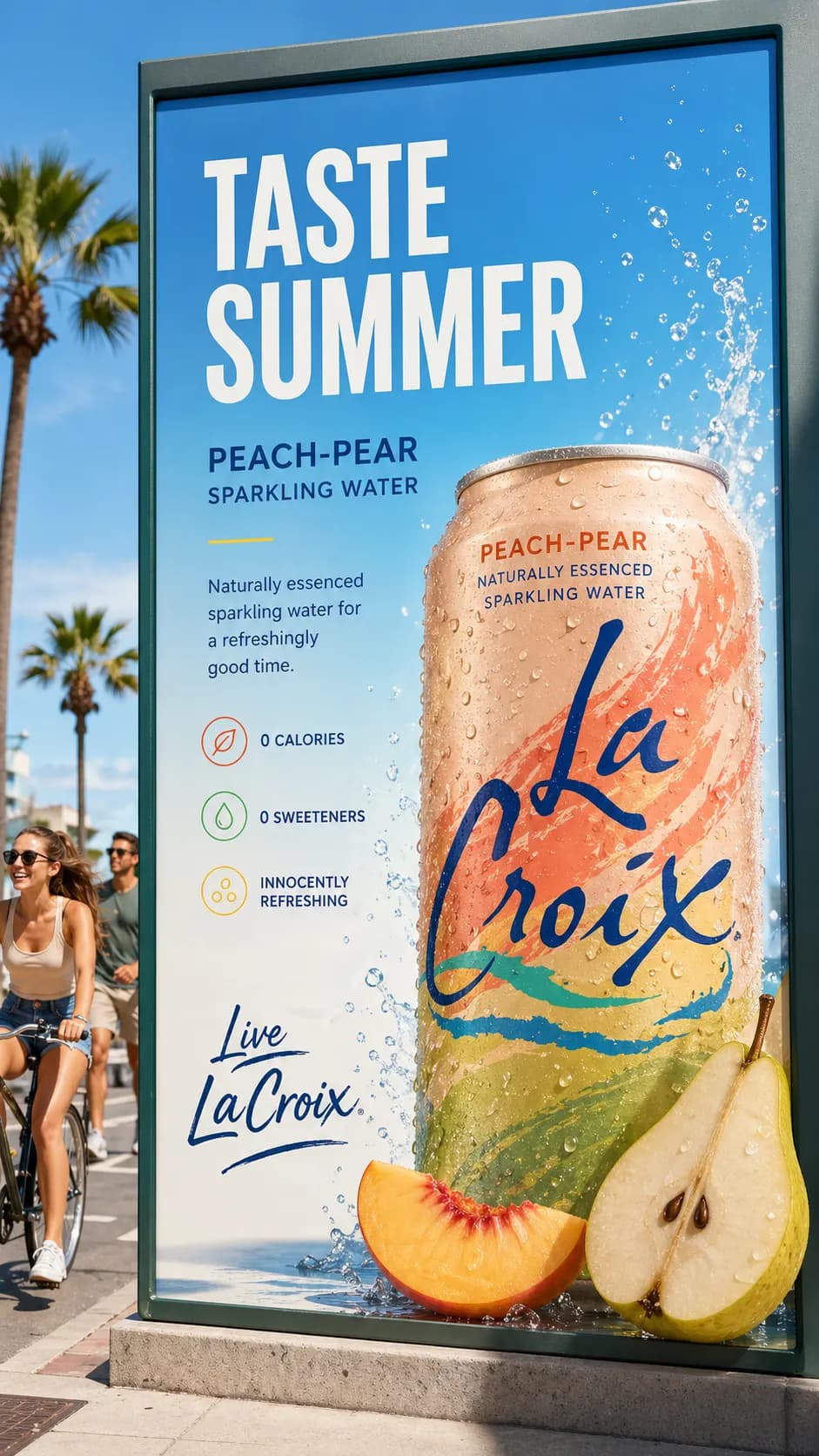
Outdoor ad prompts need more contrast, simpler message areas, and stronger product visibility.
Prompt:
LaCroix peach-pear sparkling water can, summer outdoor billboard ad concept, bright street scene, high-saturation fresh colors, product large and visually dominant, condensation on the can, young active lifestyle mood, clean headline area and simple product benefit tags, energetic sparkling water brand tone, 9:16 vertical image.
This is also useful for Spindrift, Olipop, Poppi, and other beverage brands.
11. Home Creator Review Cover: iRobot Roomba
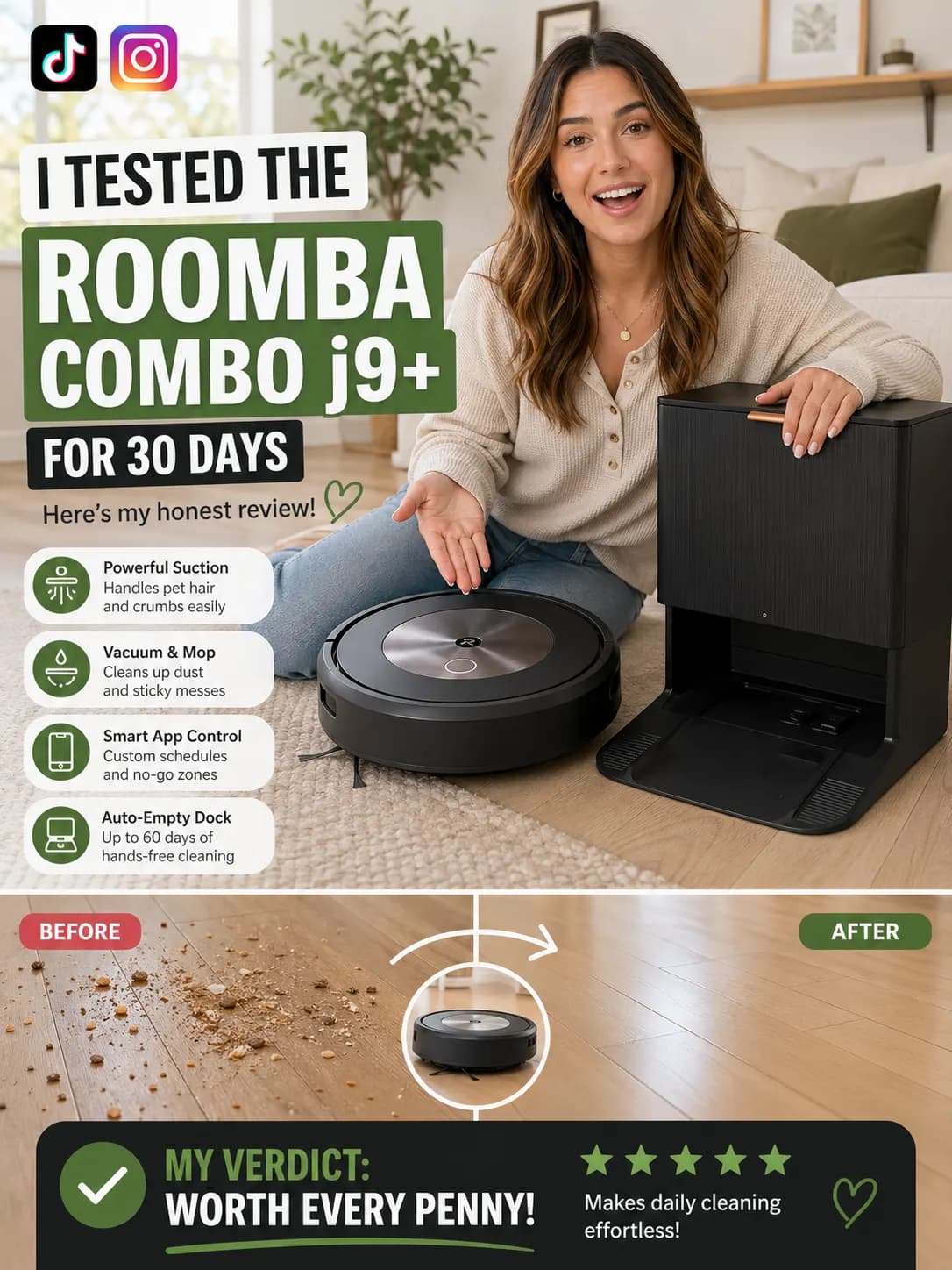
UGC-style covers should feel real, bright, and readable on mobile. The prompt should include the creator, product, setting, and title area.
Prompt:
TikTok and Instagram home creator review cover, young woman shown from the waist up in a bright clean living room, demonstrating an iRobot Roomba Combo j9+ robot vacuum, natural daylight, realistic home test scene, visible before-and-after cleaning comparison, bold mobile-friendly title text and feature callout labels, 3:4 vertical image.
This format works for smart-home products, cleaning tools, kitchen gadgets, and pet products.
12. TikTok Product Review Cover: Columbia Sun Hoodie
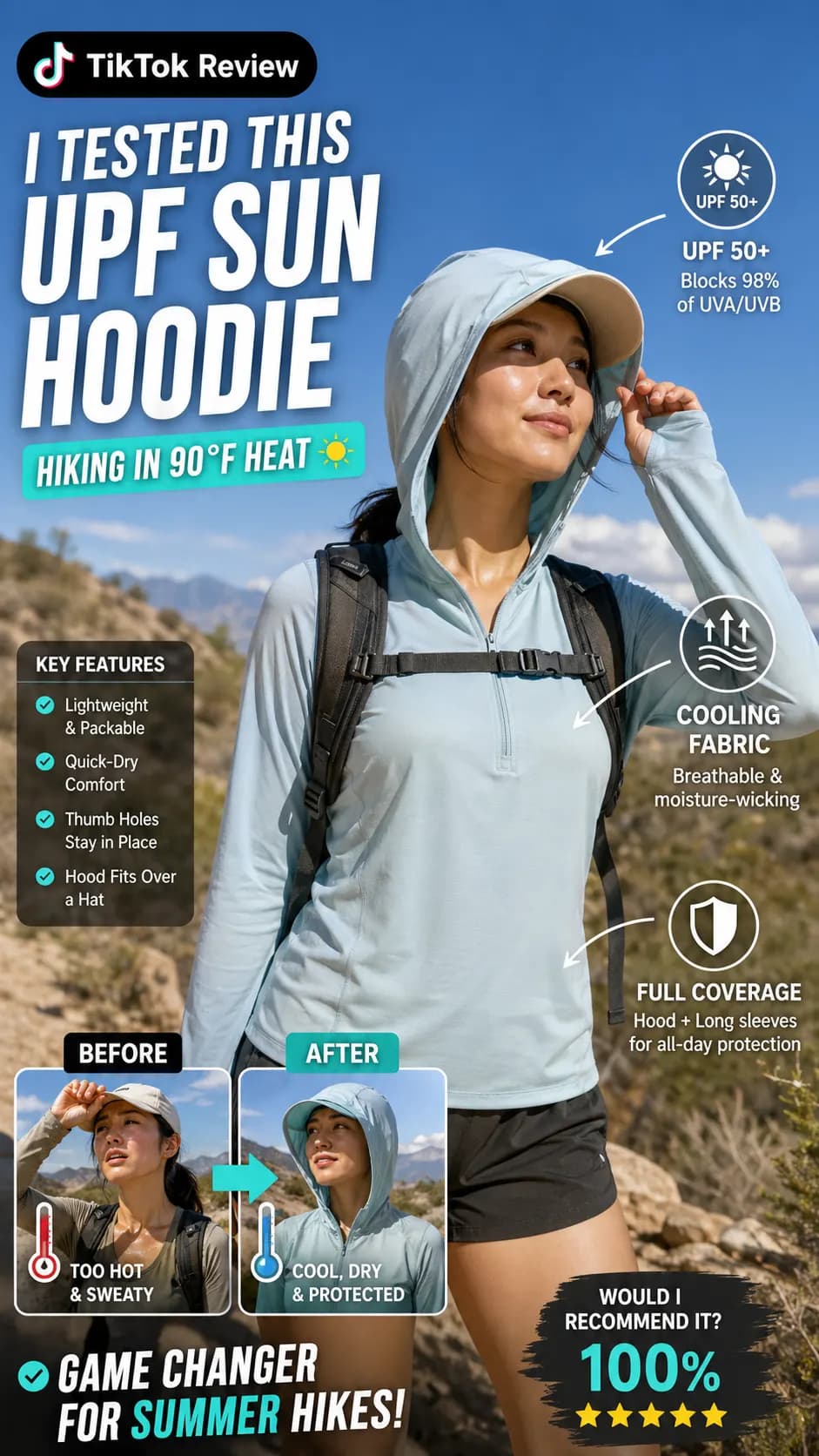
Review covers for apparel need action, contrast, and feature callouts.
Prompt:
TikTok outdoor gear review cover, young woman wearing a Columbia UPF sun hoodie during a sunny hiking test, bright outdoor lighting, clear fabric texture, breathable and sun-protection feature comparison, strong before-and-after style callouts, arrows pointing to hood, sleeves, and cooling fabric, bold TikTok-style title layout, 9:16 vertical image.
For apparel prompts, include fit, fabric texture, movement, weather, and the exact feature being demonstrated.
13. Food Creator Review Cover: Trader Joe's Coconut Dessert
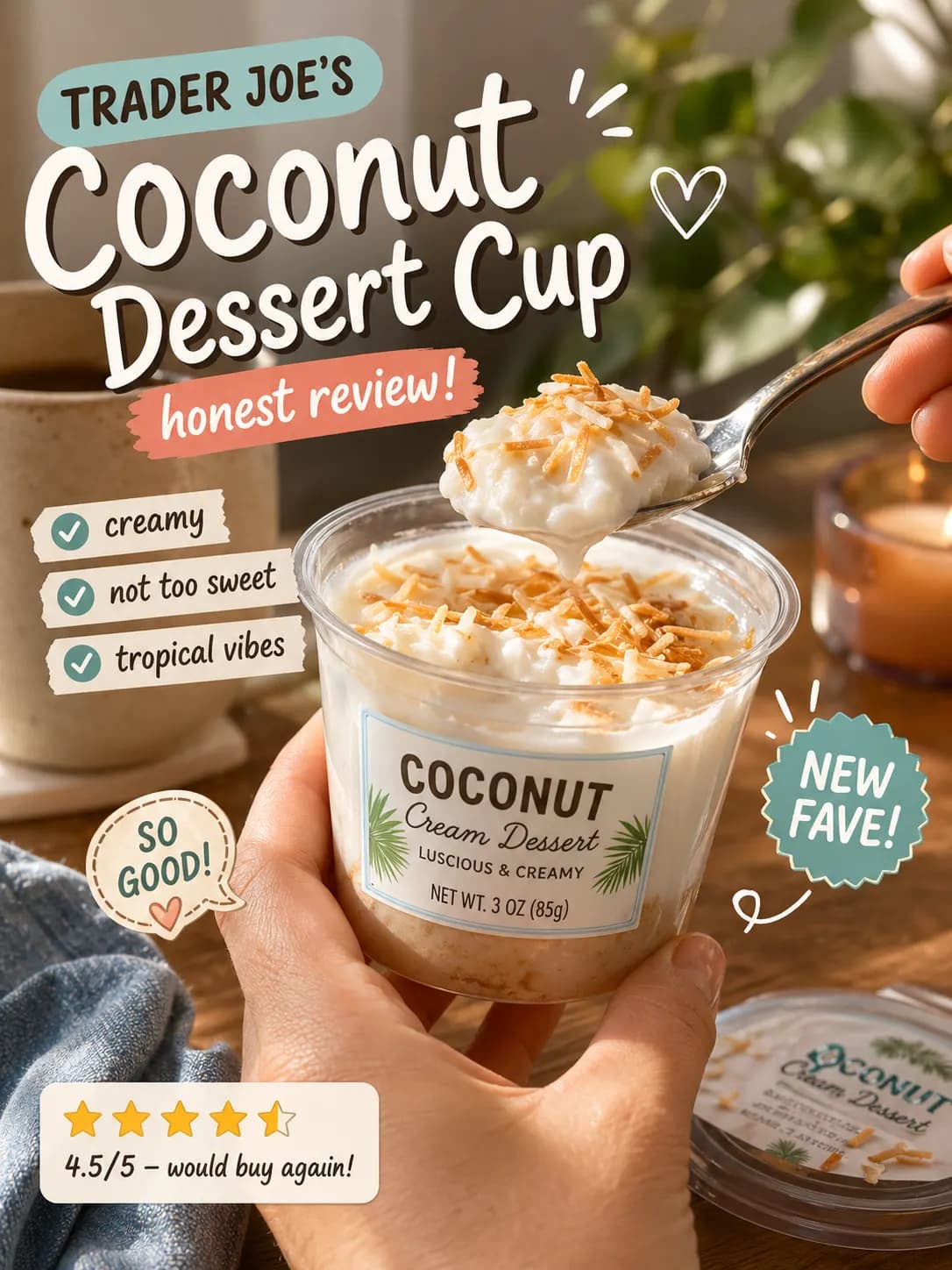
Food social covers depend on texture and appetite appeal. The prompt should describe how the product is held, opened, or tasted.
Prompt:
Food creator review cover featuring Trader Joe's coconut dessert cup, hand holding the dessert near a cozy tabletop scene, close-up showing creamy coconut texture and spoon pull, warm soft natural light, playful sticker-style accents, cute headline text layout, clean viral food review composition for Instagram and TikTok, 3:4 vertical image.
This prompt can also be adapted for Whole Foods desserts, Costco snacks, or direct-to-consumer food products.
14. Spring Marketing Poster: Wellness Brand
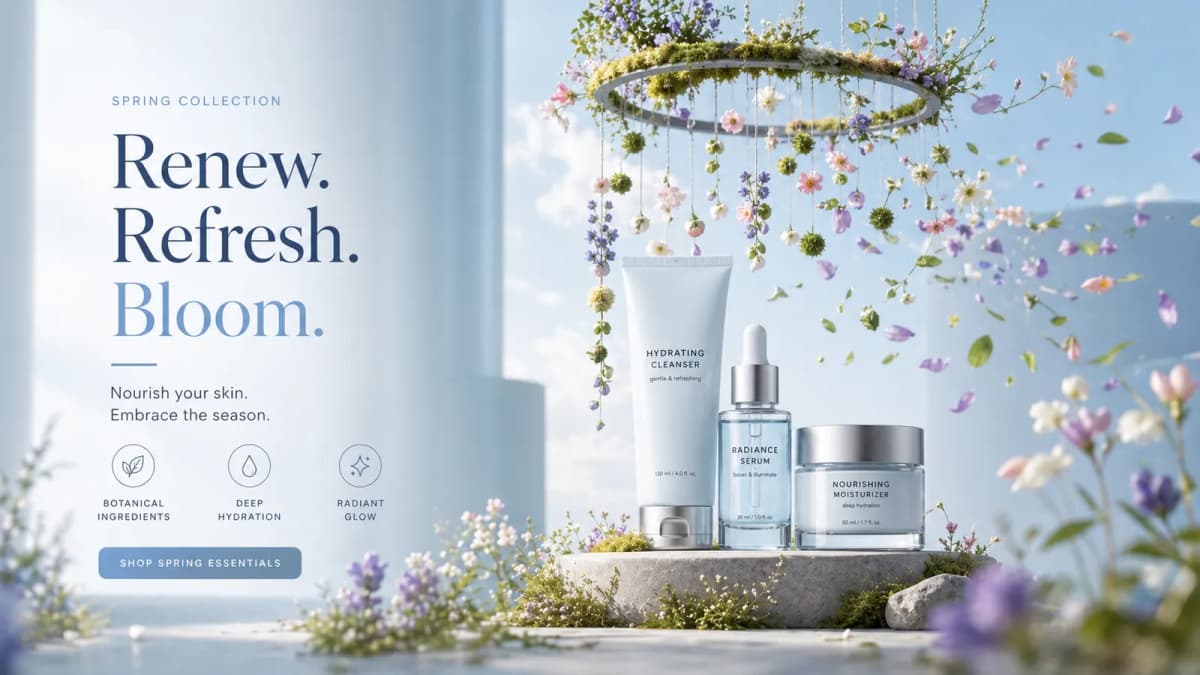
Seasonal posters should define the visual environment and motion direction. This prompt keeps the spring theme while making it more broadly usable.
Prompt:
Spring marketing poster for a wellness skincare brand, soft pale blue cylindrical background, 3D rendered product stage, delicate moss and small spring flowers forming a hanging wind chime shape, all floral elements flowing gently to the right as if moved by wind, dynamic perspective, bright exposure, realistic ray-traced light, reflective highlights, soft foreground blur, clean middle ground, detailed background texture, refined seasonal campaign layout, 16:9 landscape.
This is suitable for wellness, skincare, beverage, fragrance, and lifestyle campaign concepts.
15. Amazon A+ Content: Hydro Flask
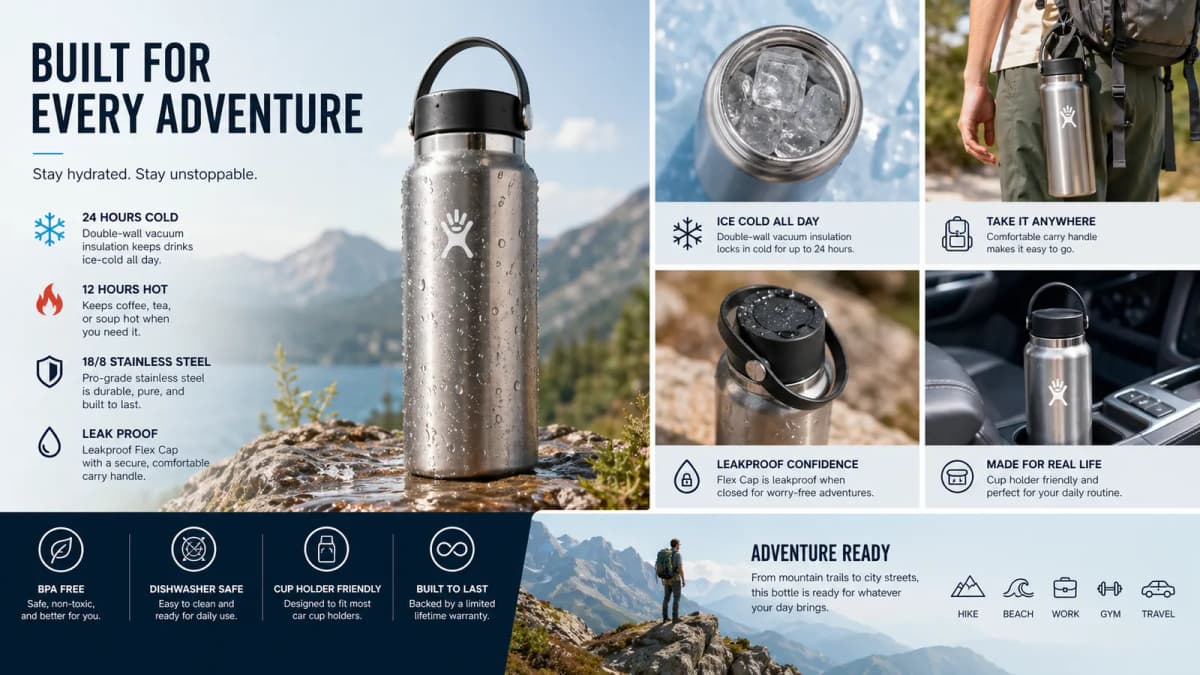
Amazon A+ Content needs clarity, benefit callouts, and visual hierarchy. This prompt turns a product into a feature-focused layout.
Prompt:
Hydro Flask stainless steel water bottle, clean Amazon A+ Content style layout, insulated bottle shown with outdoor lifestyle detail shots, visible stainless steel texture, water droplets and cold-retention visual cues, feature callouts for temperature control, durability, leak resistance, and everyday carry, premium ecommerce infographic composition, bright natural lighting, 16:9 landscape.
This is useful for product detail pages, Shopify comparison blocks, and marketplace content planning.
How to Adapt These Prompts for Amazon, Shopify, and TikTok Shop
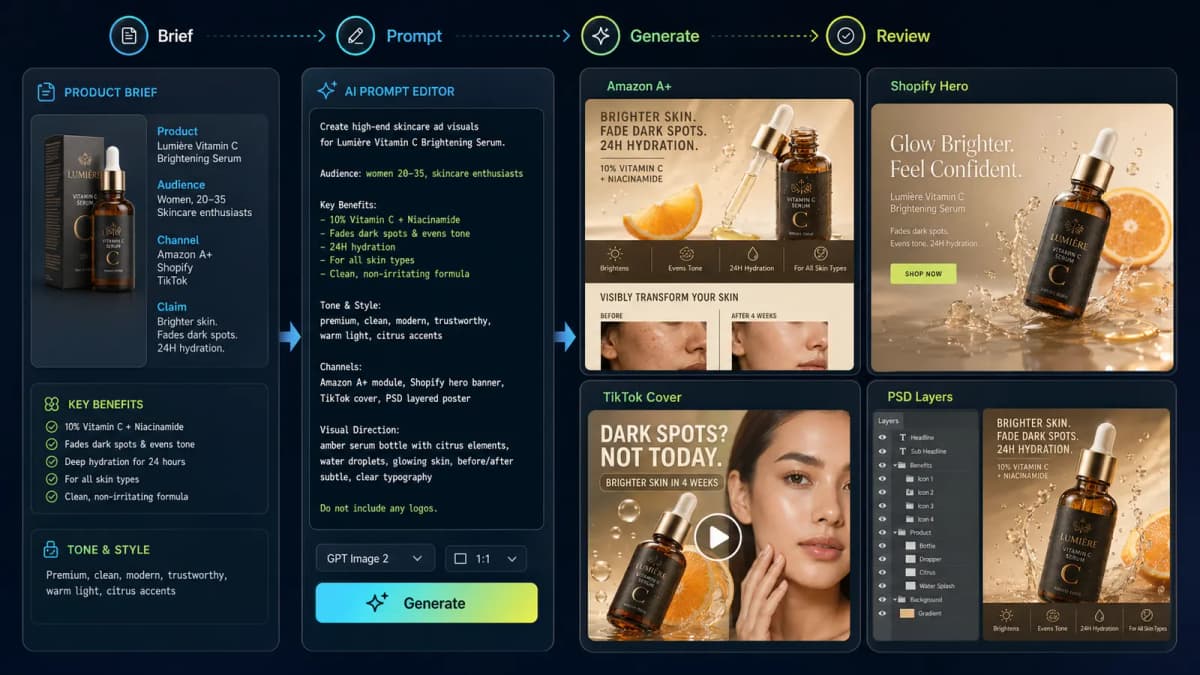
The same visual idea should be adjusted by channel. A prompt written for a Shopify hero banner should not look the same as a TikTok review cover or an Amazon A+ module.
Amazon and Marketplace Listings
Amazon-style visuals usually need clarity and feature education. Use prompts that include:
- Product centered or clearly dominant.
- Clean backgrounds for gallery concepts.
- Feature callouts for A+ Content.
- Material details that support product value.
- Compliance review before publishing any claims.
Product categories such as bottles, home cleaning devices, small appliances, beauty tools, and accessories work especially well with this structure.
Shopify and DTC Product Pages
Shopify pages can carry more brand atmosphere than marketplace listings. Prompts can include richer lifestyle settings, editorial layouts, and brand-specific color systems.
Useful prompt details include:
- Homepage hero banner format.
- PDP gallery image format.
- Bundle or gift set arrangement.
- Seasonal campaign direction.
- Visual connection between product, use case, and target customer.
TikTok, Instagram, and Pinterest
Social covers need faster recognition. Prompt for big title areas, strong product placement, realistic creators, and visual proof of the benefit.
Good social prompt elements include:
- Creator in frame.
- Mobile-first vertical aspect ratio.
- Large headline area.
- Arrows, stickers, or labels when appropriate.
- Product use shown in context.
Common Mistakes to Avoid
Even a good AI image model can produce weak outputs when the prompt lacks commercial context.
- Writing only the product name: Add scene, lighting, composition, texture, and channel.
- Ignoring aspect ratio: A 16:9 banner prompt will not automatically work for a TikTok cover.
- Using vague brand tone: Words like "premium" help, but material, color, lighting, and layout make the direction clearer.
- Forgetting text layout: If the image needs headline space, say where that space should be.
- Skipping legal review: Real campaigns need checks for logos, claims, packaging accuracy, trademarks, and platform rules.
- Expecting final PSD output from one image: A layered workflow works better when the full poster and separate elements are requested as separate steps.
Conclusion
GPT Image 2 prompts work best when they describe the commercial job behind the image. A product hero image, beauty campaign visual, cafe interior, TikTok review cover, and PSD-ready poster all need different prompt structures. The strongest prompts define the product, channel, scene, light, composition, texture, text layout, and aspect ratio before generation begins.
For sellers, this makes AI image generation more useful as a planning step. It can support creative testing, product page planning, ad concept review, and designer handoff before a full production budget is committed.
Nexscope provides structured ecommerce data and focused seller workflows. Teams can use Nexscope's web tools directly or connect governed capabilities to their existing Agent through API, MCP, or Skills. Ready workflows include Keyword to Ads, Video Clone, and Buy Box Repricer.
Use Nexscope focused tools to research products and competitors, or connect the relevant ecommerce data to your Agent through API, MCP, or Skills.
Connect Ecommerce Data to Your Agent
Use Nexscope through API, MCP, or Skills, or open a ready seller workflow.
Explore Ecommerce Data →Frequently Asked Questions
What are GPT Image 2 prompts?
GPT Image 2 prompts are written instructions used to generate or edit images with GPT Image style tools. In ecommerce, a useful prompt usually includes the product, scene, lighting, composition, brand tone, text layout, and aspect ratio. This turns the prompt into a short creative brief rather than a vague request for a nice image.
Can GPT Image 2 create ecommerce product images?
GPT Image 2 style workflows can help create product image concepts, lifestyle scenes, ad drafts, and A+ Content-style layouts. Sellers should still review accuracy before publishing. Real product claims, logos, packaging, compliance details, and marketplace requirements need human review before the image becomes a live listing or paid ad.
What should an ecommerce image prompt include?
An ecommerce image prompt should include the product name or category, target channel, scene, lighting, composition, material texture, brand tone, text layout, and image ratio. For example, a product hero image may need a centered 1:1 composition, while a TikTok cover may need a 9:16 layout with bold headline space and feature callouts.
Can GPT Image 2 generate TikTok or Instagram covers?
GPT Image 2 style prompts can generate social cover concepts when the prompt includes mobile-first composition, creator context, product use, title space, and platform-style visual cues. TikTok covers often need stronger contrast and larger text areas, while Instagram and Pinterest covers can use cleaner lifestyle composition.
How can GPT Image 2 help with PSD layer workflows?
GPT Image 2 can support PSD layer workflows by generating a full poster first, then generating separate visual elements in the same position, scale, and alignment. Designers can remove backgrounds and rebuild the composition in Photoshop with separate layers. This works best when the prompt clearly says not to change placement or scale.
Are brand names safe to use in AI image prompts?
Brand names can be useful for internal concepting and style references, but public campaigns need rights review. Sellers should use their own product assets, approved logos, accurate packaging, and legally reviewed claims. If the image references another brand, it should not be used in a way that confuses customers or implies endorsement.
What is the best aspect ratio for ecommerce AI images?
The best aspect ratio depends on the channel. A 1:1 square works well for product grids and ecommerce gallery concepts. A 16:9 landscape works for banners and A+ Content modules. A 3:4 vertical image works for social covers, and 9:16 works for TikTok, Reels, Shorts, and vertical ad placements.
Sources
- OpenAI. (2026). Image generation guide. Retrieved from platform.openai.com
- OpenAI. (2026). Image generation tool guide. Retrieved from platform.openai.com
- OpenAI. (2026). Images API reference. Retrieved from platform.openai.com