

8 Best Amazon Product Research Tools for Sellers in 2026

Amazon product research tools help sellers compare demand, competition, reviews, pricing, keywords, and product opportunities before money is tied up in inventory. This page focuses on software selection and workflow fit. The separate guide to researching products to sell on Amazon covers the complete validation process.
For 2026, product research has moved beyond search volume and revenue estimates. Sellers need to compare demand, review depth, price pressure, keyword intent, PPC competition, customer complaints, marketplace fit, and product differentiation in one decision process. Nexscope, Helium 10, Jungle Scout, SellerSprite, Amazon Product Opportunity Explorer, SmartScout, Sell The Trend, and Seller Labs all approach that problem from different angles.
Quick Comparison
| Tool | Best for | Useful signals | Limitation to watch |
|---|---|---|---|
| Nexscope | Structured ecommerce research data | Product, keyword, review, competitor, pricing, sales, and trend data in Nexscope or through REST API and MCP | Coverage, freshness, estimates, and missing values still require review |
| Helium 10 | Amazon-first product and keyword research | Black Box, Xray, Cerebro, keyword tracking, listing builder | Can feel module-heavy for sellers who want a single recommendation |
| Jungle Scout | Amazon seller research and market intelligence | Product validation, sales estimates, category data, extension workflow | Strongest when the seller is already focused on Amazon |
| SellerSprite | Amazon demand and competition analysis | Keyword research, review analysis, competitor monitoring, product idea evaluation | Interface and workflow depth may vary by seller use case |
| Amazon Product Opportunity Explorer | Native Amazon niche discovery | Amazon search and purchase signals inside Seller Central | Available to eligible Amazon sellers, not a cross-marketplace workflow |
| SmartScout | Amazon market and brand intelligence | Brand database, traffic graph, seller map, subcategory analysis | More useful for deeper market mapping than beginner product ideation |
| Sell The Trend | Dropshipping and trend discovery | TikTok, dropshipping product discovery, ads, suppliers, store automation | Better fit for dropshipping than Amazon private label validation |
| Seller Labs | Amazon seller operations with AI content | AI research articles, ad and profit tools, Amazon MCP positioning | More operations-focused than dedicated product opportunity discovery |
Eight Amazon Research Tools
1. Nexscope
Nexscope is an ecommerce data source and data platform. It provides structured product, market, keyword, review, competitor, pricing, sales, and trend data. Teams can use supported capabilities in Nexscope's web product or connect the same data to their own Agent through REST API or MCP.
This makes Nexscope useful when a team needs research data to remain reusable across product validation, competitor analysis, review analysis, or an internal workflow. It does not remove the need to verify estimates, supplier terms, margins, compliance, and physical samples.
Best fit: teams that want structured ecommerce evidence in Nexscope or their own Agent workflow.
Key use cases:
- Turn a keyword into Amazon product opportunity ideas
- Compare demand, competition, reviews, and launch room
- Organize comparable product, keyword, review, and competitor evidence
- Reuse supported data through REST API or MCP
- Keep source, freshness, estimate, and missing-data boundaries visible
When the workflow starts with a keyword, the Amazon Opportunity Finder is the most relevant Nexscope entry point.
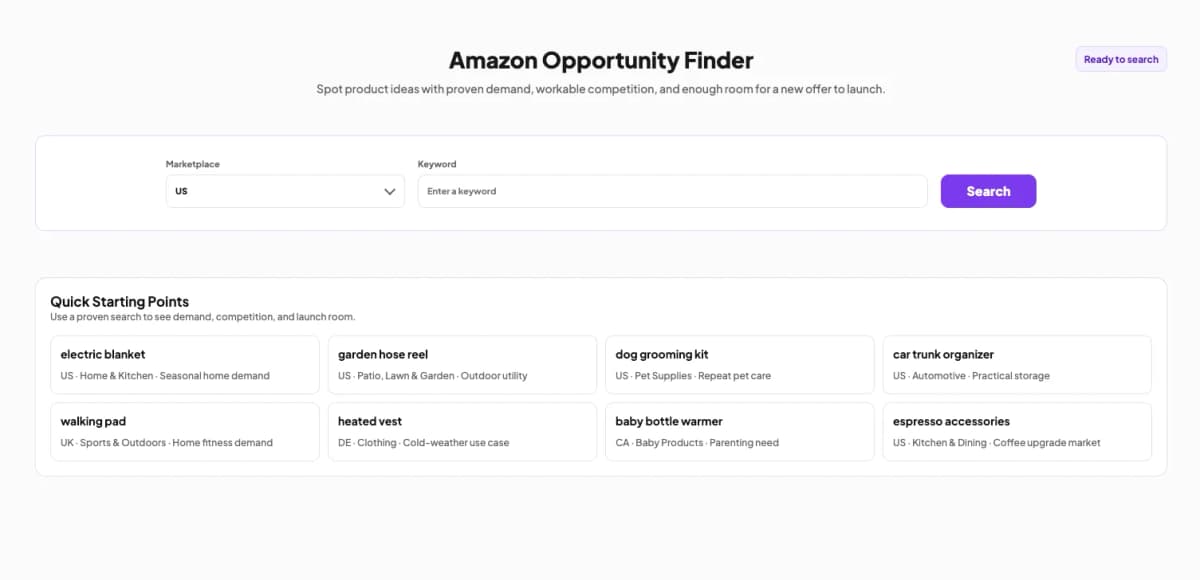
New users receive 1,000 free credits. The lowest paid plan is $9 per month with 3,000 monthly credits.
2. Helium 10
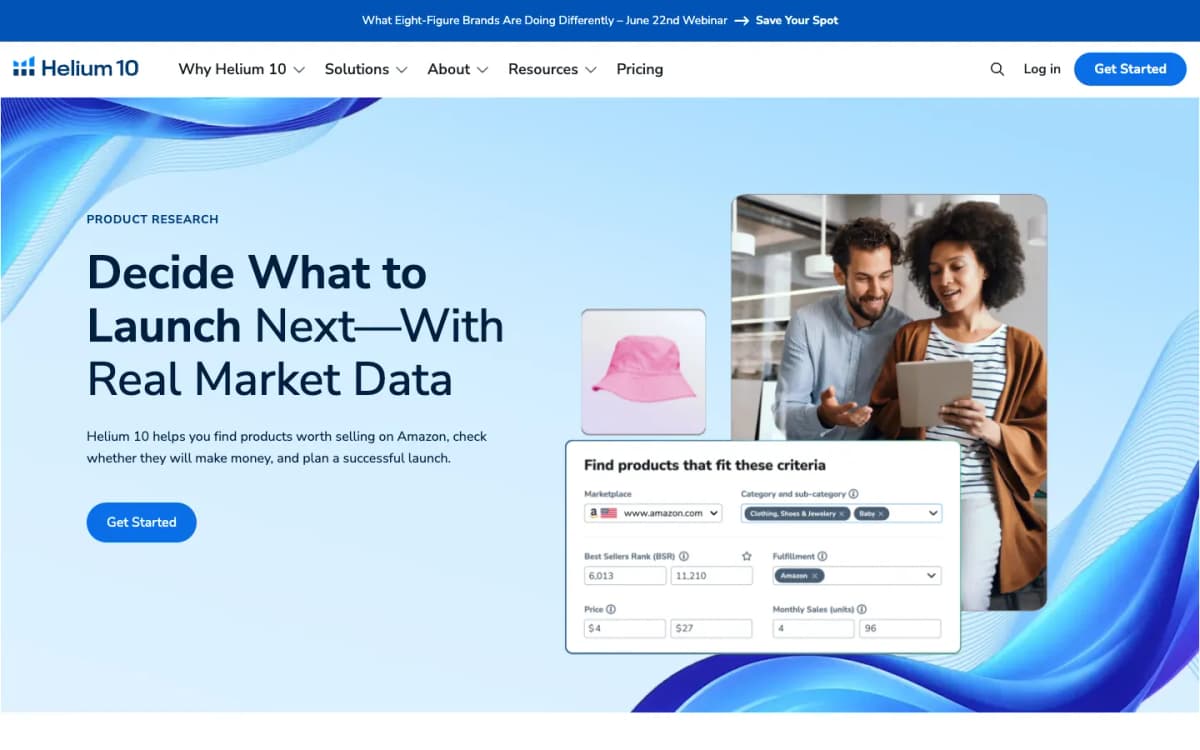
Helium 10 is one of the most established Amazon seller suites. Its product research workflow includes tools such as Black Box for product discovery, Xray for product analysis, Cerebro for competitor keyword research, and Product Launchpad for organizing a launch plan.
Helium 10 is useful for sellers who want a broad Amazon toolkit covering product research, keyword research, listing optimization, analytics, advertising, alerts, and operations. Its product research page describes workflows for finding products, checking product viability, reviewing sales estimates, looking at FBA fees, and comparing products with filters such as sales, price, reviews, and competition.
Best fit: Amazon-first sellers who want a mature suite with many modules.
Watch for: sellers need to know which module to use and how to connect the findings. The tool is powerful, but a beginner can still end up moving between dashboards without a clear decision.
3. Jungle Scout
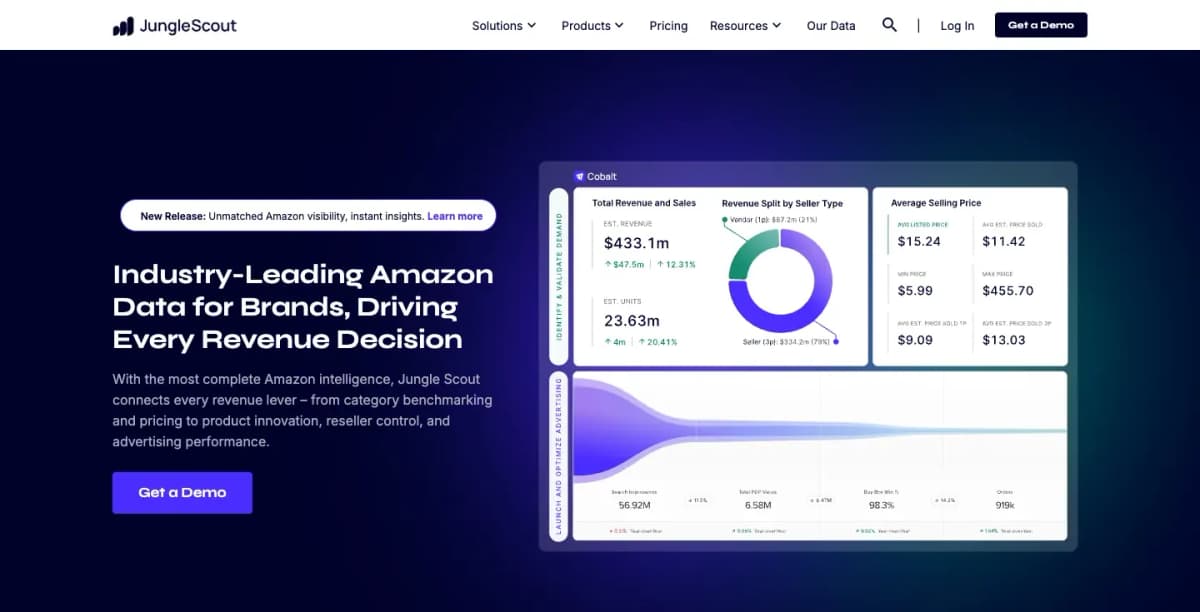
Jungle Scout has long been associated with Amazon seller research. Its current positioning includes market intelligence for brands and product validation for new or growing sellers. Jungle Scout highlights demand, seasonality, keyword search volume, category benchmarking, pricing, market share, and shopper trend analysis.
For independent sellers, Jungle Scout is often used to validate product ideas, estimate sales, and understand whether a category has enough demand to justify a launch.
Best fit: Amazon sellers who want trusted Amazon data and a familiar product validation workflow.
Watch for: the workflow is strongest when the seller has already decided to focus on Amazon. Sellers comparing Amazon with TikTok Shop, Shopify, eBay, or Walmart may need a broader workflow.
4. SellerSprite
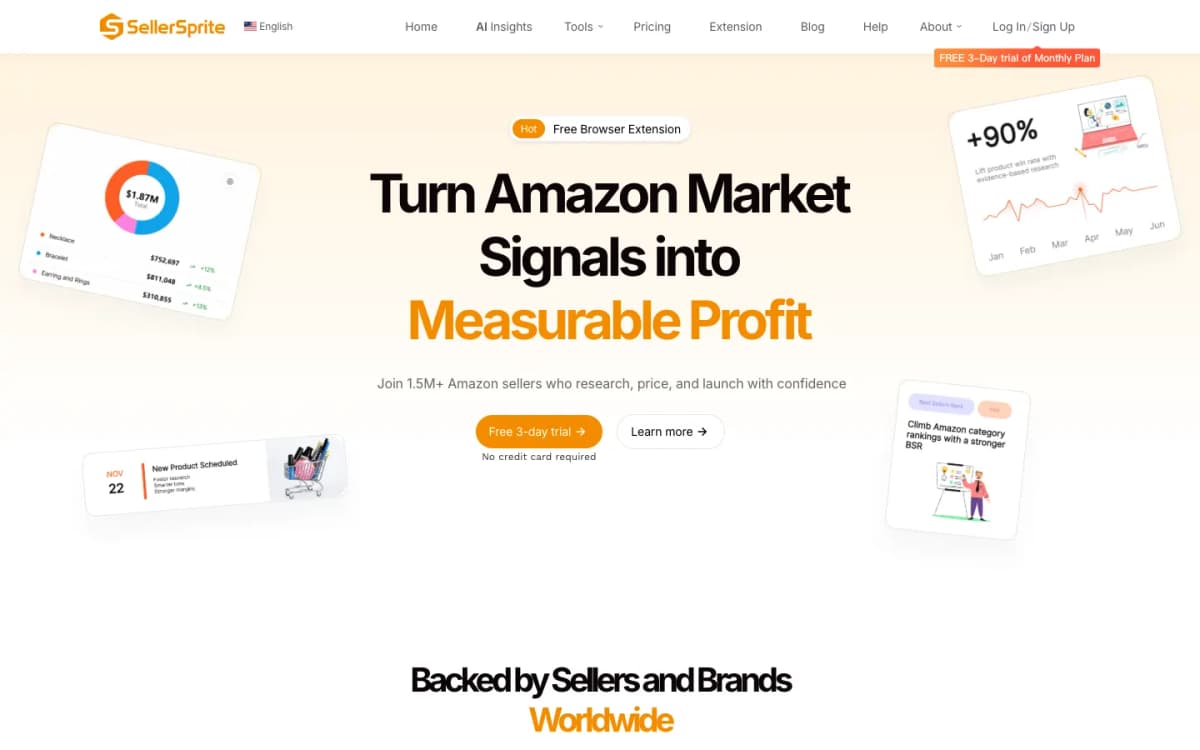
SellerSprite appears frequently in Amazon seller research queries because it covers demand, competition, keyword research, product research, and competitor analysis. Its product idea content focuses on evaluating product demand and competition before launch.
SellerSprite can be useful for sellers who want to inspect keywords, competitor products, review signals, and marketplace patterns while staying close to Amazon research.
Best fit: Amazon sellers who want demand and competition analysis with keyword and competitor context.
Watch for: sellers still need to translate the research into listing copy, image strategy, pricing, and launch priorities.
5. Amazon Product Opportunity Explorer
Amazon Product Opportunity Explorer is Amazon's native product opportunity tool. It helps eligible Seller Central users discover customer demand and niche information using Amazon's own marketplace signals.
Because the data comes from inside Amazon, it can be valuable for sellers already operating in Seller Central. It can help identify customer needs, niche trends, and potential product opportunities.

Best fit: Amazon sellers with Seller Central access who want native Amazon opportunity signals.
Watch for: it is not designed as a full cross-marketplace workflow. It also does not replace competitor review analysis, creative direction, supplier research, or external trend validation.
6. SmartScout
SmartScout is useful for Amazon market and brand intelligence. Its public site highlights tools such as product databases, brand data, subcategory analysis, ad spy, seller tools, traffic graph, and AI listing support.
This can be valuable for sellers who want to understand brands, sellers, subcategories, and Amazon market structure rather than only search for a single private label idea.
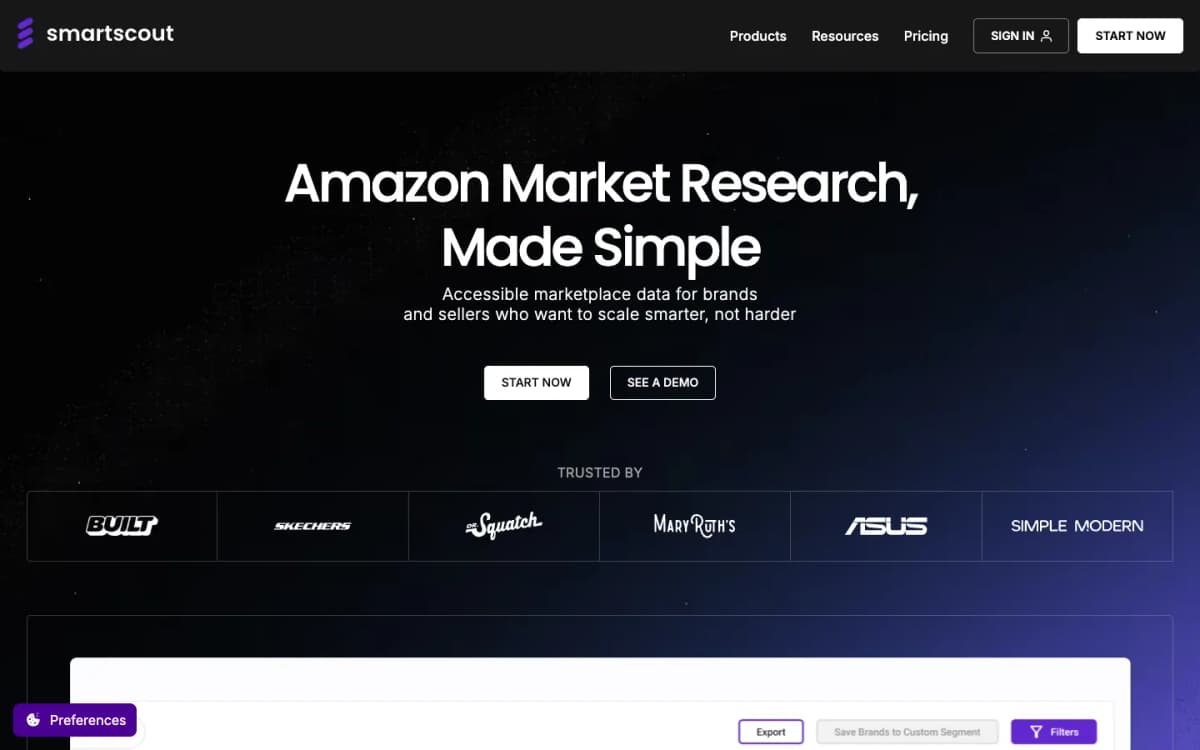
Best fit: sellers, agencies, and brands that need deeper Amazon market mapping.
Watch for: a beginner who only needs a quick product opportunity workflow may find the market-intelligence angle more advanced than necessary.
7. Sell The Trend
Sell The Trend is more dropshipping-oriented than Amazon-private-label-oriented. It focuses on product discovery, trend detection, store automation, suppliers, TikTok viral ads, Facebook ads, and ecommerce integrations.
It is still relevant because many new sellers compare Amazon, TikTok Shop, Shopify, and dropshipping before choosing a channel. In that situation, trend discovery can be useful before deeper Amazon validation.
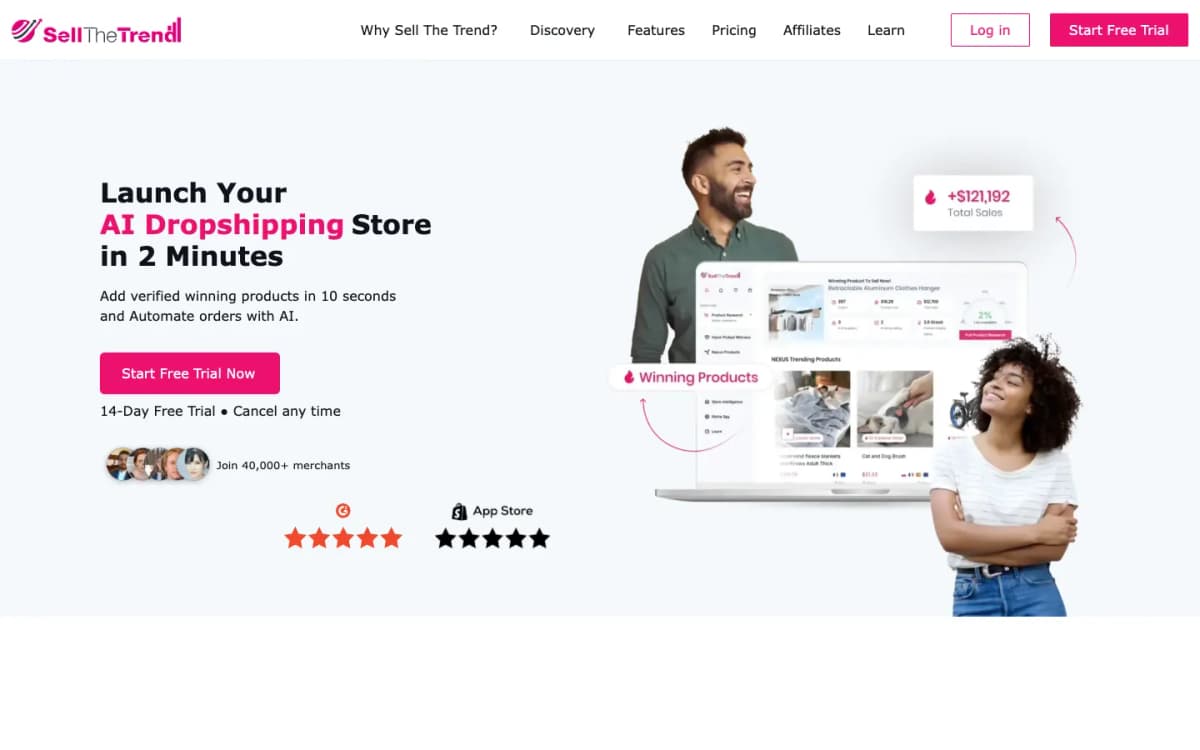
Best fit: dropshipping sellers and trend-led ecommerce operators.
Watch for: trend velocity does not automatically mean a product is suitable for Amazon FBA. Sellers still need to check Amazon demand, reviews, margin, compliance, and PPC pressure.
8. Seller Labs
Seller Labs is not a pure product research tool, but its AI product research guide appears in product-research discovery results. Seller Labs focuses on Amazon seller software and operations, with products around Amazon MCP, feedback, ads, profit, and automation.
It is useful in a seller's broader stack when product research needs to connect with advertising, profitability, reporting, and ongoing operations.
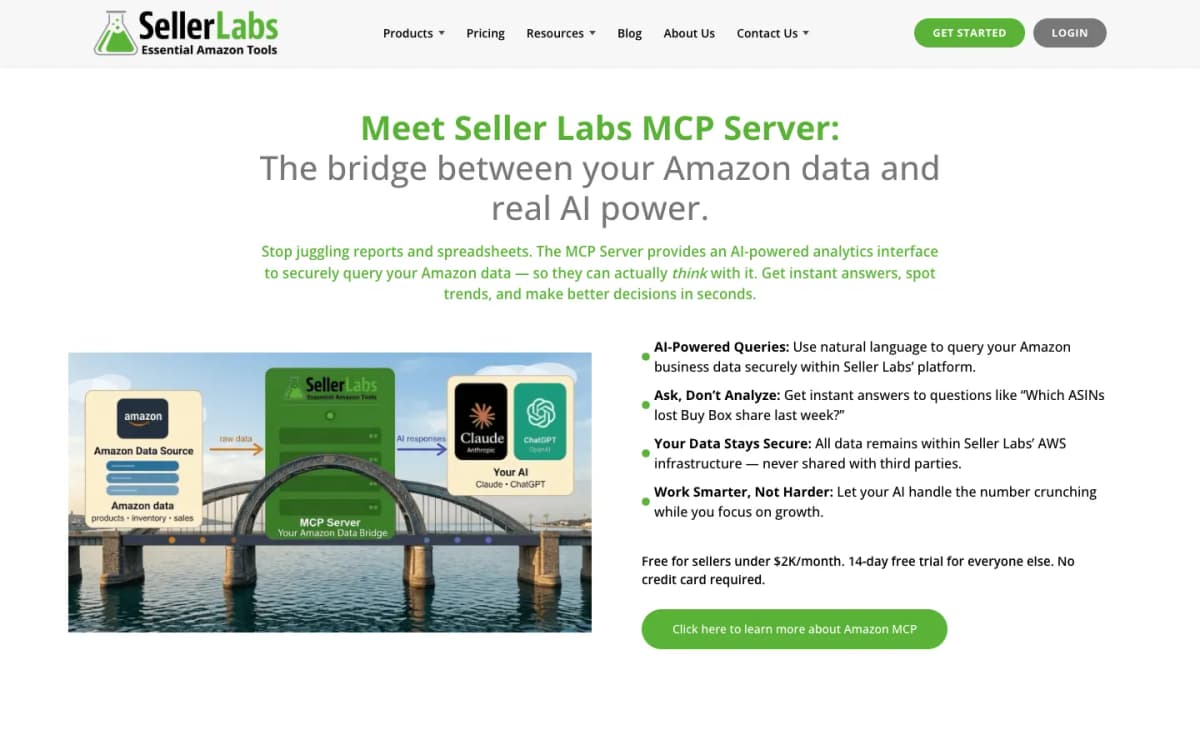
Best fit: Amazon sellers who want operational support after product research.
Watch for: sellers looking specifically for opportunity discovery may need a more dedicated research tool alongside it.
How to Choose the Right Tool
Price
Price matters, especially for new sellers who are still testing product ideas. A cheap tool is not always better if it only exports raw data, but a large subscription can also be hard to justify before the seller has a validated niche.
When comparing tools, look at what the plan actually includes:
- Product database access
- Keyword research limits
- Competitor tracking
- Review analysis
- AI research or content features
- Export limits
- Team seats
The best value is the tool that reduces the number of separate subscriptions a seller needs to make one launch decision.
Core features
A useful product research tool should cover more than one score. Sellers should compare whether the tool can help with:
- Keyword-led product discovery
- Demand and sales estimates
- Review depth and complaint analysis
- Competitor listing analysis
- Price band and margin checks
- Keyword-to-listing strategy
- Product image and creative direction
- Post-launch monitoring
Helium 10 and Jungle Scout are strong Amazon-first suites. SmartScout focuses on deeper market and brand intelligence. Nexscope fits teams that want structured ecommerce data in its web product or connected to their own Agent through REST API or MCP.
Data coverage
Amazon data is essential, but it is not always enough. A product can show weak Amazon search volume before it becomes visible on TikTok Shop, or it can look attractive on Amazon while being too crowded visually, too expensive to advertise, or too risky to source.
Sellers should check whether the tool supports the channels and signals they actually use:
- Amazon marketplace demand
- TikTok Shop or social trend signals
- Competitor pricing and reviews
- Keyword movement
- Listing and image quality
- Category and brand structure
- Follow-up monitoring after launch
For sellers who only need Amazon dashboards, an Amazon-first suite may be enough. Teams working across several marketplaces should confirm exactly which countries, fields, refresh schedules, and historical ranges each provider supports before choosing a plan.
Ease of use
A tool can have excellent data and still slow the seller down if every answer requires moving between modules. This is especially common for beginners who do not yet know whether to start with product filters, keyword tools, competitor ASINs, reviews, or trend data.
Ease of use should be judged by a repeatable test. Start from the same keyword or product idea, collect the same required fields, record the time needed, and check whether another person can reproduce the result. A clear export with visible data limits can be more useful than a polished score with no explanation.
Workflow depth
The final choice should depend on how far the tool takes the seller after product discovery. A basic tool can help find a product idea. A better tool helps decide whether to enter the market. The best tool connects the full path:
- Find product opportunities
- Validate demand and competition
- Read reviews for product gaps
- Shape listing angles and keyword strategy
- Plan product images and creative direction
- Check risk before sourcing
- Monitor competitors after launch
No tool completes the launch decision by itself. Helium 10, Jungle Scout, SellerSprite, Amazon Product Opportunity Explorer, SmartScout, Sell The Trend, Seller Labs, and Nexscope support different parts of research. The final choice should match the seller's marketplace, required evidence, budget, team skills, and the product validation process.
Where Nexscope Fits
Traditional Amazon product research tools help sellers collect and compare marketplace evidence. Nexscope fits when the team needs structured ecommerce data that can be used in its web product or connected to the team's own Agent through REST API or MCP.
For example, a seller can start with a keyword such as "electric blanket," collect comparable product, keyword, price, review, sales, and competitor fields, then pass the resulting shortlist into a documented validation process.
Product research rarely ends with a niche score. A seller still needs to decide:
- Which subcategory is realistic?
- Which buyer complaint should the product fix?
- Which keywords should shape the listing?
- Which images would communicate the difference?
- Which competitors should be watched after launch?
The data should make those decisions easier to audit. Estimates, missing values, sources, and freshness need to remain visible so a team can separate directional signals from verified facts.
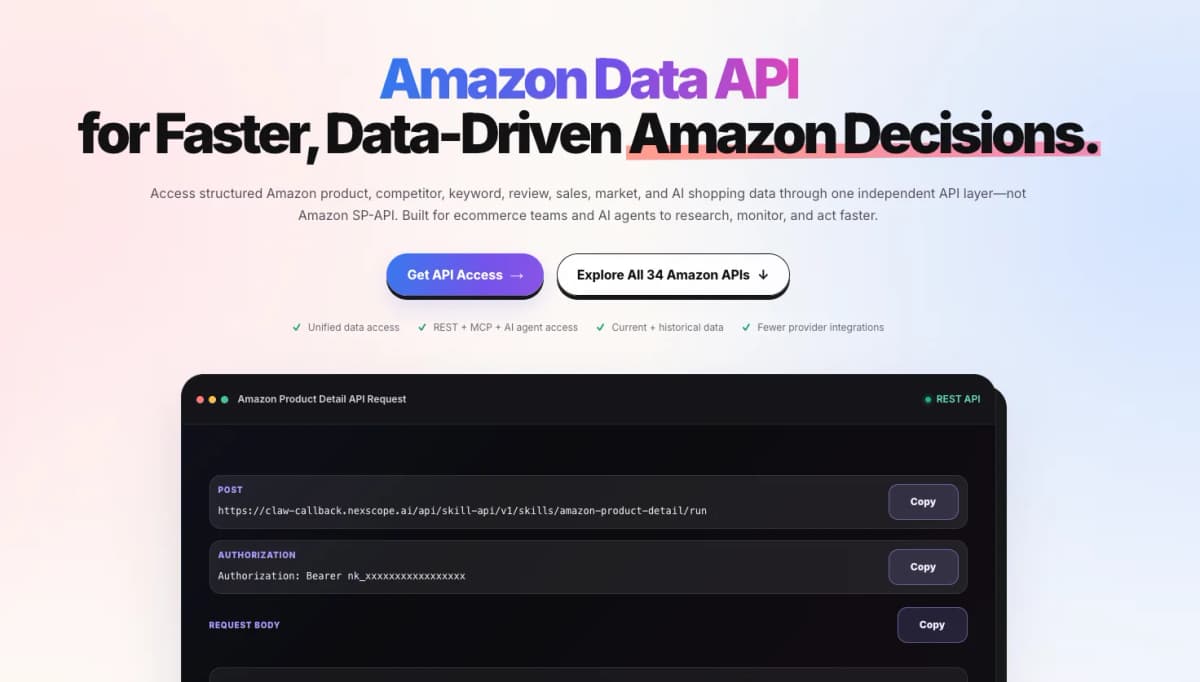
Use Nexscope Data when a research workflow needs reusable ecommerce evidence in Nexscope or a seller's own Agent environment.
Conclusion
The best Amazon product research tools for 2026 help sellers understand demand, competition, reviews, pricing, keywords, and launch room before ordering inventory.
Helium 10 and Jungle Scout remain strong Amazon-first suites. SellerSprite is useful for demand and competition analysis. Amazon Product Opportunity Explorer gives native Seller Central signals. SmartScout supports deeper market intelligence. Sell The Trend helps trend-led sellers discover products across ecommerce channels.
Nexscope is useful when a team wants structured ecommerce data in its web product or through REST API and MCP for its own Agent. Whichever tool is chosen, the final decision still requires margin, supplier, sample, differentiation, compliance, and first-party marketplace checks.
Grow your ecommerce business
AI-powered intelligence for smarter selling decisions
Get Started Free →Frequently Asked Questions
Which Amazon product research tool is best for beginners?
The best beginner tool is the one that makes required evidence understandable and does not force the seller to buy modules that will not be used. Amazon Product Opportunity Explorer can provide a free first-party starting point for eligible sellers. Helium 10 and Jungle Scout offer broader Amazon suites. Nexscope fits teams that want structured ecommerce data in its web product or connected to their own Agent through REST API or MCP. A beginner should test the same product idea in two options before paying annually.
Helium 10 or Jungle Scout?
Helium 10 is a broad Amazon seller suite with product, keyword, listing, advertising, and operations modules. Jungle Scout is closely associated with product validation and Amazon market intelligence. The better choice depends on the required marketplace coverage, specific tools included in the plan, team size, export limits, and how much time the seller will invest in learning the interface. Current plans and feature limits should be checked on each provider's official pricing page.
Is Amazon Product Opportunity Explorer enough?
Amazon Product Opportunity Explorer is valuable because it uses Amazon marketplace signals and groups customer needs, search terms, and products into niches. It is not a complete launch decision. Sellers still need review analysis, unit economics, supplier and sample checks, intellectual property and compliance review, differentiation, and a realistic advertising plan. It is best used as one first-party evidence source inside a broader Amazon product research process.
Are free Amazon product research tools enough?
Free sources can support strong initial screening. Amazon Best Sellers, search autocomplete, customer reviews, Google Trends, and Product Opportunity Explorer for eligible sellers can reveal demand, language, competition, and product gaps. Paid tools become useful when a seller needs faster comparison, larger datasets, historical tracking, exports, or repeatable team workflows. The subscription should solve a defined evidence or workflow gap rather than act as a substitute for product judgment.
Which tool has the most reliable Amazon data?
Amazon's own tools provide first-party marketplace signals, while third-party providers may offer broader history, estimates, competitor views, or workflow features. Reliability depends on the exact field, country, refresh schedule, estimation method, and product category. Sellers should compare a sample of tool outputs with Seller Central data and visible marketplace evidence. A provider that clearly labels estimates, sources, freshness, and missing values is easier to evaluate than one that presents every number as exact.
Can one research tool replace manual validation?
No. A research tool can collect data, organize comparisons, summarize reviews, and monitor changes. It cannot inspect a physical sample, verify a supplier's production quality, confirm every compliance requirement, resolve intellectual property risk, or guarantee future demand. Sellers should use tools to reduce repetitive work and improve evidence quality, then complete margin, supplier, sample, legal, and launch checks before committing to inventory.
Sources
- Amazon. (2026). Product Opportunity Explorer. Retrieved from sell.amazon.com
- Helium 10. (2026). Amazon Product Research Tools. Retrieved from helium10.com
- Jungle Scout. (2026). Amazon Product Research and Market Intelligence. Retrieved from junglescout.com
- SmartScout. (2026). Amazon Market Intelligence Tools. Retrieved from smartscout.com
- SellerSprite. (2026). Amazon Product and Keyword Research. Retrieved from sellersprite.com